
Last updated November 14, 2026
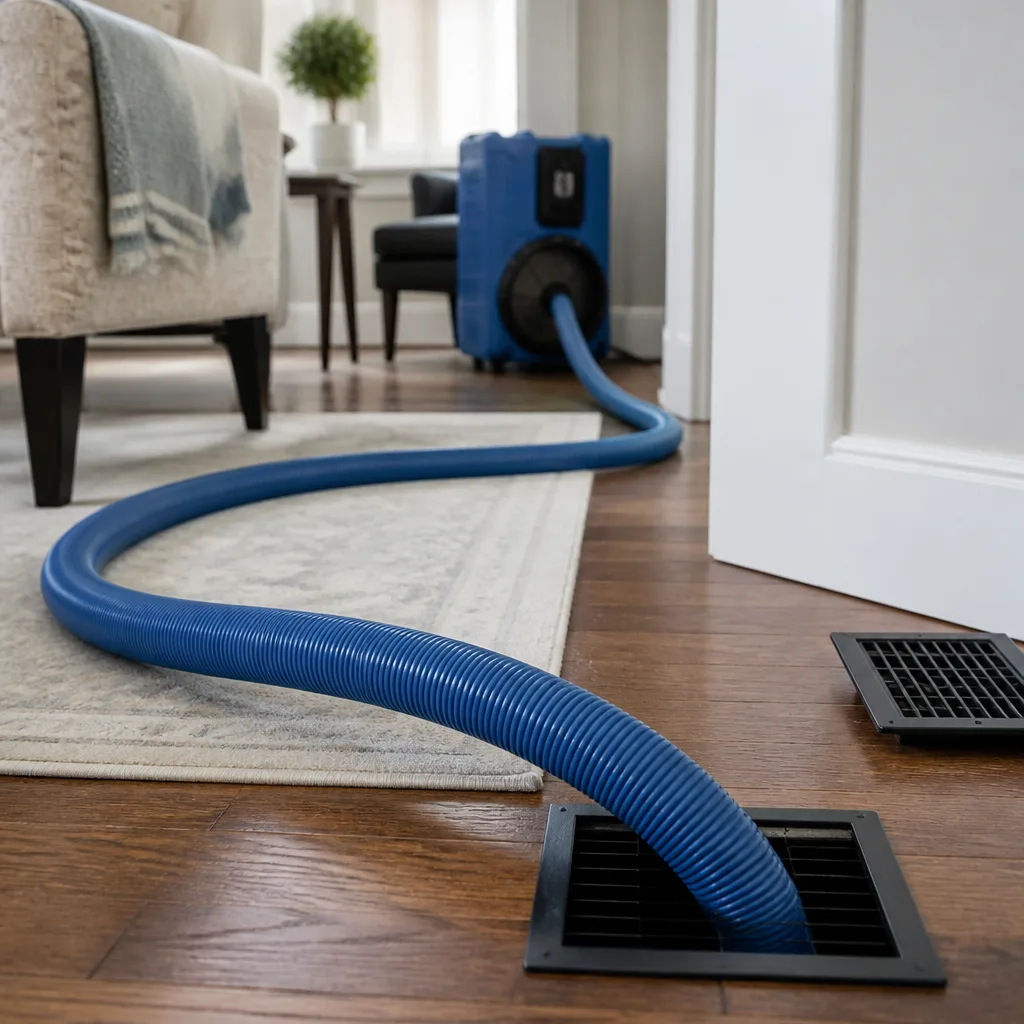 Whole-home duct cleaning
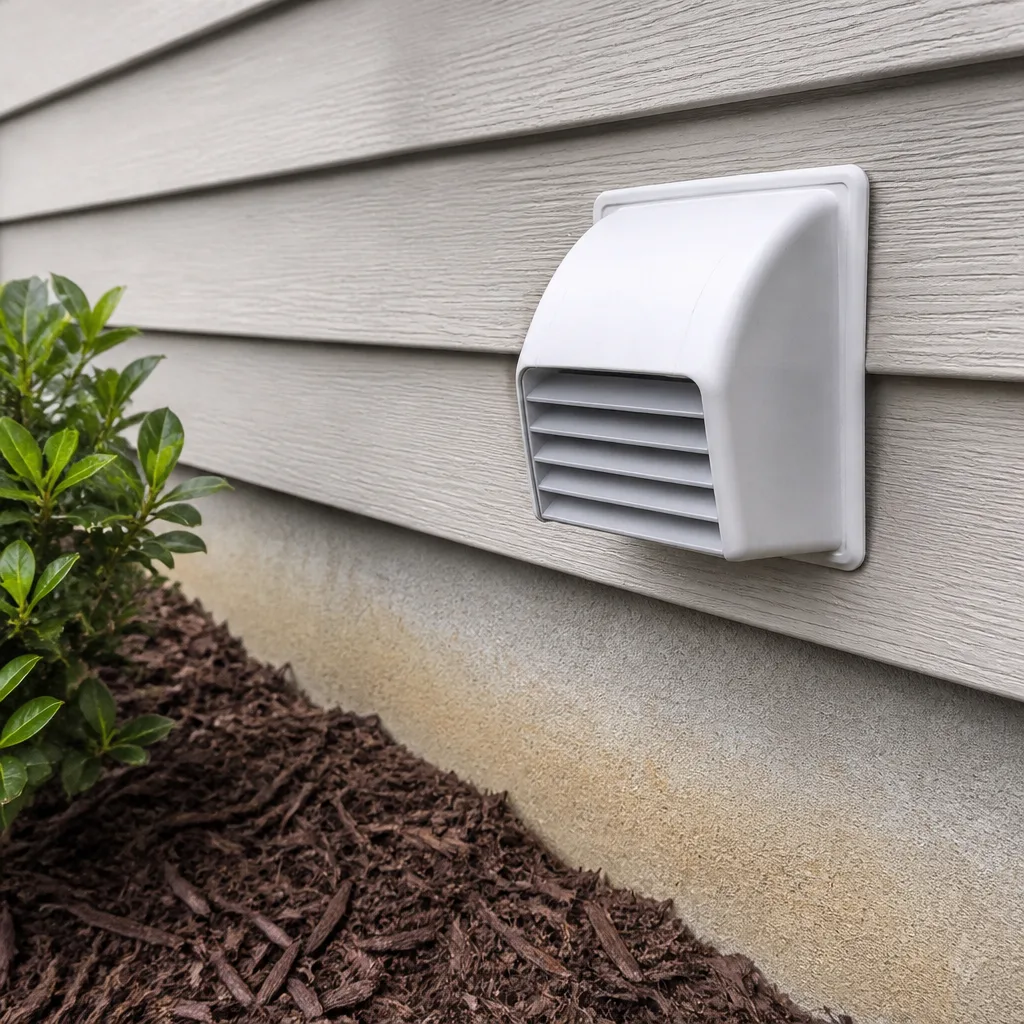 Dryer vent cleaning
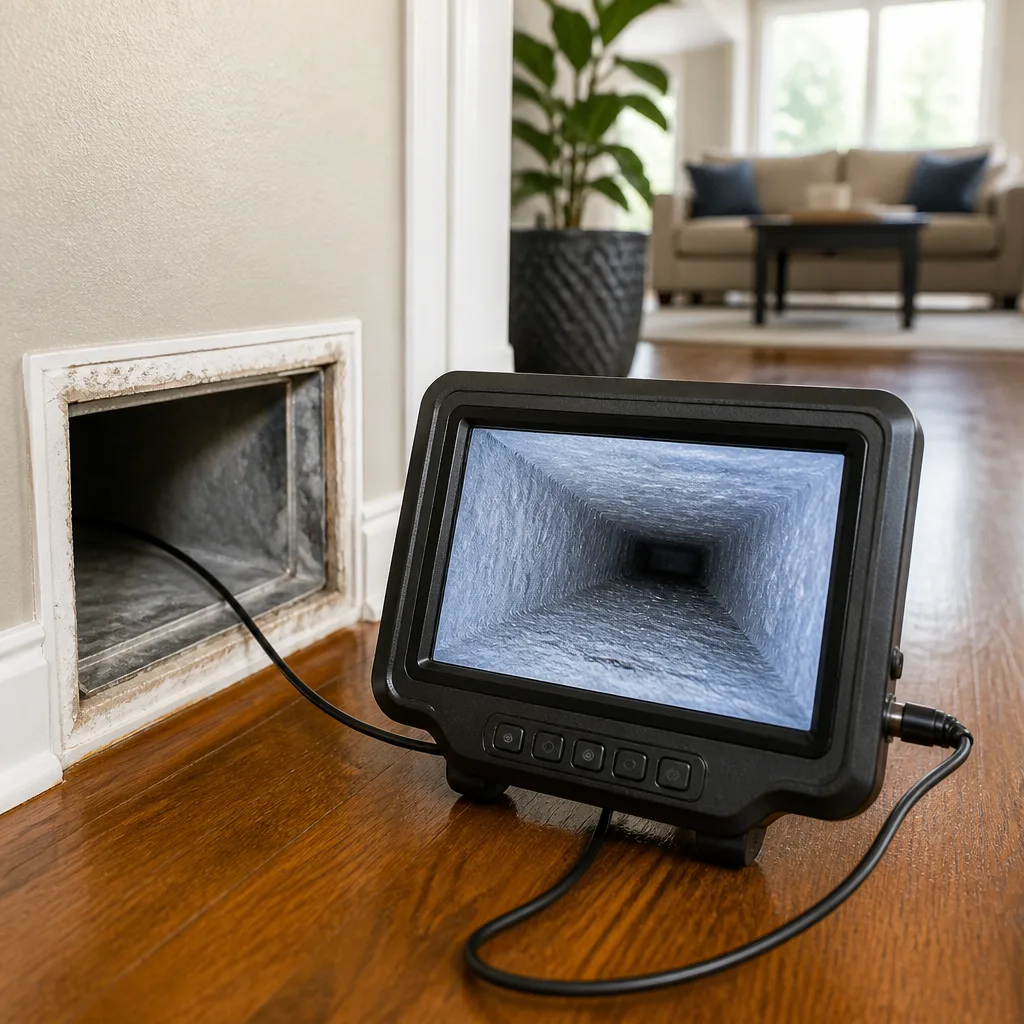 Camera inspection
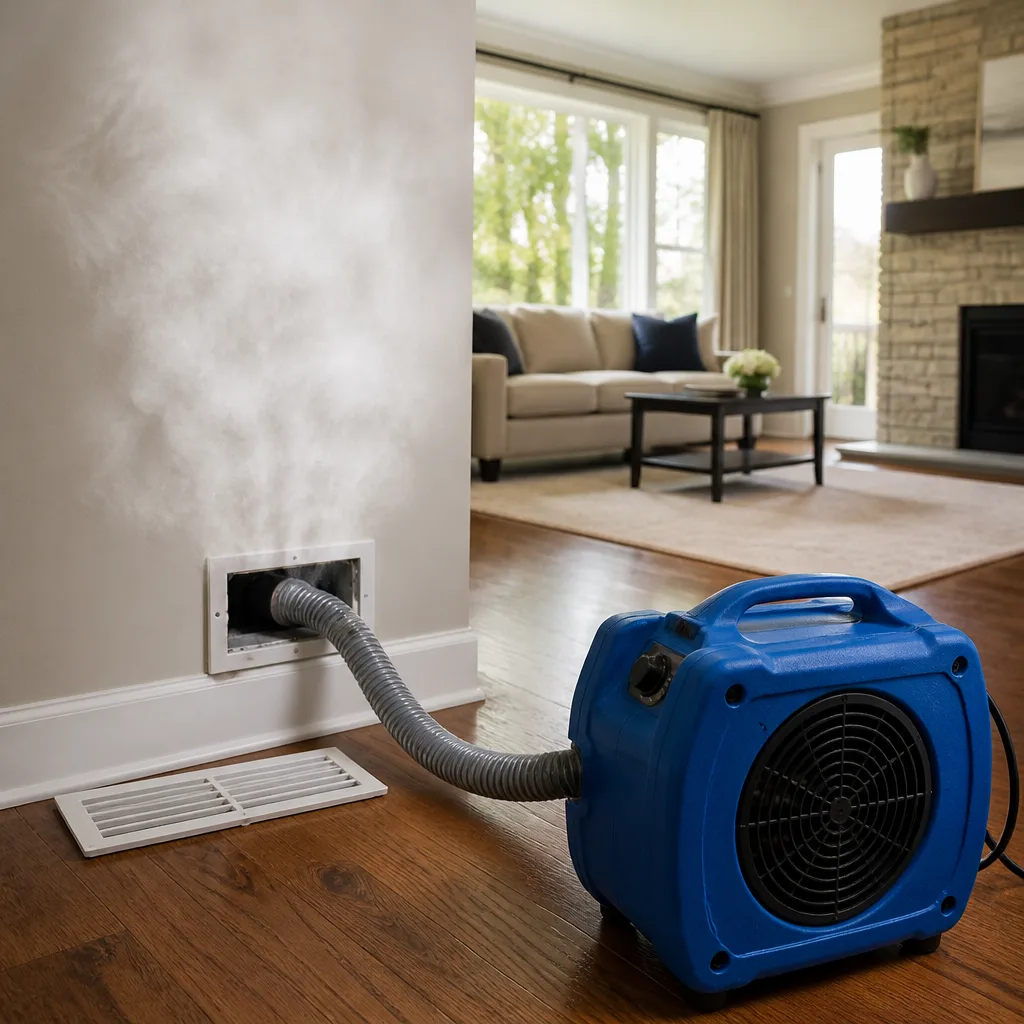 Sanitizing & deodorizing
Whole-system duct and dryer vent check with before-and-after photos - you see exactly what came out of your vents
That "$99 whole-house special" is a bait ad - the real number appears once they are in your hallway, or the "clean" is a shop-vac at the register. We photograph the inside of your ducts before and after instead.
Air Duct Cleaning Maintenance Schedule: What to Do and When
The 3-to-5-year cleaning interval most national sources recommend was not calibrated for homes sitting on Oklahoma red clay with crawl-free slab foundations. That single fact changes the math for a lot of Norman households. Clay soil sheds fine particulate year-round, spring storms push it through every gap, and a slab keeps return boots close to the floor where that dust settles first. This guide builds a real maintenance schedule around those conditions instead of a generic average. You’ll learn how often to clean, what resets the clock, what to do between visits, and how to keep a log any technician can use.
Quick Answer
For most Norman homes, professional air duct cleaning makes sense every 3 to 4 years, with homes near active construction, gravel roads, or open fields trending closer to every 2 to 3 years. Newer, well-sealed homes on managed lots can stretch to 5 years. The calendar is a starting point, not a rule: a renovation, a rodent issue, water intrusion, or an HVAC replacement resets the schedule regardless of how much time has passed.
Styles & brands we work with
- Whole-home duct cleaning
- Dryer vent cleaning
- Camera inspection
- Sanitizing & deodorizing
Table of Contents
- Why the Generic Cleaning Interval Falls Short in Norman
- How Red Clay and Storm Season Raise Your Baseline Particulate Load
- Slab Foundations and Floor-Level Return Boots
- The Norman Maintenance Calendar: Year 1 Through Year 5
- Event-Based Triggers That Reset the Clock
- What to Do Between Professional Cleanings
- How to Build a Maintenance Log a Technician Can Actually Use
- What Professional Equipment Changes About the Schedule
Why the Generic Cleaning Interval Falls Short in Norman
The advice to clean ducts every three to five years travels well. It just isn’t a schedule. It’s a range built for a national average home in a national average climate, and it assumes dirt arrives at roughly the same rate everywhere. In Norman, dirt arrives faster than that average because two local conditions work against you: the soil and the season.
Oklahoma’s red clay is the first. It doesn’t stay put. It dries, powders, and lifts into the air with any wind, then finds its way into garages, attic spaces, and the return side of a home’s air system. Fine clay particles are small enough to ride the return air stream and heavy enough to settle inside duct runs rather than pass through a filter. Homes near active development on the edges of town or down gravel stretches get a heavier dose than homes on quiet, landscaped lots.
The second is storm season. Spring in Norman brings sustained wind events that push outdoor particulate against every seam, gasket, and return grille in a house. The summer that follows turns dry and dusty. Between the two, a Norman home sees a particulate baseline that a temperate-climate homeowner won’t. That doesn’t mean you clean every year. It means the upper end of the generic range is not where most local homes should sit.
Here’s what we’ve learned from years of duct work in this market: the age of the system matters less than what’s happening around it. A decade-old system in a well-sealed, protected home can be in better shape than a five-year-old system in a house that backed onto a graded lot through two storm seasons. The schedule has to follow the conditions, not the build date. If you want the fundamentals on the service itself, our air duct cleaning page covers what the work actually involves.
How Red Clay and Storm Season Raise Your Baseline Particulate Load
Understanding the mechanism helps you know when to act. Fine clay particulate behaves differently from the lint, hair, and household dust that most maintenance guides focus on. It’s mineral, not organic, and it accumulates in layers inside horizontal duct runs and at the bottom of vertical drops.
What you’ll typically see in a Norman home that’s past due:
- Dust streaks on supply registers within a few weeks of cleaning a room, because the entrained clay keeps moving until the source is addressed.
- A visible film on return grilles that returns even after you wipe them down.
- Fine grayish-red dust on baseboards and window sills after windy stretches, especially on east and south exposures.
- A slight musty or earthy smell when the system first kicks on, which points to settled organics mixed with the mineral dust.
Storm events accelerate all of this. A single strong spring system with sustained wind does in a weekend what a mild month won’t. But the contamination is cumulative, not sudden. Each storm adds a layer, and the layers settle into the system’s lower reaches, where the air velocity no longer suspends them.
That’s why a Norman schedule has to account for storm frequency, not just elapsed years. A home that saw three heavy wind events and a neighboring lot graded during its last cycle is arguably due sooner than one that sat quietly through the same period. If your home sits near the open fields south and east of Norman or near a lot that was developed recently, plan for the shorter end of the range. When in doubt, a physical inspection answers the question faster than a calendar can.
Slab Foundations and Floor-Level Return Boots
Slab construction is the second local variable that most national guidance ignores. In a Norman home on a slab, ductwork typically runs through the attic or through soffits rather than a basement or crawlspace, and the return boots sit close to floor level. That geometry has a direct effect on what collects first.
Return boots near the floor are intake points for everything that settles at the lowest level of a room. Fine clay dust settles below the breathing zone and then gets pulled into the return. In climates with basement returns or high-wall returns, that dust has farther to travel before it reaches the intake. Here, it’s already at the mouth of the system.
Slab construction also traps humidity differently. A slab holds ground moisture and releases it slowly, which means the air near floor-level returns carries a bit more moisture on average than the air higher in the room. Mineral dust that picks up humidity clings to duct surfaces instead of passing through. Over a few seasons, that creates the greasy-feeling film you sometimes see at the base of return boots.
What this means for the schedule:
- Inspect return boots seasonally, not just the supply registers. The boots are where the load starts.
- Watch for dampness or a musty smell near floor-level returns after a rainy stretch. That’s a prompt to check, not a diagnosis.
- Consider that a slab home in Norman will typically warrant the shorter end of the cleaning interval compared to a crawlspace home with higher returns.
- Keep furniture and rugs from blocking return grilles, so the air moves at the velocity the system was designed for.
None of this means slab construction is a problem. It’s just a different condition that changes how often the system needs attention. A professional who understands the difference will look at the boots first, not just the supply side.
The Norman Maintenance Calendar: Year 1 Through Year 5
Here’s a working schedule you can actually follow. It assumes a standard Norman single-family home, residential system, and no major disruption. Adjust as conditions require.
Year 1 (fresh cleaning, then establish baseline)
- After a professional cleaning, note the date in your log along with the system age and filter type.
- Check filters at 30 and 60 days, then set a replacement interval based on what you see.
- Wipe register grilles monthly and note how quickly dust returns.
- After the spring storm season, do a visual check of the return boots for visible buildup.
Year 2 (maintenance mode)
- Replace filters on your established interval. Don’t stretch it because the filter “still looks okay.”
- Check the dryer vent run once during the year, including the exterior flap.
- Watch for new dust patterns, and any change in how quickly registers get dirty.
Year 3 (first real evaluation point)
- By year 3, most Norman homes have accumulated enough to justify an inspection, even if a full cleaning isn’t yet due.
- If the inspection shows heavy buildup, schedule cleaning. If it’s light, extend the interval by a year and re-check.
- This is also the point to check the ducts for disconnected joints or sagging runs that may need air duct repair.
Year 4 and Year 5 (full cycle)
- Homes on longer cycles should plan for cleaning by year 4 or 5, with the same inspection-first approach.
- Any renovation, rodent activity, or water event in this window resets the clock (see the next section).
- Keep the log current so the next professional has context from the start.
Property managers maintaining multiple units should scale this to the building, not the individual unit. Unit turnovers are natural inspection points.
Event-Based Triggers That Reset the Clock
Time is one variable. Events are the other. Certain things reset the maintenance clock regardless of how recently the system was cleaned, and Norman homeowners should know them cold.
- Renovation. Any project that opens walls, pulls up flooring, or generates sustained dust sends particulate into the return side of the system. A kitchen or bathroom remodel is a trigger. Even drywall work in a single room can be, depending on how well the work area was sealed off. Clean after the project, not before.
- Rodent activity. Rodent nesting in duct runs or near return boots introduces a contamination issue a routine cleaning won’t fully address. If you’ve had activity, have the system inspected and cleaned, not just vacuumed at the registers.
- Water intrusion. A slow roof leak, a burst pipe, or a slab moisture issue that reaches ductwork changes the situation. The first concern is the water source, then the ductwork. Both need attention.
- HVAC replacement. A new air handler or condenser is the right moment to clean the ducts it connects to. You’re already paying for the install; cleaning the system before it starts moving air through old buildup is the sensible sequence.
- Moving into a new home. You don’t know the previous owner’s maintenance history. A cleaning and inspection establishes the baseline in a single visit.
- A new pet or a change in household allergies. A meaningful change in household composition is a reasonable trigger to inspect. We don’t make medical claims, but if air quality is on your mind, knowing the state of the system is a sensible first step.
Any one of these resets the schedule. Treat the calendar as the default and events as the override. When both point to action, act.
What to Do Between Professional Cleanings
The work between cleanings is what stretches a schedule or compresses it. Most of it costs nothing beyond attention and an occasional filter.
Filter grading. Filters are rated by MERV value, and matching the rating to your system matters. A filter that’s too restrictive can strain the blower and reduce airflow; one that’s too open lets particulate pass through. Most residential systems do well with a mid-range filter changed on a consistent interval. If you’re considering an upgrade to a system like a Honeywell or Aprilaire filtration product, that changes the calculation, and it’s worth talking through with a professional rather than guessing. Higher filtration doesn’t remove the need to clean, but it can meaningfully slow what gets into the ducts.
Register inspection. Walk the house once a month and look at the registers. Wipe them. Note how fast dust returns and whether any room is dirtier than the others. A single dirty register tells you something about that room, not the whole system. All of them dirty together tells you something about the system.
Dryer vent monitoring. The dryer vent is a separate system from the air ducts, but it’s a fire-safety concern and it lives in the same house. Check the exterior flap: it should open freely when the dryer runs and close when it doesn’t. Lint buildup at the flap, a dryer that takes longer than it used to dry a load, or heat in the laundry room are all prompts to have the vent cleaned. Our dryer vent cleaning service handles that as a single visit alongside the duct work when both are due.
Humidity awareness. On a slab, a hygrometer is cheap and tells you a lot. If indoor humidity is running consistently high, the ducts are collecting moisture along with dust, and the schedule should be tighter.
None of this replaces a professional cleaning, but it tells you when to call for one, rather than guessing from a calendar.
How to Build a Maintenance Log a Technician Can Actually Use
Documentation is the difference between a professional arriving and starting from zero versus arriving and immediately knowing the system’s history. Here’s a straightforward log to keep, on paper or in a note on your phone.
- System basics. Equipment make, model, and installed year. Filter type and MERV rating.
- Cleaning history. Date, service performed, and any notes from the technician (for example, “heavy buildup on the east return run”).
- Repairs. Any duct repairs, including what was done and where. If it’s in the log, the next professional knows not to disturb it.
- Filter changes. Date and what was installed. This is the single most skipped entry and the most useful one.
- Events. Renovations, HVAC replacement, water intrusion, pest issues. Note the date, because events reset the schedule.
- Observations. Anything you noticed between visits: a change in dust, a smell, a room that’s always dirtier. Observations are context a technician can use.
Keep the log somewhere you’ll find it. A shared note or a folder on the refrigerator beats a receipt in a drawer. When you call, mention you have a log. Any professional worth working with will welcome it.
What Professional Equipment Changes About the Schedule
The tools matter more than most homeowners expect, because they determine how thorough a cleaning can be and, by extension, how long you can go between them. A consumer-grade shop vac pulling from the registers removes surface dust but not the buildup deeper in the runs. That buildup returns quickly, which is why some “cleanings” seem to wear off in a month.
Professional-grade equipment works differently. Rotobrush contact-cleaning systems are the same equipment specified in professional duct cleaning standards. Nikro negative-air and HEPA equipment keeps particulate contained on-site rather than circulating through the house while the work happens. Abatement Technologies equipment signals capability at the remediation level, which matters when the job involves more than routine debris removal. In our experience, a cleaning done with the right equipment holds its result longer, which is what makes a multi-year schedule realistic in the first place.
Equipment also determines whether the visit can address more than cleaning. Our duct cleaning in Norman uses these systems, and we do it as a focused service, not as an add-on to a general handyman list. That focus is why a single visit can clean, inspect for damage, and, where appropriate, integrate upgraded filtration. It’s also why the schedule recommendation is rarely a guess.
Our technicians have up to 13 years of experience, and that experience is the other half of the equation. Equipment gets you to the buildup. Reading the result correctly, and telling you what your specific system actually needs rather than what a checklist says, is what turns a cleaning into a schedule.
Common Mistakes to Avoid
- Treating the 3-to-5-year rule as a universal standard. It’s a range, and it was not calibrated for Oklahoma clay and slab construction. Norman homes often need a shorter interval.
- Skipping the return boots during inspection. On a slab, the return boots near floor level are where the load starts. Check them first, not last.
- Ignoring the calendar after an event. A renovation, rodent activity, or water intrusion resets the schedule. Following the default calendar past an event means cleaning too late.
- Stretching filter changes because the filter “still looks fine.” By the time it’s visibly loaded, it’s been doing less than you think for a while. Replace on the interval you set, not by eye.
- Cleaning the ducts but never the dryer vent. They’re separate systems, and the dryer vent is the one with the fire-safety concern. If you’re scheduling a duct cleaning, ask about the vent at the same visit.
- Going with the lowest bid without asking about equipment. A shop vac is not a Rotobrush. If the quote doesn’t mention professional equipment, ask.
- Keeping no records. Without a log, every professional starts from zero, and you can’t tell whether the system is trending better or worse.
See the difference
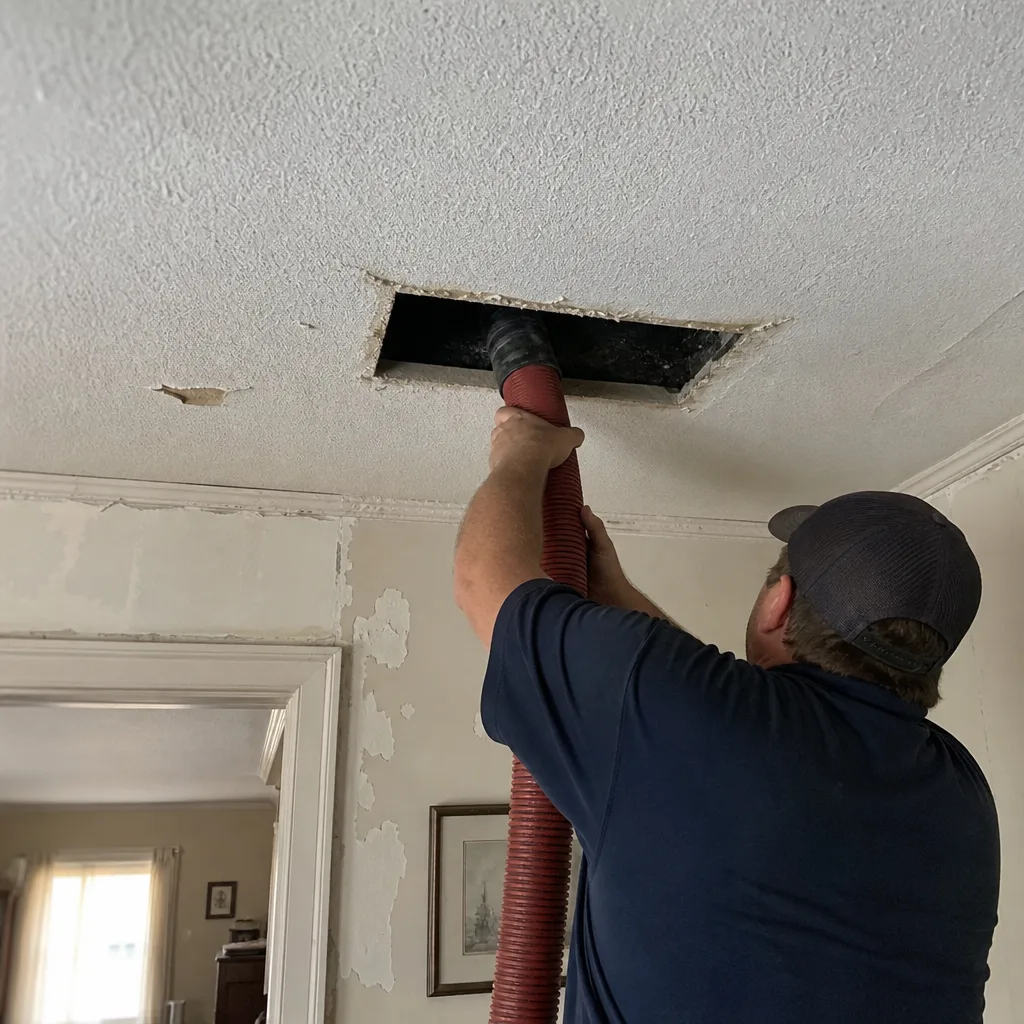 Before
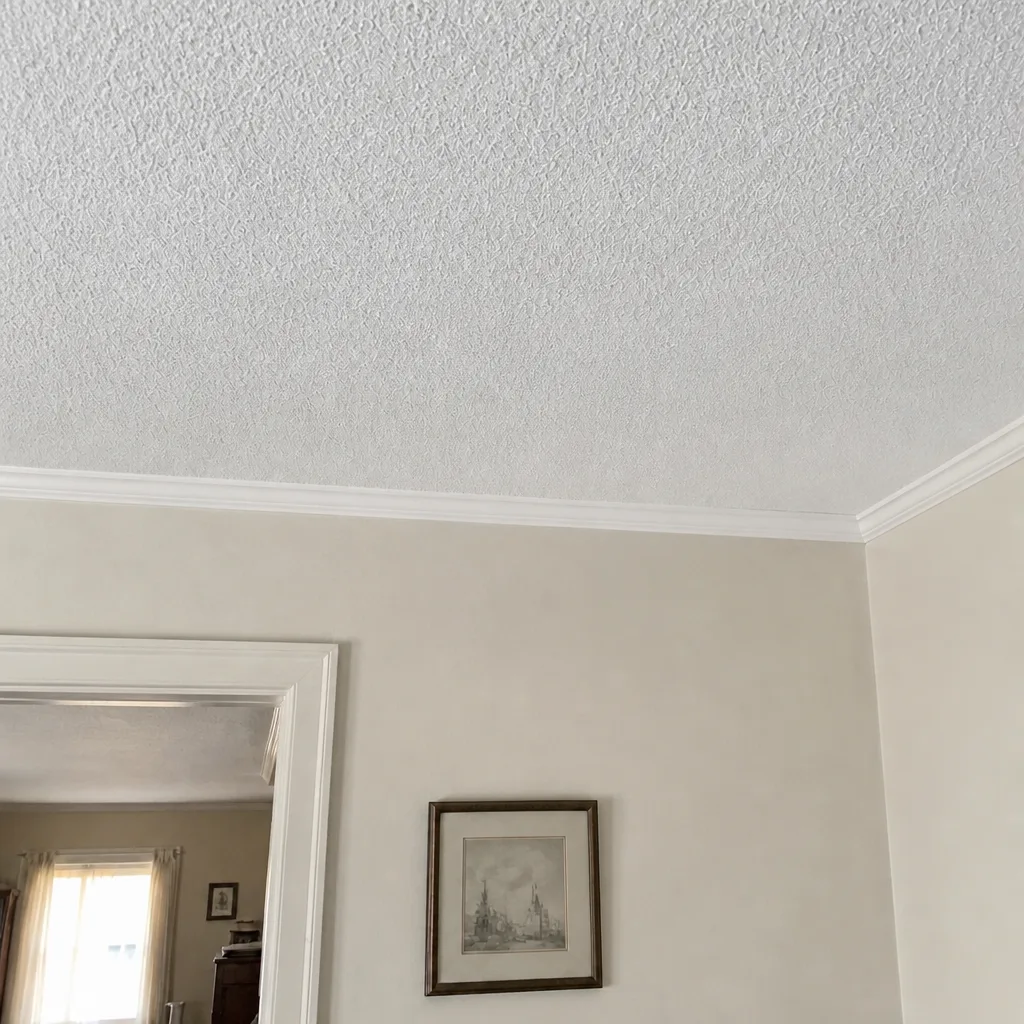 After
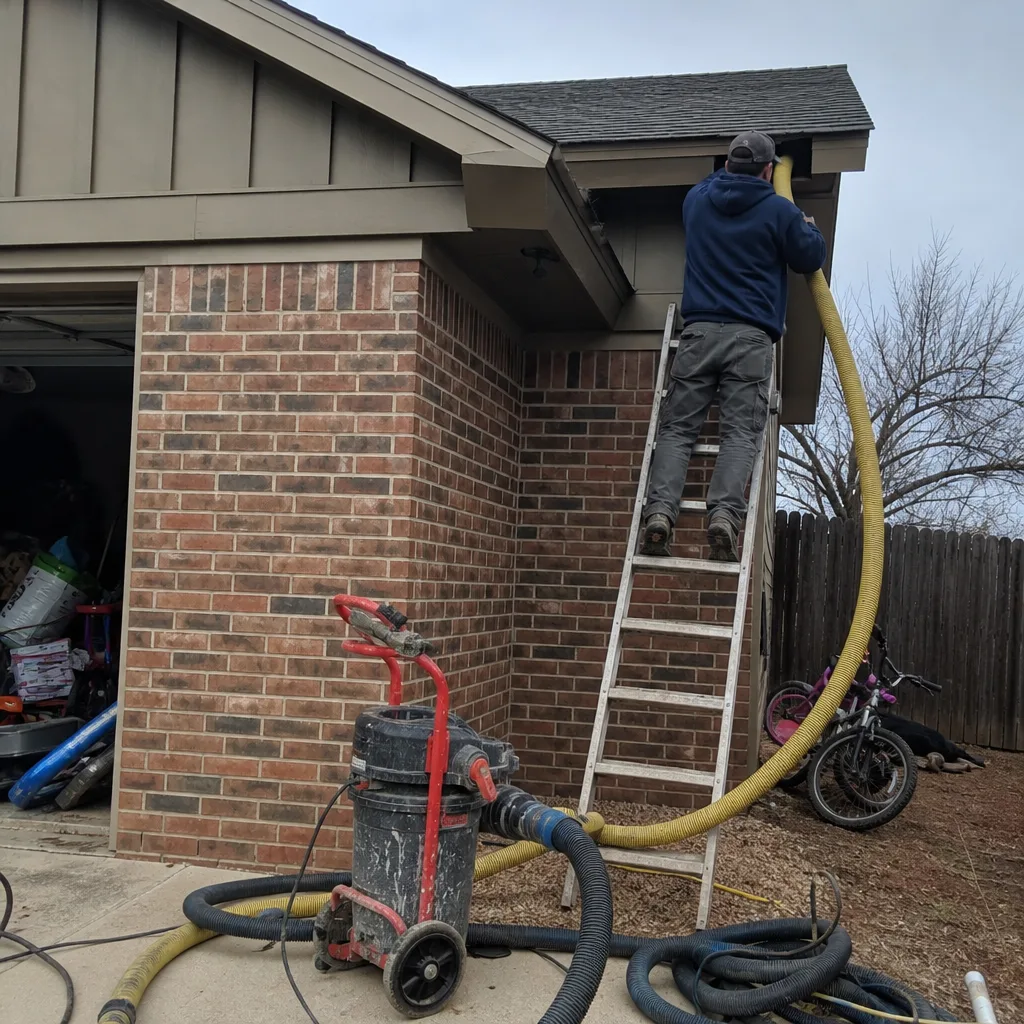 Before
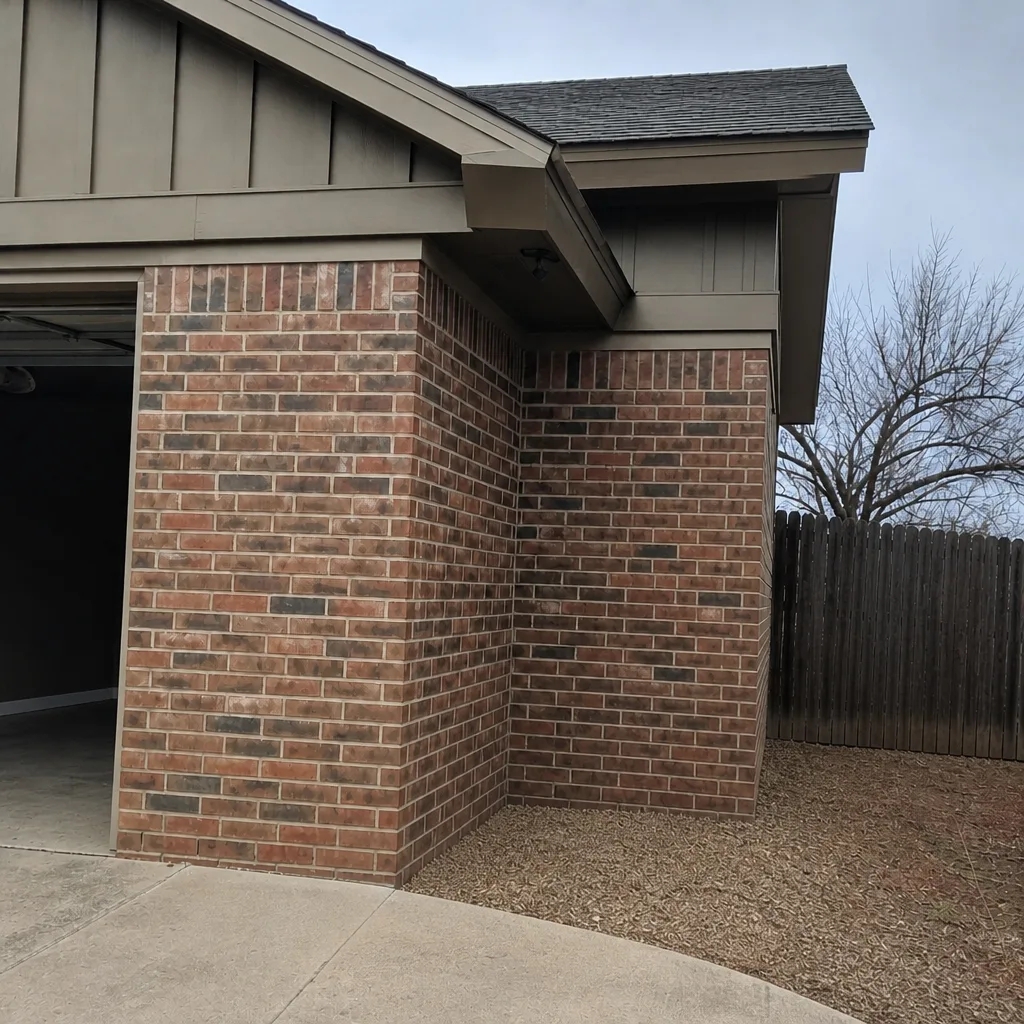 After
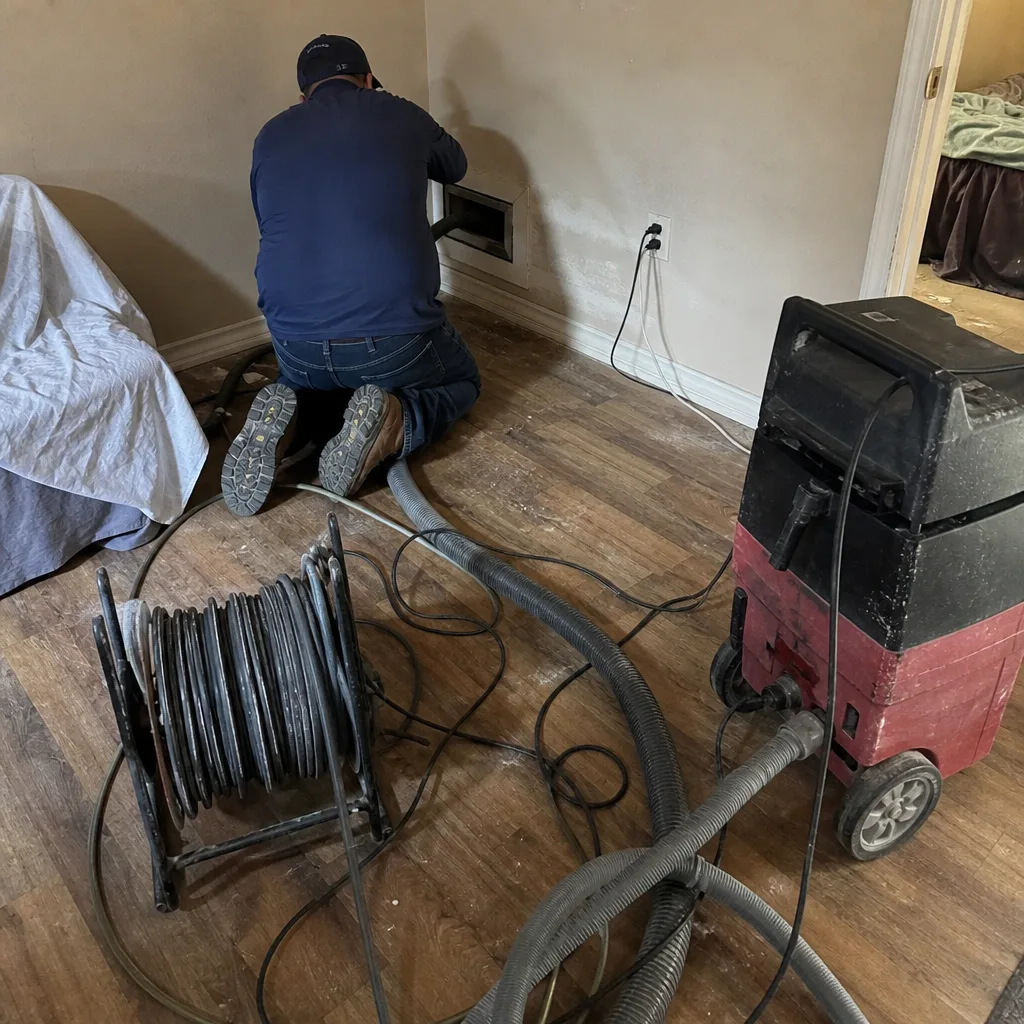 Before
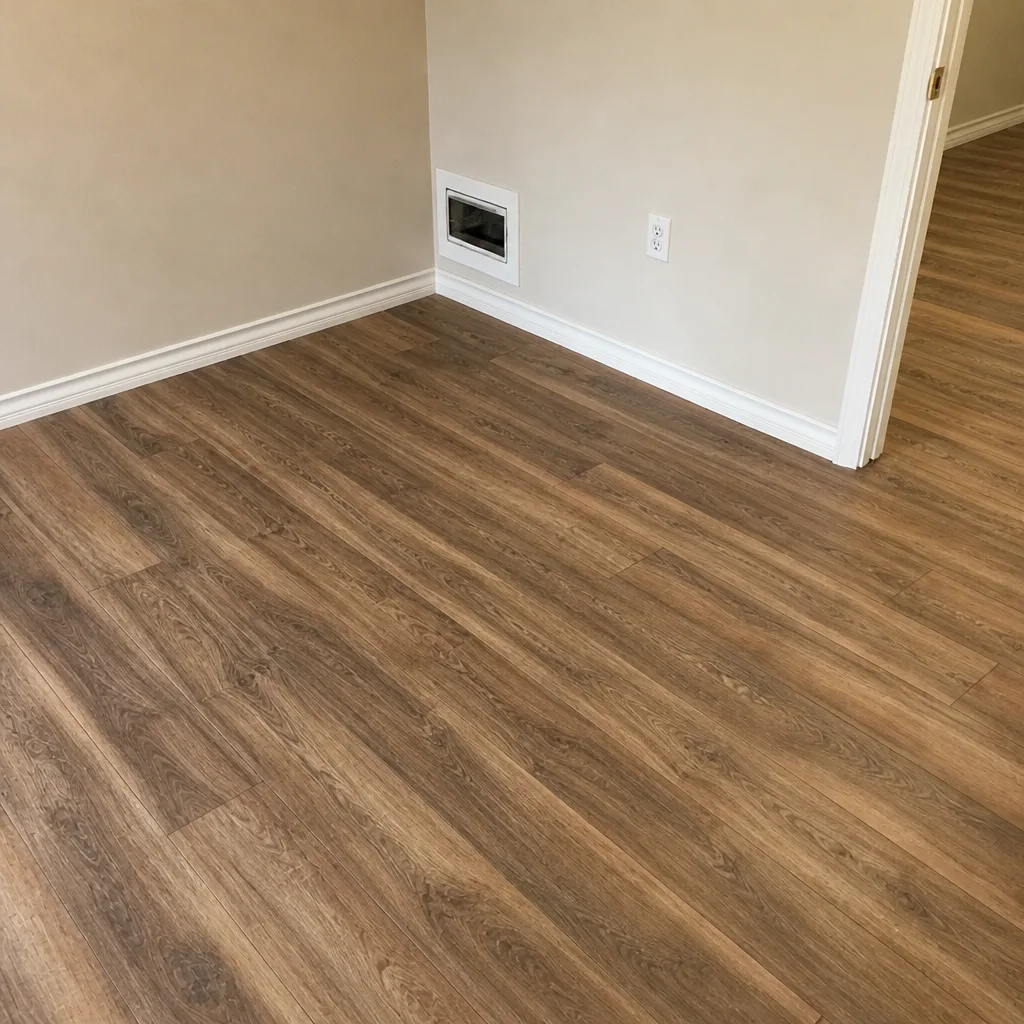 After
When to Call a Professional
Call a professional when you can see or smell the sign. A dusty smell when the system starts, visible buildup in return boots or on registers that returns within weeks, or dust film on surfaces after windy stretches all point to a system worth inspecting. So do the event triggers: renovation, rodent activity, water intrusion, HVAC replacement. And if you’re moving into a home with no maintenance record, a baseline inspection answers the question.
Duct Cleaning Norman offers free estimates in Norman. Call (866) 493-6592. We answer 24/7. Fast dispatch from 7am to 7pm, Sunday through Friday. If the timing works, we can often take a look the same day.
Frequently Asked Questions
Every 3 to 4 years for most Norman homes, with heavier-exposure homes near active construction, gravel roads, or field edges trending toward every 2 to 3 years. Newer, well-sealed homes on managed lots can stretch to 5 years. Events like a renovation, rodent activity, water intrusion, or HVAC replacement reset the clock regardless of time elapsed. Call (866) 493-6592 for an exact quote; estimates are free.
Because two local conditions raise the particulate baseline. Oklahoma red clay sheds fine mineral dust year-round and storm season pushes it against every entry point, while slab construction keeps return boots near floor level where that dust settles first. The standard interval was built for a national average, not for those conditions. Call (866) 493-6592 if you want an inspection based on your home’s actual situation.
A renovation, rodent activity, water intrusion, or an HVAC replacement. Any of those means the system should be inspected on its own timeline, not the calendar’s. A new pet, a household allergy change, or moving into a home with no maintenance record are also reasonable triggers. Call (866) 493-6592 and describe what happened.
No, not effectively. A shop vac pulls surface dust from the registers but leaves the buildup deeper in the runs, and it doesn’t contain the particulate it releases while working. Professional systems do both. Rotobrush contact cleaning and Nikro negative-air equipment are the difference between surface vacuuming and a real cleaning. Call (866) 493-6592 for an exact quote; estimates are free.
Ask for before-and-after photos of your own ducts, and ask for a report of what the technician found. A professional cleaning should leave a visible difference you can see in the photos and the registers, not a vague “all done.” Call (866) 493-6592 with questions about the process.
It’s a separate system and a separate concern, and it’s worth checking at the same time as a duct cleaning. A dryer that takes longer than it used to, lint at the exterior flap, or heat in the laundry room are all prompts to have it cleaned. Call (866) 493-6592 to schedule it alongside a duct cleaning.
The Bottom Line
A schedule is a starting point, not a guarantee. In Norman, the two variables that matter most are the clay dust and the slab construction, and both push most homes toward the shorter end of the standard interval. Build the calendar, then let events override it. Keep a log, check the return boots, change filters on an interval instead of by eye, and have the dryer vent looked at in the same visit. When you’re ready for a professional look, call (866) 493-6592. We answer 24/7. Fast dispatch from 7am to 7pm, Sunday through Friday.
Written by the team at Duct Cleaning Norman.