
Last updated November 14, 2026
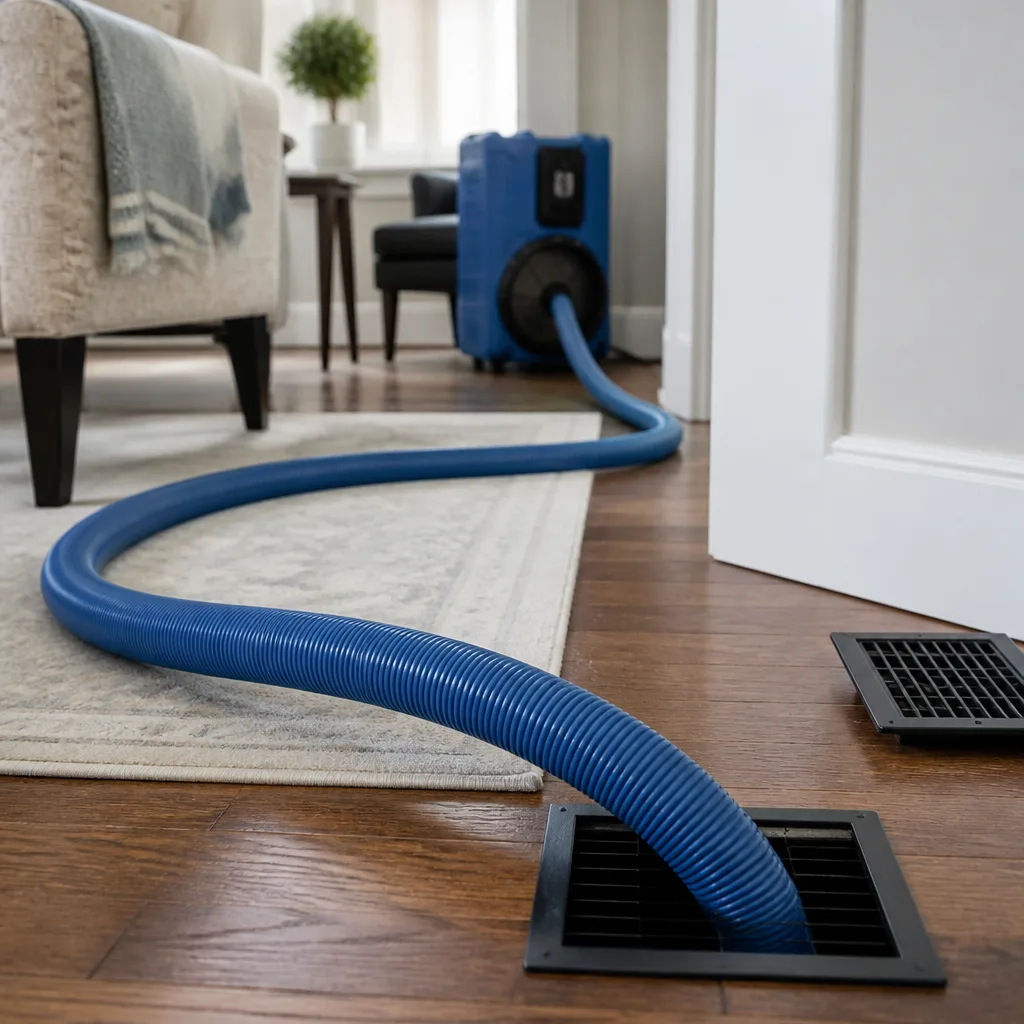 Whole-home duct cleaning
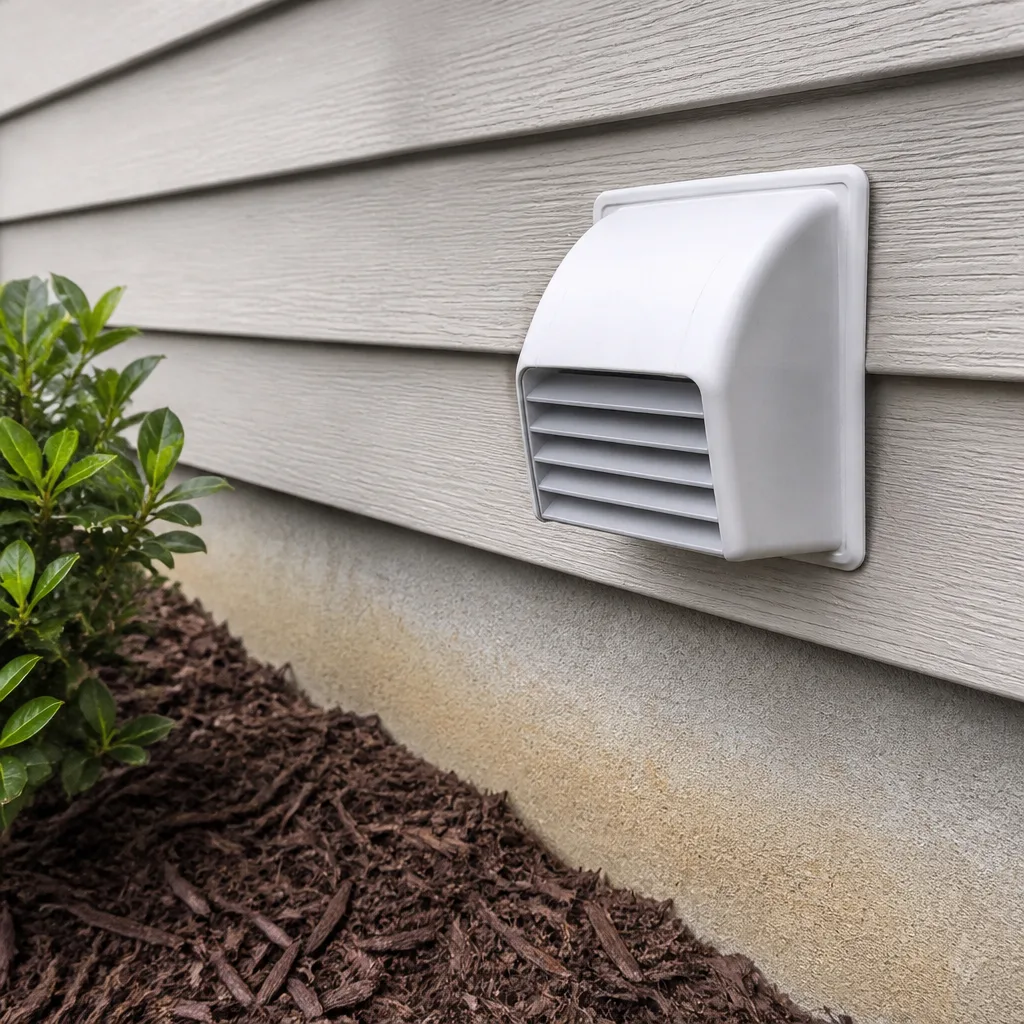 Dryer vent cleaning
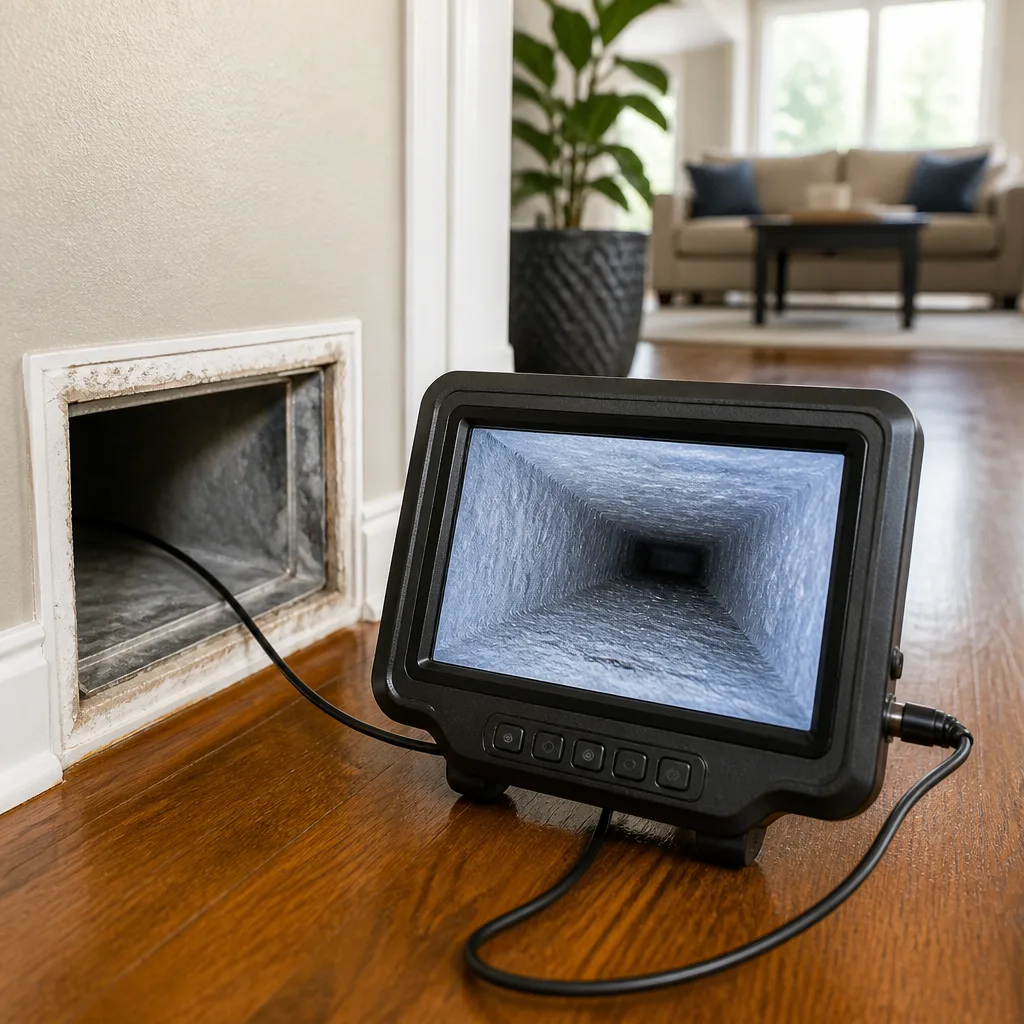 Camera inspection
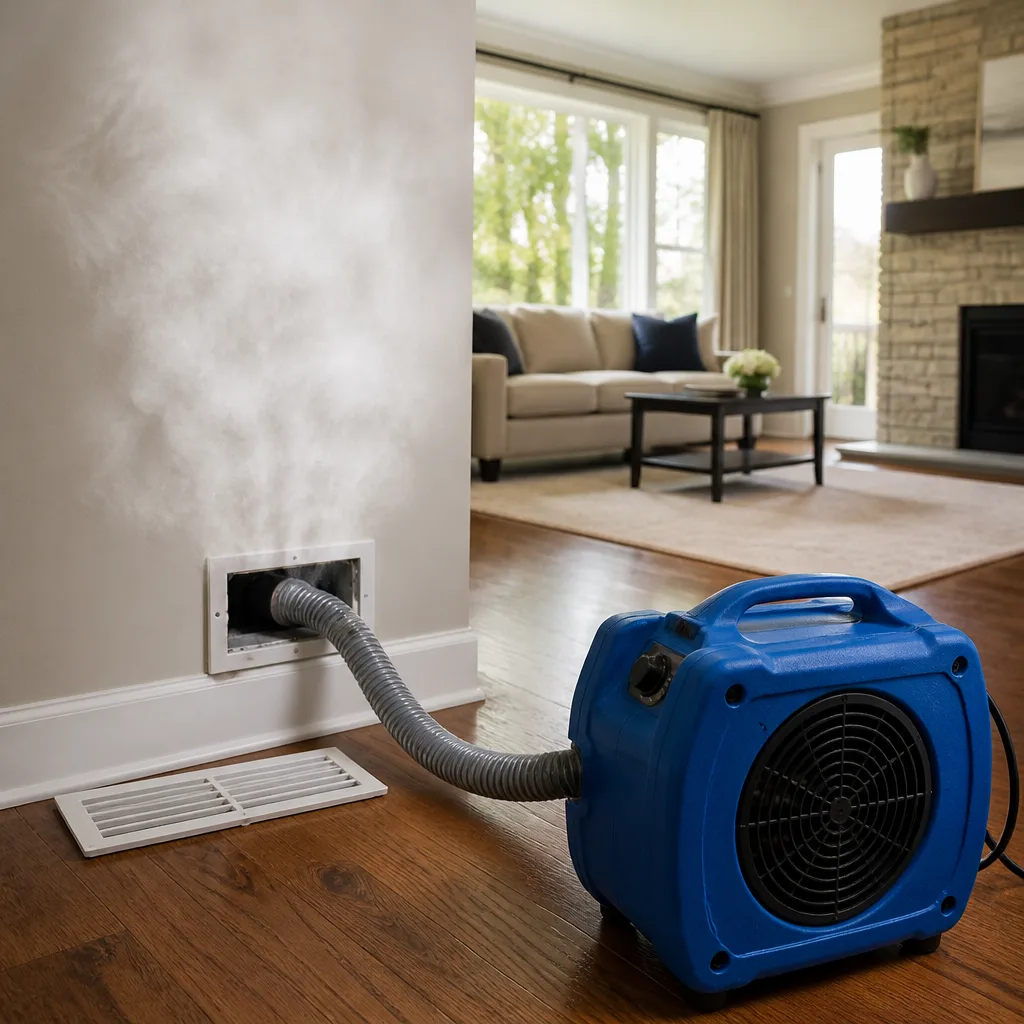 Sanitizing & deodorizing
Whole-system duct and dryer vent check with before-and-after photos - you see exactly what came out of your vents
That "$99 whole-house special" is a bait ad - the real number appears once they are in your hallway, or the "clean" is a shop-vac at the register. We photograph the inside of your ducts before and after instead.
Air Duct Cleaning Warning Signs: A Norman Homeowner’s Reference Guide
Dust on your registers isn’t a warning sign. It’s normal. Every home in Norman has some, and wiping it away is part of living in a house with forced-air heat and cooling. What matters is what happens next. Dust that reappears within 48 hours of wiping a register clean is a different problem, and it usually points to a specific location in your duct system where the cleaning needs to start. The same goes for odors, temperature swings, and the way your system behaves in July. This guide connects the symptoms you can actually see and smell to the mechanical causes behind them, so when you call for service you can describe what’s happening accurately instead of guessing.
Quick Answer
The warning signs that genuinely point to duct contamination are: dust returning to a register within two days of cleaning, a musty odor that appears only on startup or only in certain rooms, visible dark growth at a supply grille, a recent renovation that left fine dust in the system, and longer run cycles with uneven room temperatures. Ordinary settled dust, a single dusty room, and a faint smell after a long vacancy usually aren’t urgent. The difference is whether the debris is being pushed into the room from the ducts or pulled into the ducts from the home.
Styles & brands we work with
- Whole-home duct cleaning
- Dryer vent cleaning
- Camera inspection
- Sanitizing & deodorizing
Table of Contents
- Supply-Side Dust vs. Return-Side Contamination
- What Musty Odor Patterns Tell You About Location
- Visible Growth at a Register Grille
- Post-Renovation Debris vs. Years of Accumulated Dust
- HVAC Performance Signals That Trace Back to Your Ducts
- The Dryer Vent Warning Signs Homeowners Misread
- How to Check Your Own System Before You Call
- When to Call a Professional
Supply-Side Dust vs. Return-Side Contamination
These two problems look almost identical on a dusty register. One is debris inside the ducts being blown out into your rooms. The other is outside air being drawn in through gaps in the return system, bringing unfiltered dust with it. The fix is different for each, and cleaning the wrong one wastes the visit.
Supply-side dust shows up as a fine, even coating on the register fins and the wall around the grille. It reappears fast after wiping because the system is actively pushing particles out through that vent. If you hold a piece of dark cloth near the register while the fan runs and see fine dust collecting within a few minutes, you’re looking at material moving through the supply trunk. This usually means the ducts themselves hold a layer of accumulated debris, or a section of flex duct has come loose or torn and is dumping dust downstream.
Return-side contamination is subtler. The return grille is where the system pulls air back in, and if the return plenum has gaps, seams that have opened, or a disconnected joint near the air handler, the system is pulling attic or crawlspace air into the loop. That air is unfiltered. It shows up as heavier dust on the return grille, a dusty filter that loads up within days, and a near-constant film on horizontal surfaces in the rooms closest to the air handler.
We check both sides before we quote a job. An air duct cleaning visit that only addresses the supply side and ignores a leaking return is a half-finished job. Our technicians run negative-air HEPA equipment from Nikro to hold particulates while we work, so we can see where the debris is concentrated rather than guessing from the register face.
In Norman, the mix of older slab-foundation homes near campus and newer construction on the edges of town means both problems show up regularly. Homes built before the 1990s often have return systems routed through wall cavities with seams that have shifted over decades of soil movement. Newer homes tend to have tighter duct runs but don’t always seal at the air handler cabinet. Both end up pulling the same dust.
Quick identification checklist
- Dust reappears within 48 hours on supply register fins: likely supply-side debris or a broken section of flex duct.
- Heavy dust on the return grille and rapid filter loading: likely return-side leakage pulling in outside air.
- Dust concentrated in one room or one zone: likely a damaged duct branch or loose connection near that room.
- Dust on horizontal surfaces near the air handler: check the return plenum and air handler cabinet seams.
What Musty Odor Patterns Tell You About Location
A musty smell in a Norman home isn’t one problem, it’s a set of clues. Where the odor appears and when it appears narrows down where in the duct system the moisture or organic material is sitting. Take a mental note of the pattern before you call.
Odor only on startup
If the smell shows up for thirty seconds when the system first kicks on and then fades, the source is usually sitting in the supply trunk or the air handler cabinet itself. The first blast of air passes over the material, picks up the odor, and then the airflow stabilizes. This pattern often means condensation has collected in the plenum or on the evaporator coil and started to grow something. The ducts may be clean; the coil and drain pan may not be.
Continuous odor while the system runs
A smell that stays the entire time the fan runs suggests a broad source, not a local one. Widespread musty smell in a home this size usually traces back to a section of insulated flex duct that has absorbed moisture, or to debris that’s been sitting long enough to stay damp from the home’s own humidity. Norman’s summer humidity does the rest. Insulated duct runs through warm attic space can hold moisture in the lining and never fully dry.
Odor only in certain rooms
This one is the easiest to narrow down. If the smell appears in a bedroom and nowhere else, the problem is in the branch serving that room. Common causes are a section of flex duct that sags and holds condensation, a branch that runs through a damp crawlspace, or a duct connection that’s failed and drawn in soil air. Room-specific odor is the clearest diagnostic clue a homeowner can give us when they call, and it usually saves a full-system cleaning.
The smell test matters more in Norman than in drier parts of the state. This part of Oklahoma sits in a humid subtropical band where summer dew points regularly climb high enough that any moisture inside a duct system stays there. If you’re noting odor, note the pattern with it. Our team uses Abatement Technologies filtration equipment when we’re working in a home with an active odor issue, and we can discuss whether a Norman home needs a cleaning visit first or a duct repair visit to close an open connection.
Visible Growth at a Register Grille
This is the one sign that should move to the top of the list. Dark spots, fuzzy patches, or a dusty black film around the edges of a supply grille mean organic material is growing where it shouldn’t. In Norman’s humidity, once that growth is visible at the register face, it’s usually working back into the ductwork behind it. The grille is just where you happen to see it.
Here’s the part most cleaning companies get wrong. Cleaning the ducts without identifying the moisture source is a wasted visit. Duct surfaces are a habitat, not a cause. If the growth comes back three months later, the moisture problem was never addressed. A cleaning visit that skips this step just resets the clock.
- Identify the moisture source first. Common causes are a coil drain pan that isn’t draining, a disconnected condensate line, a roof or attic leak feeding a duct run, or a duct routed through a damp crawlspace without proper insulation.
- Confirm whether growth is confined to the grille face or extends into the duct. Sometimes the film is only where the metal is coolest from condensation. Sometimes it continues several feet into the supply run.
- Correct the moisture issue before or during the cleaning. If the leak or drain pan isn’t fixed, the cleaning is temporary. Our scope covers air duct cleaning and duct repair; a plumbing or roofing issue needs the right trade, and we’ll tell you when that’s what you’re looking at.
- Clean with containment-grade equipment. Rotobrush contact cleaning and Nikro negative-air HEPA hold the debris out of the room while the work is done.
- Consider upgrading filtration afterward. A Honeywell or Aprilaire filter setup at the air handler catches more of what’s kicked up next time the system cycles.
We don’t do mold remediation. What we do is clean the duct system, repair damage, and help you close the loop with better filtration. If the growth is on structural surfaces outside the ducts, that’s a separate scope and worth calling a remediation specialist. Honest scope beats a stretched scope every time.
Post-Renovation Debris vs. Years of Accumulated Dust
These two problems look similar when you open a register, but they behave very differently. Years of accumulated dust settles in a pattern. Post-renovation debris comes in a burst and often lands as a single heavy layer of fine particles that never had a chance to distribute.
Drywall dust, joint compound, sawdust, and fiberglass insulation particles from a kitchen or bath remodel are the main offenders. They’re lighter than ordinary house dust, they stay airborne longer, and they travel the whole supply and return system in a matter of days once the HVAC comes back on. A homeowner who runs the system during a renovation spends the next several months recirculating drywall dust across every room in the house. This is where post-renovation duct cleaning earns its place as more urgent than routine cleaning.
Signs you’re looking at renovation debris rather than everyday dust:
- White or gray powder on horizontal surfaces and register faces, not the brownish film of ordinary dust
- Drywall grit in the return grille that’s visible without a flashlight
- Fibrous material (insulation glass) visible in the supply diffuser after a ceiling or wall opened up
- Sawdust in rooms the work never touched
- Coarse particles caught on the filter within a few days of a fresh install
The urgency isn’t about how bad it looks. Drywall dust is abrasive, and it coats blower wheels, evaporator coil fins, and every moving part it can reach. Left long enough, the system starts running harder for the same output. We use Rotobrush contact cleaning systems because the rotating brush action is the right tool for breaking up the compacted drywall dust that hangs onto flex duct lining. A basic shop-vac approach doesn’t get the debris to release.
Our duct cleaning in Norman service covers this scenario regularly, since this part of Oklahoma sees steady home turnover and remodeling activity. If you’re wrapping up a project and the walls came down at any point, book the cleaning before the dust has a chance to settle for a season.
HVAC Performance Signals That Trace Back to Your Ducts
Sometimes the warning sign isn’t dust at all. It’s a system that behaves differently than it used to. Three signals in particular come up again and again when a duct system has a problem: longer run cycles, uneven room temperatures, and utility bills that climb without explanation during peak months.
Longer run cycles
If your system used to cool the house in fifteen minutes and now takes twenty-five, that’s information. Restricted airflow through a partially blocked return duct, compacted debris in a supply trunk, or a section of duct that has partially collapsed all force the blower to work against higher static pressure. The system will run longer for the same cooling because it’s moving less air per minute. That’s before you ever count the cost in electricity or the wear on the compressor.
Uneven room temperatures
Every Norman home has a room that runs a few degrees warmer than the rest. That’s normal. What’s not normal is a room that used to be fine and no longer keeps up. A room that falls behind in summer is usually being starved of airflow, and airflow loss in one branch almost always means a blockage or a bad connection somewhere upstream. If the room stays behind after a filter change and a duct cleaning, the cause may be a duct repair issue rather than debris.
Utility bills climbing in summer
Norman summers push a home’s air conditioning hard, and a system running longer hours in July and August will use more energy even under normal conditions. What to watch for is a bill that climbs noticeably more than the seasonal pattern would explain, or a bill that keeps climbing year over year without a rate change. A restricted duct system is one of the most common causes of that pattern, and it’s usually the least expensive one to fix.
Other signals worth noting
- The system short-cycles during cooling season without reaching the set temperature
- A whistling or rushing sound at a register that started recently
- A dusty filter that loads up in half the time it used to
- Visible condensation or moisture on duct insulation in the attic
- Reduced airflow at some registers compared to others
We use those signals to make a judgment about scope. A simple airflow restriction often needs cleaning. A duct that has come apart or collapsed is a repair scope. That’s the reason air duct repair is one of our services: homeowners shouldn’t need to bring in a second contractor if the cleaning turns up actual damage.
The Dryer Vent Warning Signs Homeowners Misread
The clothes dryer isn’t part of the HVAC duct system, but the warning signs look alike and the safety stakes are higher. A dryer that takes two cycles to dry a normal load, a dryer that feels hot on the outside of the cabinet, clothes that come out hotter than they used to, and a lint filter that’s still catching everything but doesn’t fix the dry times are all signs of a clogged or restricted exhaust path.
Lint accumulates in the run between the dryer and the exterior vent, not just in the filter. It compacts against turns, and it reduces the dryer’s ability to move hot, moisture-laden air out of the drum. The dryer works harder, the cycle gets longer, and the risk inside the cabinet climbs. This isn’t a scare tactic; it’s what happens when lint has nowhere to go.
Most duct cleaning companies don’t offer dryer vent cleaning at all. That’s a gap worth knowing about, because if the same household is seeing dust from the HVAC registers and longer dryer cycles at the same time, the two issues often share a connection to overall airflow. We offer dryer vent cleaning as a separate service, and it’s a straightforward call to combine with a duct cleaning visit so both get handled at once.
How to Check Your Own System Before You Call
You don’t need to open anything up. A few straightforward checks with nothing more than a flashlight, a piece of dark cloth, and a few minutes give you solid information to share when you call.
- Wipe a supply register and time the return. Wipe the fins and the wall around one supply grille. Note whether dust returns within 48 hours. If it does, tell us the room and the time frame.
- Look at the return grille. Hold a flashlight at an angle. Heavy dust on the return face and the frame is a sign of return-side leakage.
- Change the filter and note the loading. A filter that loads up in less than a month isn’t doing a normal job; the system is pulling extra dust from somewhere.
- Note the odor pattern. Only on startup? All the time? One room? Write it down. This is the single most useful thing you can tell a service technician.
- Check each room for temperature. Walk through and mark which rooms are running warmer in summer. That points to which branches we should look at first.
- Peek at the dryer vent exterior flap. If the exterior vent flap isn’t opening fully when the dryer runs, or you see lint packed around it, that’s a dryer vent restriction.
- Rule out the easy things first. A clogged filter, a closed supply register damper, or a blocked return grille can mimic duct problems. Check those before booking.
We use these same clues during an initial walkthrough. Rotobrush and Nikro equipment lets us confirm whether what you saw translates to real debris in the system, and no visit ends with a cleaning you didn’t need. If the system is fine, we’ll say so.
See the difference
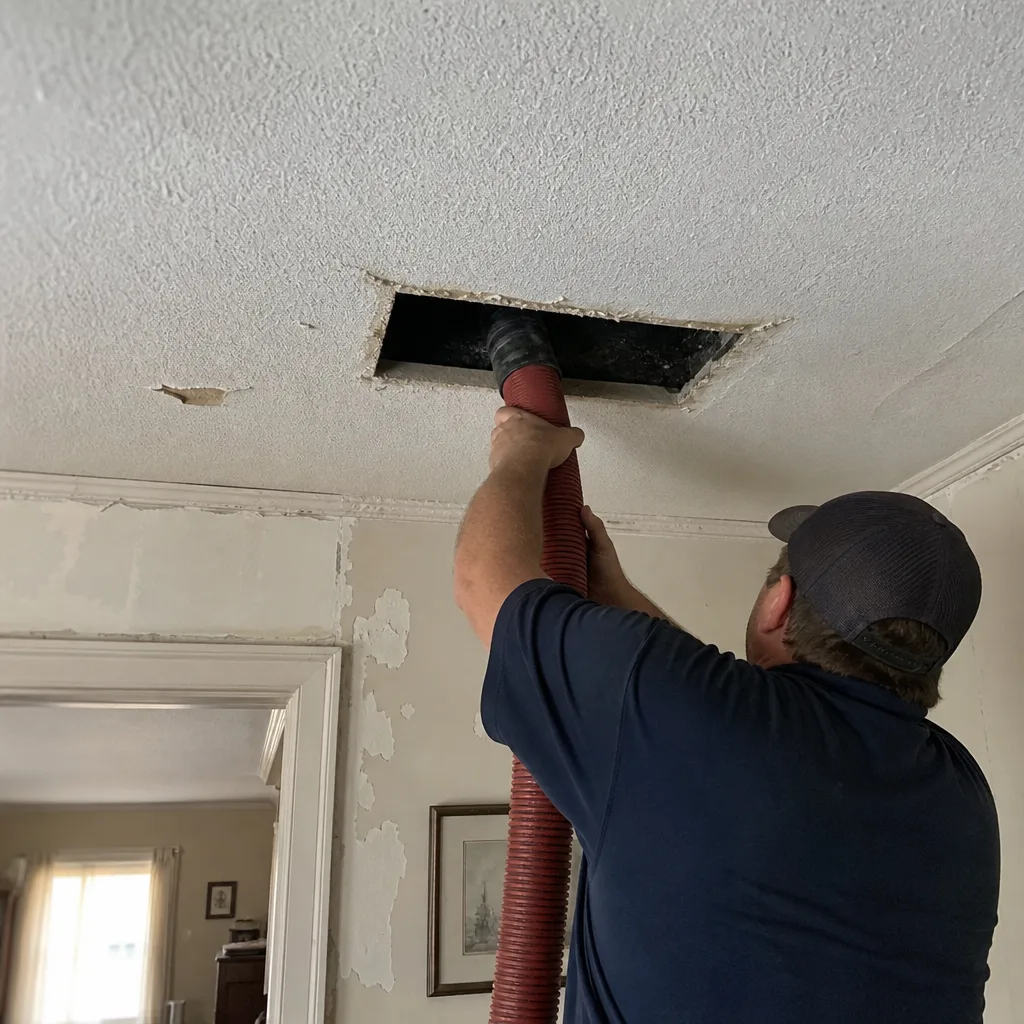 Before
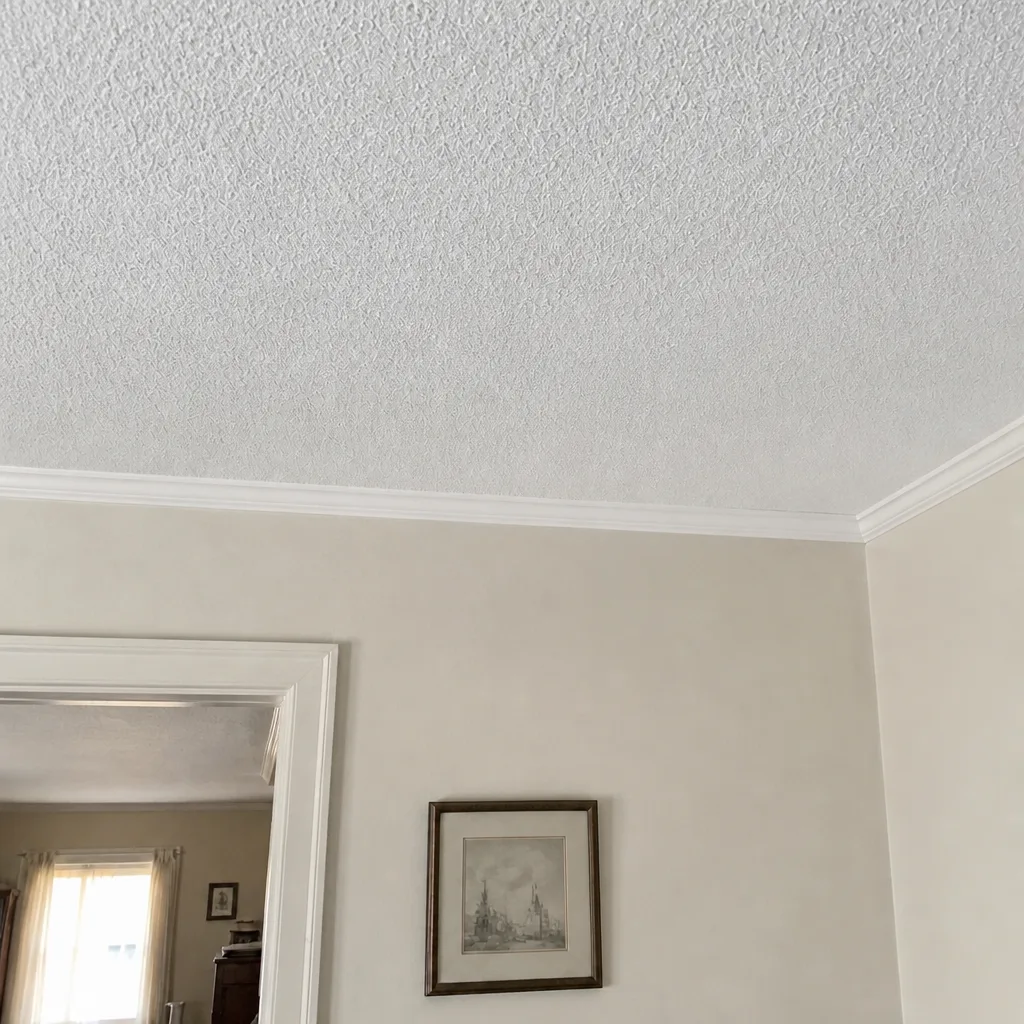 After
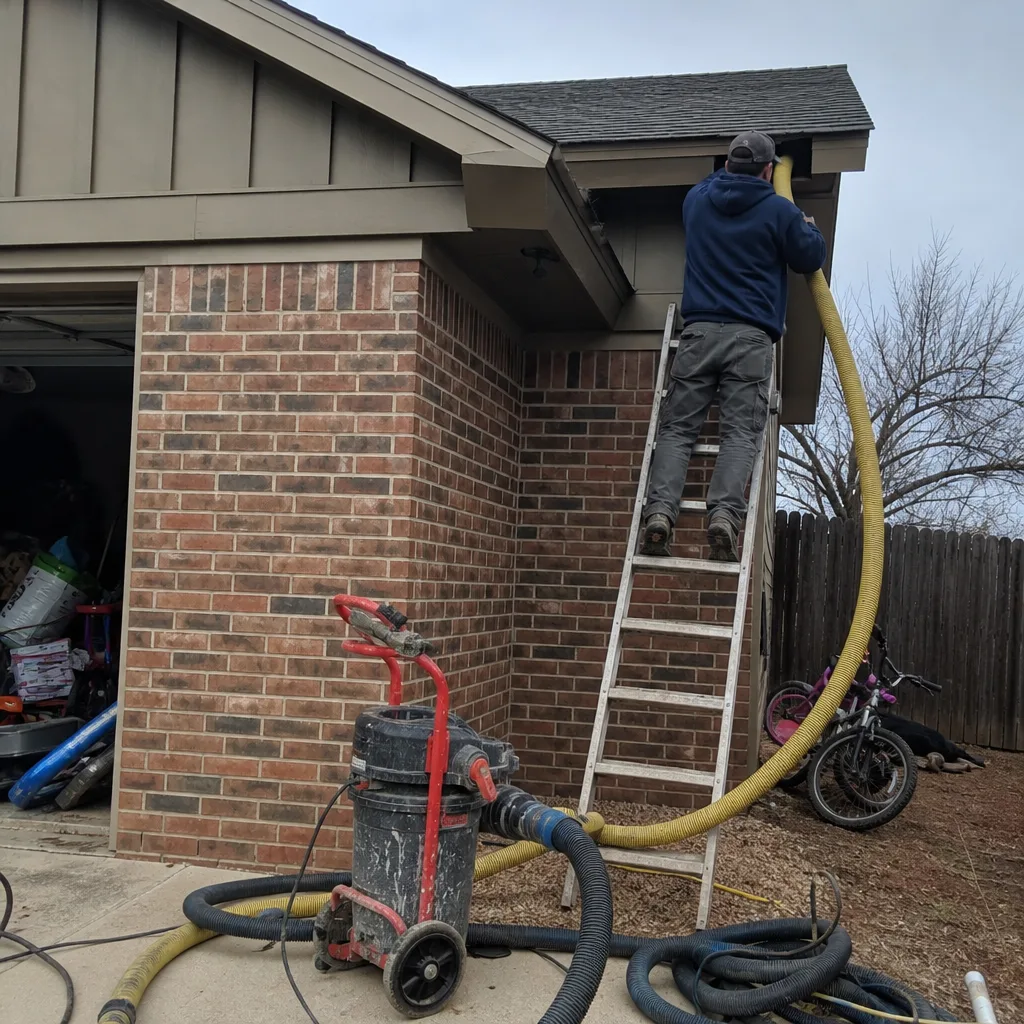 Before
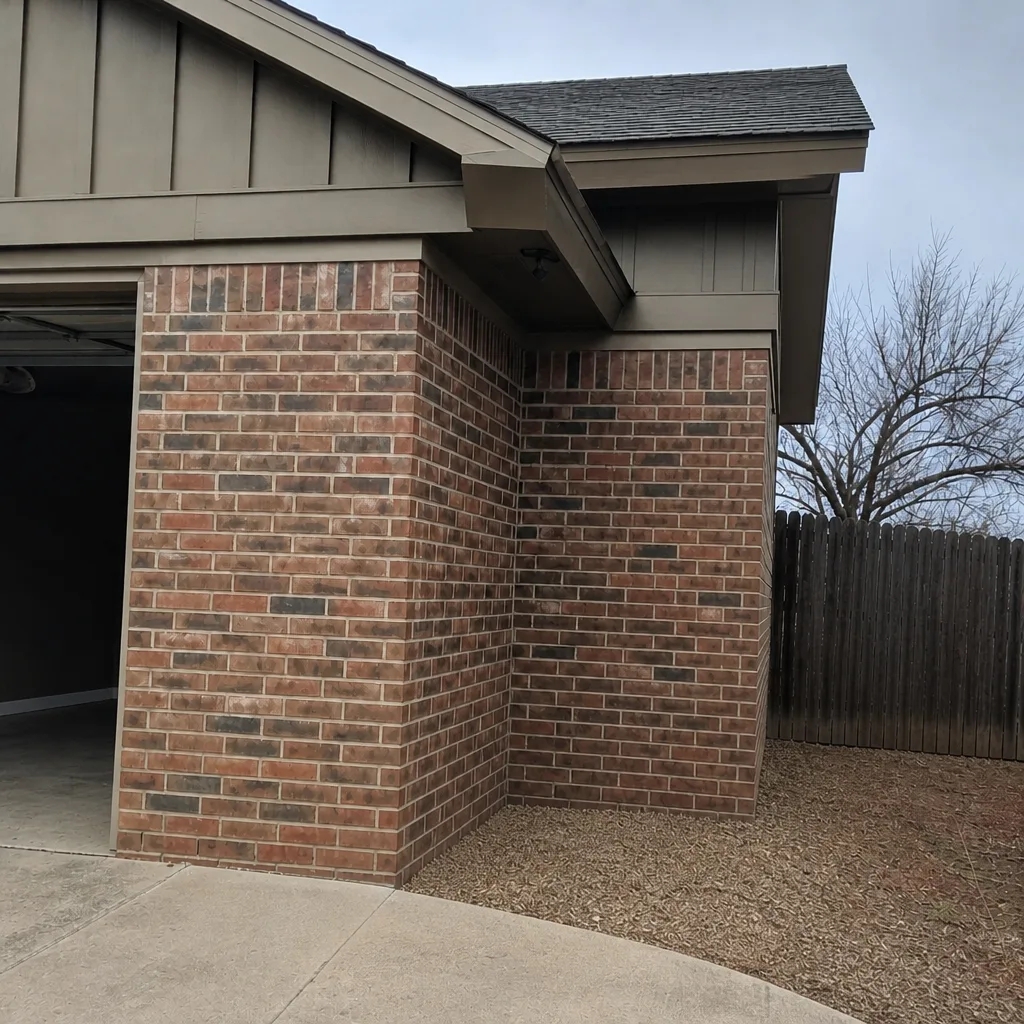 After
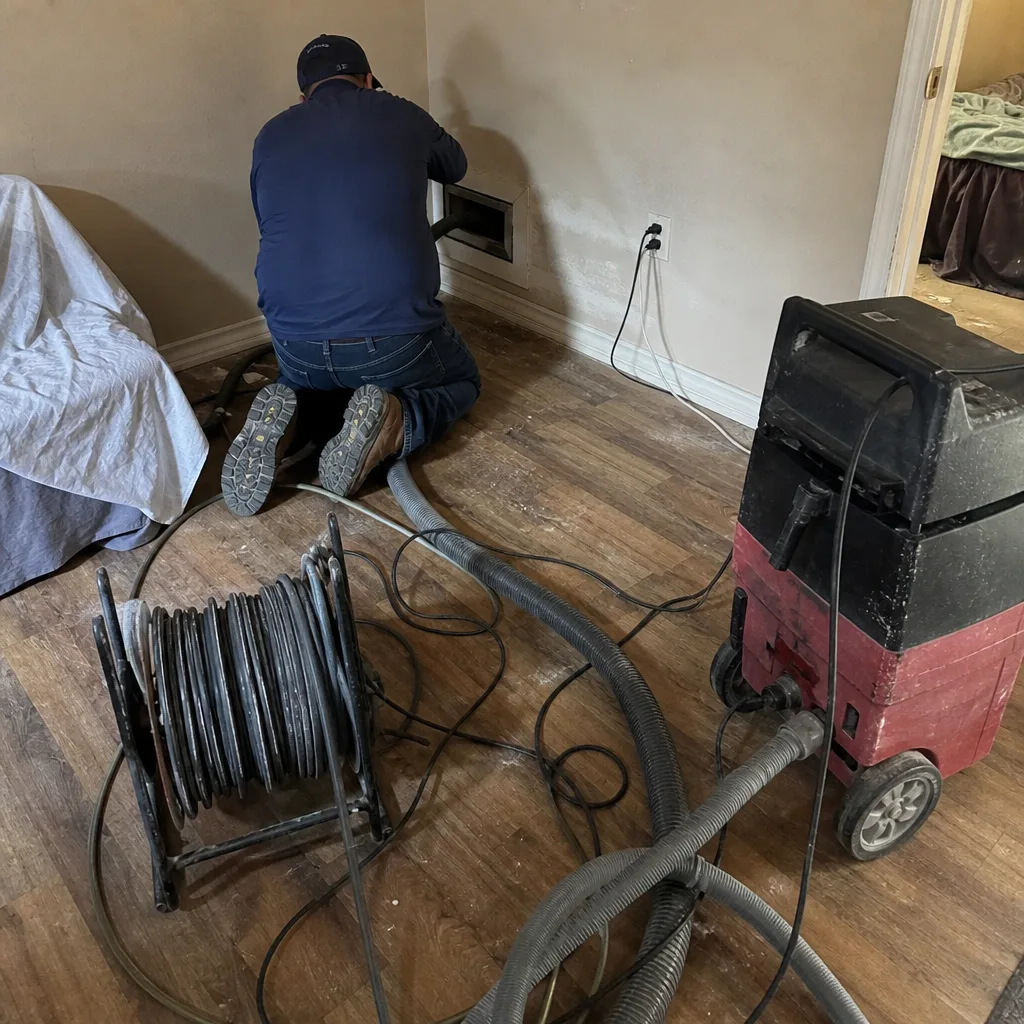 Before
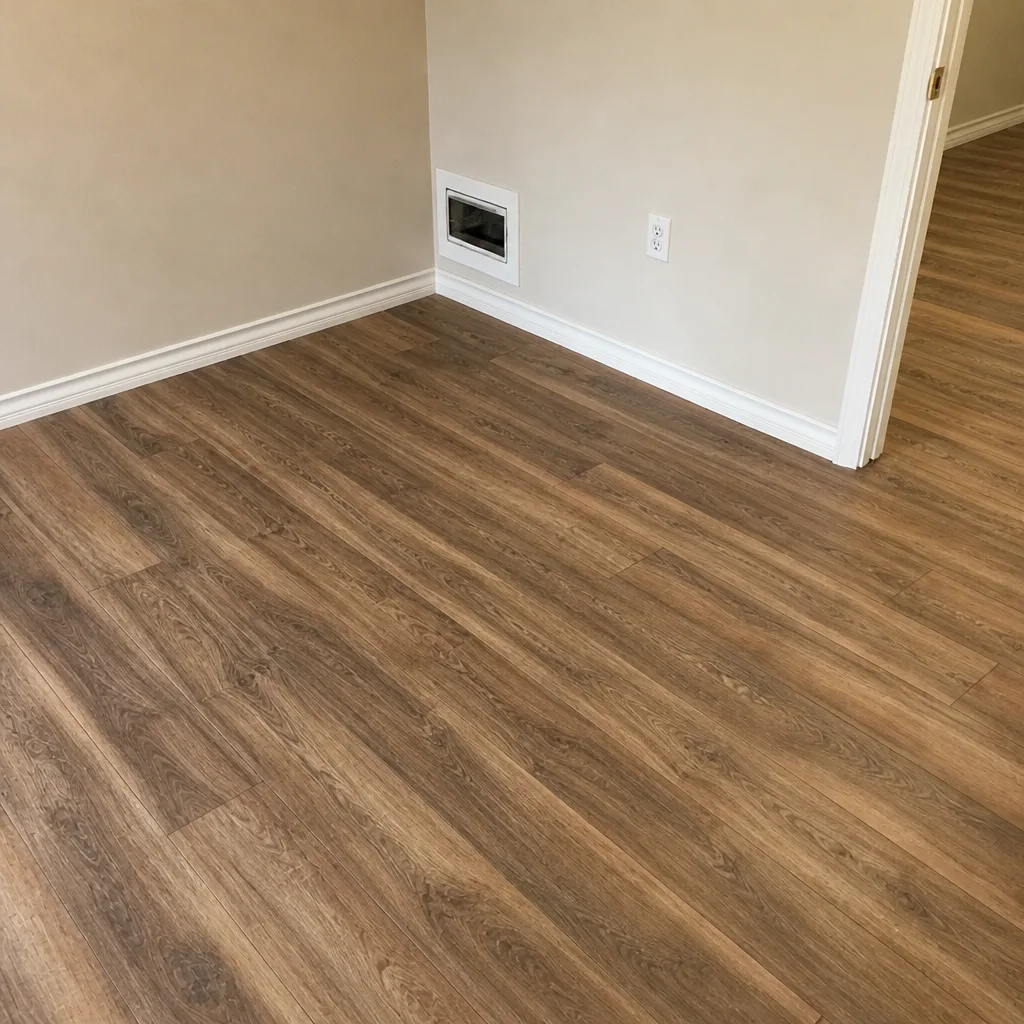 After
Common Mistakes to Avoid
- Wiping the dust away and calling it done. If the dust reappears in two days, the source wasn’t the register. Trace the pattern before you spend time on the surface.
- Hiring a company that shows up with a shop-vac and a leaf blower. Those tools don’t generate the suction or containment needed to actually clean a duct system. Professional-grade equipment like Rotobrush contact cleaning and Nikro negative-air HEPA exists for a reason.
- Cleaning ducts without fixing a visible moisture source. If there’s growth at a register and a leak feeding it, the cleaning resets the clock instead of solving the problem. Find the moisture first.
- Skipping the post-renovation cleaning. A homeowner who wraps up a remodel and assumes normal routine cleaning will cover it is usually wrong. Drywall dust needs to come out within weeks, not seasons.
- Ignoring the dryer while treating the HVAC. Long dryer cycles with a clean lint filter point to a vent restriction. If you’re booking a duct cleaning, add the dryer vent while you’re at it.
- Accepting a low coupon price that grows on-site. In this trade, a bait-and-switch ending is the number one complaint. Ask for a flat price per system agreed before any work begins, and ask whether you’ll see before-and-after photos of your own ducts.
- Booking based on a phone price alone. In Norman, a legitimate quote walks the system and looks at the return side, the branch layout, and any signs of moisture. If the company will quote the whole job before seeing it, expect surprise add-ons.
When to Call a Professional
Settled dust on your registers isn’t a call. Dust returning within two days, visible growth at a grille, musty odor that follows a specific pattern, post-renovation fallout, and a system that runs longer than it used to are all worth booking a visit for. Those signs point to a specific cause that needs real equipment to identify and address properly. The same goes for dryer cycles that keep getting longer.
We bring Rotobrush and Nikro equipment to every visit. Contamination gets contained. Abatement Technologies filtration handles the homes with active debris problems. Aprilaire and Honeywell product integration is available if the visit turns up an opportunity to improve filtration at the air handler. One company handles the clean, the repair, and the filter upgrade rather than three contractors.
Duct Cleaning Norman offers free estimates in Norman. Call (866) 493-6592. We answer 24/7. Fast dispatch from 7am to 7pm, Sunday through Friday.
Frequently Asked Questions
Dust that returns to a register within 48 hours of wiping, musty odor tied to a specific pattern, visible growth at a supply grille, recent renovation debris in the system, or a system running longer than usual are the signals that point to a real problem. Ordinary settled dust on a register face isn’t. Our technicians have up to 13 years of experience reading these signs during a walkthrough, and the estimate is free. Call (866) 493-6592.
Yes, to a point. Every home has some settled dust, and a newer home still accumulates it on register faces over months. The pattern to watch is speed of return. If dust reappears within two days of wiping, that’s not normal settling, it’s material moving through the system. Call (866) 493-6592 and describe where you’re seeing it.
Room-specific dust is one of the clearest diagnostic signs and it usually points to a branch duct problem rather than broad debris. A broken connection, a collapsed section of flex duct, or a leaking branch upstream of that room is the most likely cause. If it’s a single-room issue, tell the technician which room before you book. Call (866) 493-6592 for a free estimate.
Most homes don’t need it on a fixed schedule. The triggers are events: a renovation, a visible moisture problem, a system that starts behaving differently, or clear evidence that debris is being actively pushed or pulled through the system. A well-sealed system with a good filter can go years between cleanings. If you’re unsure, call (866) 493-6592 and we’ll walk through what you’re seeing.
It means organic material is growing where moisture is present. The grille is where you happen to see it; the moisture source is usually the coil drain pan, a disconnected condensate line, a roof or attic leak, or a duct routed through a damp crawlspace. Cleaning without locating the moisture source doesn’t solve it. We clean and repair ducts, and if the growth is on structural surfaces we’ll point you to a remediation specialist. Call (866) 493-6592 for an inspection.
Yes, if your dryer is taking longer than it should, running hot, or the exterior flap isn’t opening fully. Dryer vent cleaning closes a safety gap that many duct cleaning companies skip. Combining it with a duct cleaning visit handles both airflow paths in one call. Call (866) 493-6592 for a free estimate on both.
The Bottom Line
The warning signs that matter aren’t the ones on most lists. They’re the patterns: dust that returns fast, odor tied to a specific trigger or room, growth that won’t stay gone without fixing the moisture behind it, and performance that’s slipping in ways a homeowner can measure. Norman’s humidity amplifies all of them, and the fix depends on matching the symptom to the right part of the system. Reputable service means professional equipment, a flat price per system agreed before work begins, and before-and-after photos of your own ducts. Free estimates are available for any of these signs. Call (866) 493-6592. We answer 24/7. Fast dispatch from 7am to 7pm, Sunday through Friday.
Written by the team at Duct Cleaning Norman.