
Last updated November 14, 2026
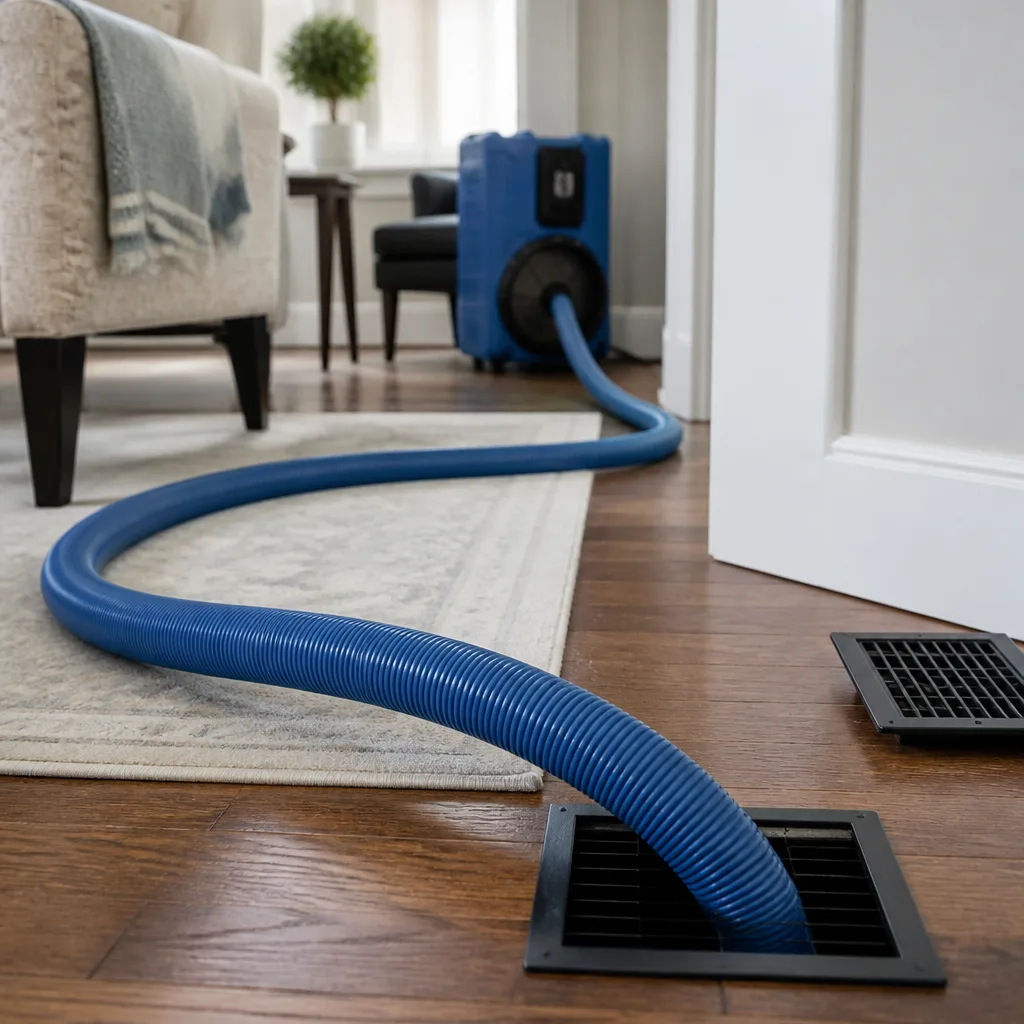 Whole-home duct cleaning
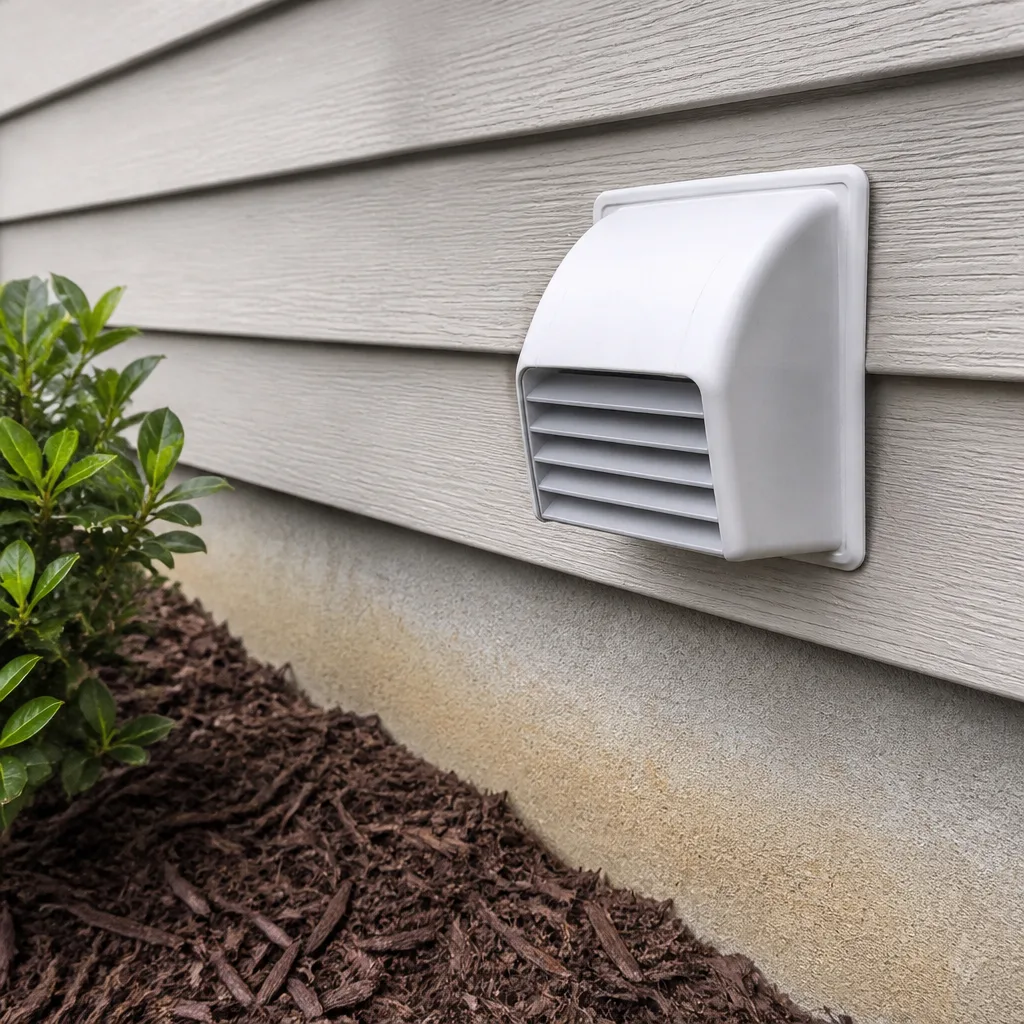 Dryer vent cleaning
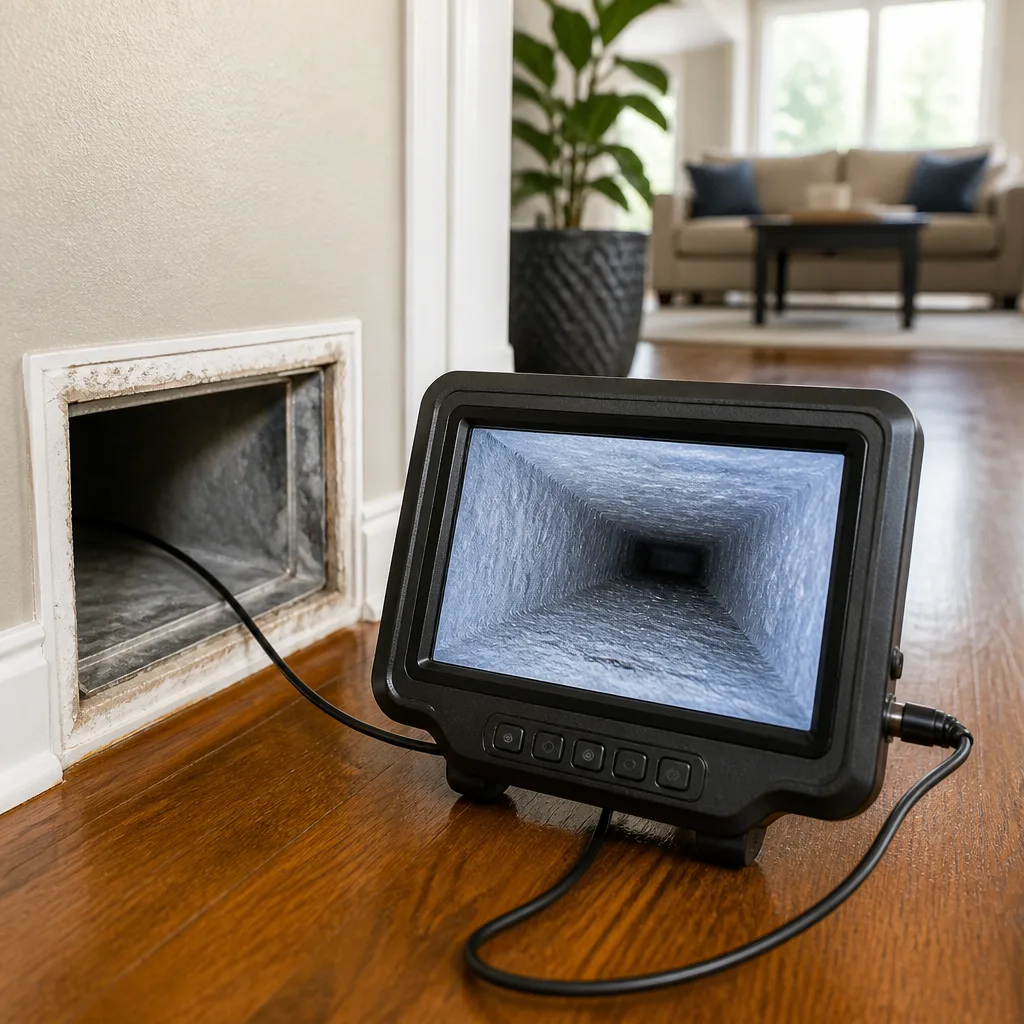 Camera inspection
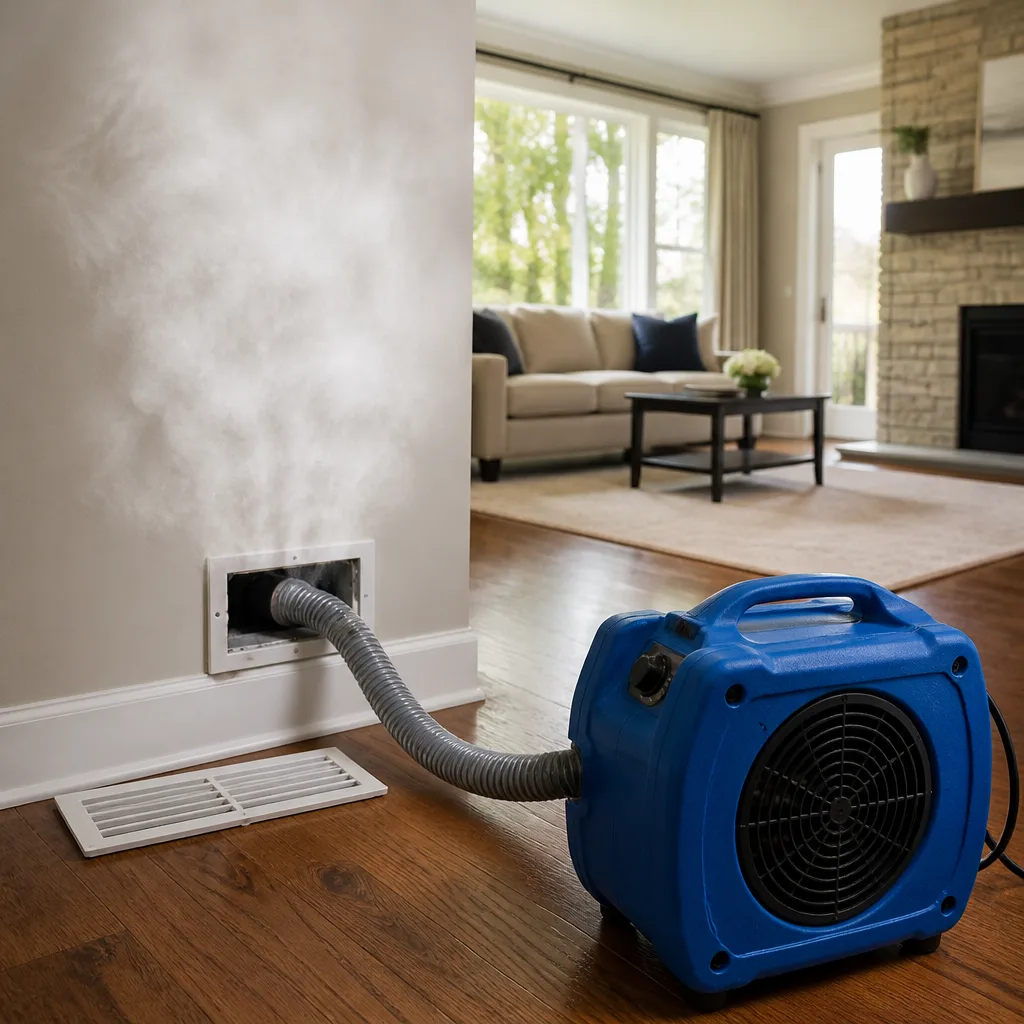 Sanitizing & deodorizing
Whole-system duct and dryer vent check with before-and-after photos - you see exactly what came out of your vents
That "$99 whole-house special" is a bait ad - the real number appears once they are in your hallway, or the "clean" is a shop-vac at the register. We photograph the inside of your ducts before and after instead.
The Complete Guide to Air Duct Cleaning in Norman
Most air duct cleaning in Norman that gets sold to homeowners isn’t really cleaning. It’s a vacuum hose pushed into a few visible vents and maybe the return, a bill handed over, and a promise that the basement got quieter. The part that matters – the source removal of debris sitting in the run of the duct, the plenum, the boots behind the wall – never happens. Here’s the number that tells the difference before anyone gets out of a truck: a shop vac pulls roughly 100 CFM of suction. A professional negative-air machine pulls 2,000 to 4,000 CFM. That gap is why some contractors refuse to name their equipment. This guide walks through the actual mechanical process, tool by tool, so you can judge a bid before the driveway fills up. Norman homes have their own patterns – clay soil, storm season, mixed duct materials – and they change what a legitimate job looks like.
Quick Answer
Legitimate air duct cleaning in Norman means source removal: agitating the debris inside the ducts while a truck- or trailer-mounted negative-air machine holds the whole system under vacuum, then capturing the loosened material in a HEPA or filter bank before it can escape into the house. A quality job takes several hours, uses rotating brush or air-whip agitation on every branch, and ends with photos or a walkthrough showing what came out. If a quote takes less than an hour, or nobody mentions negative pressure, it’s not the same service.
Styles & brands we work with
- Whole-home duct cleaning
- Dryer vent cleaning
- Camera inspection
- Sanitizing & deodorizing
Table of Contents
- What a Real Duct Cleaning Job Actually Involves
- Why Norman’s Soil and Storm Season Change the Job
- Duct Material Changes the Tool: Flex, Sheet Metal, Fiberglass
- Equipment: What Rotobrush, Nikro, and Abatement Technologies Do
- Before, During, and After: What You Should See
- Full Source Removal vs. a Surface Pass
- When Cleaning Isn’t Enough – Duct Repair and Upgrades
- The Other Airway: Dryer Vent Cleaning
What a Real Duct Cleaning Job Actually Involves
The mechanical process has three parts, and each one has a specific job. Skip any of the three and you’re paying for a vacuum sweep, not duct cleaning.
- Negative pressure containment. A truck-mounted or trailer-mounted vacuum connects to the main trunk through a large hose, and the machine holds the entire duct system under vacuum the whole time work is happening. This is what stops loosened debris from drifting back up through the registers into the rooms.
- Agitation. A rotating brush or compressed-air whip runs through each branch and trunk, scuffing packed dust off the duct walls. Vacuum alone doesn’t move material that has clung to the metal for a decade. Agitation is what makes the vacuum useful.
- Debris capture. The vacuum pulls the loosened material through a HEPA filter or filter bank before it hits the machine. On jobs where source material is heavy or mold spores are possible, an additional air scrubber runs inside the house to keep airborne particulate down while technicians work.
All three parts run at once. A technician who vacates the trunk but doesn’t agitate the branches gets the crumbs and leaves the coating. A technician who agitates without containment just sprays dust through the home. Every register in the house is covered and every branch is worked – not sampled. After cleaning, the registers go back on, the furnace filter is checked, and the system is cycled to confirm airflow. On a Norman house with a typical single-plenum system, the whole thing runs a few hours. Larger homes, dual systems, or heavily fouled ductwork can run longer.
Why Norman’s Soil and Storm Season Change the Job
Norman sits on clay-heavy soil, and that changes both how ductwork settles and what ends up inside it. When the ground swells and shrinks with the seasons, slab-based ductwork can shift slightly, opening hairline gaps at joints. Those gaps become pathways for fine clay dust to enter the return side. Homes on pier-and-beam foundations leak differently – through subfloor penetrations – but the result is the same: a slow accumulation of fine, powdery particulate that regular filter changes won’t catch because it never makes it to the filter.
Storm season adds another layer. When high winds push fine grit and airborne debris into the exterior of a house, some of it works in through the return chase or attic duct penetrations, especially on older homes where duct boots weren’t sealed tightly. Post-storm, homeowners often assume their HVAC system is fine because the air conditioner still runs. But the debris from that week of wind gusts is sitting in the return trunk and the boots, and every time the system cycles it’s been sending fine particulate back into living space. A cleaning that follows storm season will pull a specific pattern of grit – finer, sandier, less oily – that looks different from the normal dust load. That’s the check: if the material coming out is sandy, the source is exterior.
Norman’s duct cleaning in Norman market reflects this. A home that was new construction a few years ago and a home near the university that has been through several rounds of renovation will need different levels of attention. Duct cleaning is a per-home job; the contamination profile tells the technician what tools to bring.
Duct Material Changes the Tool: Flex, Sheet Metal, Fiberglass
There’s no single tool that works on every duct system, and a contractor who uses one method for everything is a contractor who hasn’t looked. The three common materials in Norman homes need to be handled differently:
- Flex duct. The corrugated plastic inside a flex run holds dust in the ridges. Too much agitation shreds the liner; too little leaves the ridges coated. A soft-bristle rotating brush at controlled speed is the right tool. Flex runs also sag over time, which creates low spots where debris collects.
- Sheet metal. Rigid galvanized ductwork takes stronger agitation – a stiffer brush head or air whip – because the walls are smooth and debris can be scuffed hard. Joints and seams are the places to verify: those are the spots where dust packs and where flex tape or sealant may have failed.
- Fiberglass-lined duct board. This is the material that punishes an aggressive technician. The liner is a soft fibrous mat, and anything stiffer than a soft brush tears it. Once a liner is torn, the fiberglass itself becomes the particulate source. Cleaning fiberglass-lined ducts requires lower pressure, softer tooling, and, in some cases, a decision to encapsulate rather than clean aggressively.
Ask the technician on the phone which ducts you have and which tool they’ll use on each. A good answer is specific (“flex branches with a soft brush, main trunk with the air whip, your return is lined so we’ll go low-pressure”). A vague answer (“we’ve got the right equipment”) tells you less than nothing.
Equipment: What Rotobrush, Nikro, and Abatement Technologies Do
Professional duct cleaning in Norman runs on equipment a homeowner would never buy. The brands that matter are the ones a working contractor would recognize on sight.
Rotobrush is the standard contact-cleaning system most certified duct cleaning professionals specify. The brush head rotates against the duct wall while a vacuum port captures the loosened material at the brush itself. That proximity is why it works: the debris is collected inches from where it was dislodged, not pulled thirty feet away against airflow. On flex and sheet metal runs, that’s the difference between a real cleaning and a sweep.
Nikro covers the negative-air and HEPA side. A Nikro HEPA vacuum holds fine particulate in a high-efficiency filter rather than letting it exhaust back into the room. During work, a Nikro negative-air setup can keep a work area under containment while registers are off. This matters on Norman homes where fine clay dust is the load: a machine without proper HEPA filtration just recirculates the particle size that’s hardest on lungs.
Abatement Technologies is a name from remediation, not basic maintenance. Their air filtration equipment handles heavy particulate loads – the kind that shows up after a flood event, or in a house where renovation dust got pulled into the return. If a company has Abatement equipment on the truck, it can operate at that level. That’s a useful signal when comparing bids.
Air quality products integrate with the same visit. Honeywell and Aprilaire filtration components can be added to the return to capture finer particulate going forward. If a cleaning today and a filtration upgrade next year are both on your list, doing them together saves a second visit and often reveals problems you’d catch either way.
Before, During, and After: What You Should See
Here’s what the process should look like on a professional job, in order, so you know what to watch for.
Before work starts. The technician walks the house, finds every register and return, and puts down protective coverings. They check the furnace filter and the blower compartment. They connect the vacuum to the trunk or plenum. If they don’t ask where the main trunk is, they don’t know the system layout well enough to clean it.
During the work. Registers come off; branch ducts get cleaned one at a time. The vacuum runs continuously. There’s often a point where a technician pulls a brush head back out to reset it on a tough run – normal. If you hear the vacuum stop while a brush is still in the duct, that’s a problem: the debris being dislodged no longer has a place to go and it goes sideways through the house.
After the cleaning. This is where you judge the job. A legitimate technician shows you proof of work:
- Before-and-after photos of the ducts they cleaned, including at least one branch and the main trunk.
- A look at what came out, or a report on the debris volume and type.
- The return register and blower compartment cleaned, filter checked.
- Registers reinstalled and the system run to confirm airflow.
If a technician won’t show you the inside of a duct, that’s your answer about what was done. Duct Cleaning Norman has technicians with up to 13 years of experience, and photos are the baseline they work to.
Full Source Removal vs. a Surface Pass
The most common bait-and-switch in the trade is a “cleaning” that never gets below the surface. A shop vac at 100 CFM traces the top of a duct run, pulls off loose dust, and calls it done. Surface dust comes off; the packed material against the walls stays.
To tell which one you’ve been sold:
- Ask for a time estimate. Full source removal on a Norman single-system home runs several hours. A one-hour job is a surface pass.
- Ask about CFM. A real negative-air machine is rated in the 2,000 to 4,000 CFM range. If a technician can’t give a rough number, they either don’t know their equipment or don’t want you to know.
- Ask for the tool list. A legitimate tool list includes a rotating brush (or air whip) and HEPA vacuum. “Shop vac” on the list is the disqualifier.
- Ask about register count. Every register gets cleaned. If the quote names only “the main lines,” surface pass.
- Ask for proof. Photos of the inside of a duct, taken with the register off, before and after. A full job produces that; a surface pass doesn’t.
None of these questions should get a hesitant answer from a technician who’s set up for the job. If they do, the bid isn’t coming from a specialist.
When Cleaning Isn’t Enough – Duct Repair and Upgrades
Sometimes the cleaning reveals a problem. Common findings on older Norman homes:
- Disconnected flex runs at a boot or trunk takeoff, leaking air into an attic or wall cavity.
- Failed flex tape at sheet metal seams, allowing outside air and soil dust into the return.
- Torn or crushed flex duct in an attic run, restricting airflow to a bedroom.
- Sagging flex duct creating a low spot where debris collects and moisture sits.
Cleaning a duct system that has a break in it just means the future dust comes back in through the break. Duct repair belongs in the same visit when the technician finds the problem, and Duct Cleaning Norman includes air duct repair as one of three core services for exactly that reason – so a cleaning doesn’t turn into “call a second contractor.” Honeywell and Aprilaire products are usually part of the repair visit too: an upgraded return filter or a whole-house filtration box, installed at the same time the duct is sealed, is a cleaner upgrade than bolting it on six months later.
The Other Airway: Dryer Vent Cleaning
A dryer vent is a duct. It’s the one duct in the house with a fire risk attached to it. Lint is combustible, and a clogged dryer vent traps heat that eventually has nowhere to go. That’s why dryer vent cleaning belongs in the same conversation as duct cleaning, and why doing them in the same appointment is more thorough than splitting them.
Signs a Norman dryer vent needs attention:
- The dryer finishes but the clothes are still damp.
- The outside dryer vent flap doesn’t pop open fully during a cycle.
- The top of the dryer gets hot to the touch.
- Lint accumulates around the door seal faster than usual.
Professional cleaning runs a brush or air whip the full length of the vent line and pulls the lint column out. On a home where the dryer vent runs through an attic or a wall chase with a couple of elbows, this is not a job for a shop vac and a garbage bag. Certified path for safety, and cleaners who skip it leave the job half done.
Common Mistakes to Avoid
- Hiring on price alone. A quote that undercuts every other bid by half usually means a shop vac and an hour. The price gap is the surface pass, not a discount.
- Not asking about equipment. If the technician can’t name the vacuum model and give a rough CFM figure, they aren’t running professional-grade containment. Rotobrush and Nikro equipment is identifiable; if it’s not there, you’ve been pitched a sweep.
- Skipping the return. The return is where the dust load actually starts – it’s the negative side of the system. Cleaning only the supply branches leaves the source untouched. Ask for confirmation the return and blower compartment were cleaned.
- Cleaning a torn flex duct. A break in the flex upstream of an attic run pulls particulate straight from the cavity. Cleaning without repairing the run just gives the debris a fresh place to land. Duct cleaning and duct repair belong together.
- Ignoring the dryer vent. On Norman homes with a vent line long enough to run through the attic, lint accumulates at the corners. Cleaning ducts without checking the dryer vent leaves the more dangerous of the two airways untouched.
- Assuming storm season dust is harmless. Fine grit that works in through an attic penetration is particle-sized material the filter can’t stop. Post-storm, if the system’s been running for weeks with a heavier dust load, the filter change isn’t the whole story.
- Trusting “we cleaned everything” without proof. A photo of the register opening, taken with the cover off, is the single most useful piece of evidence a job happened. Ask for it on every job.
See the difference
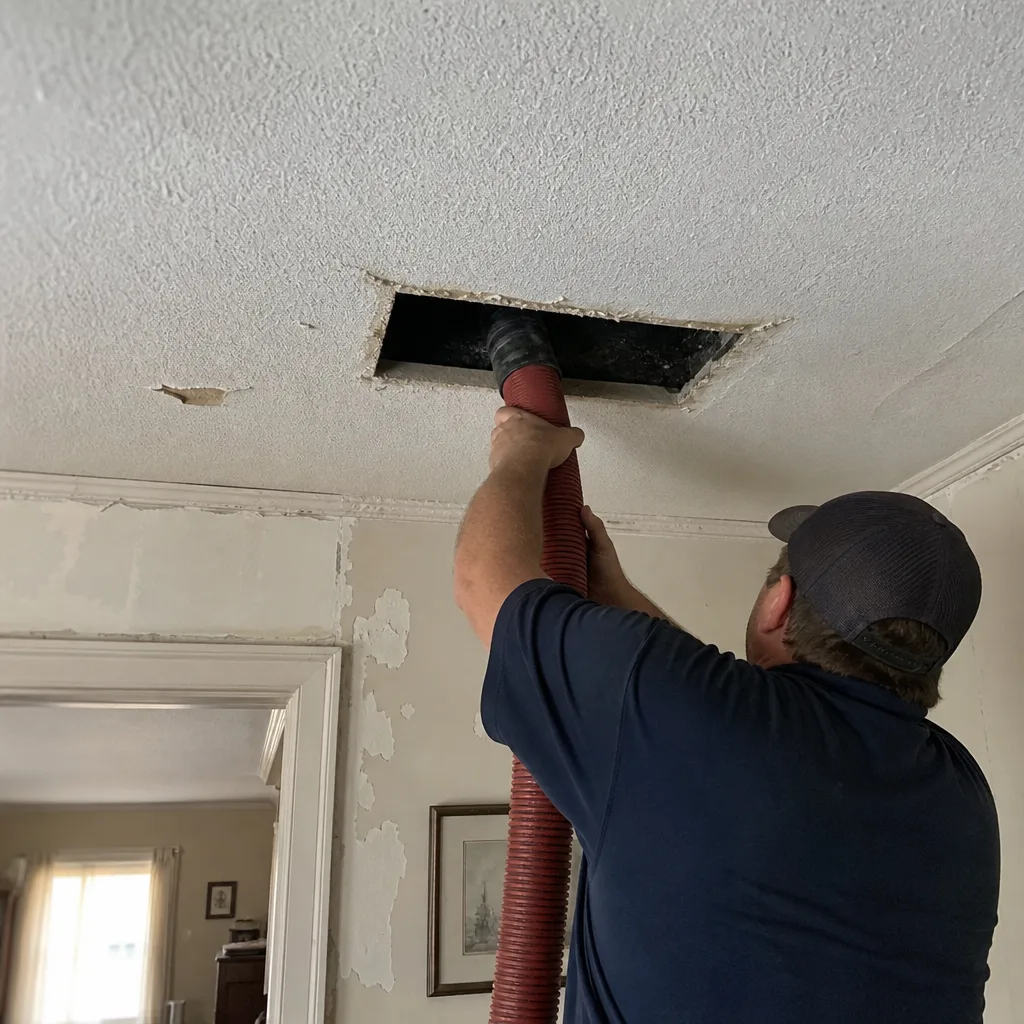 Before
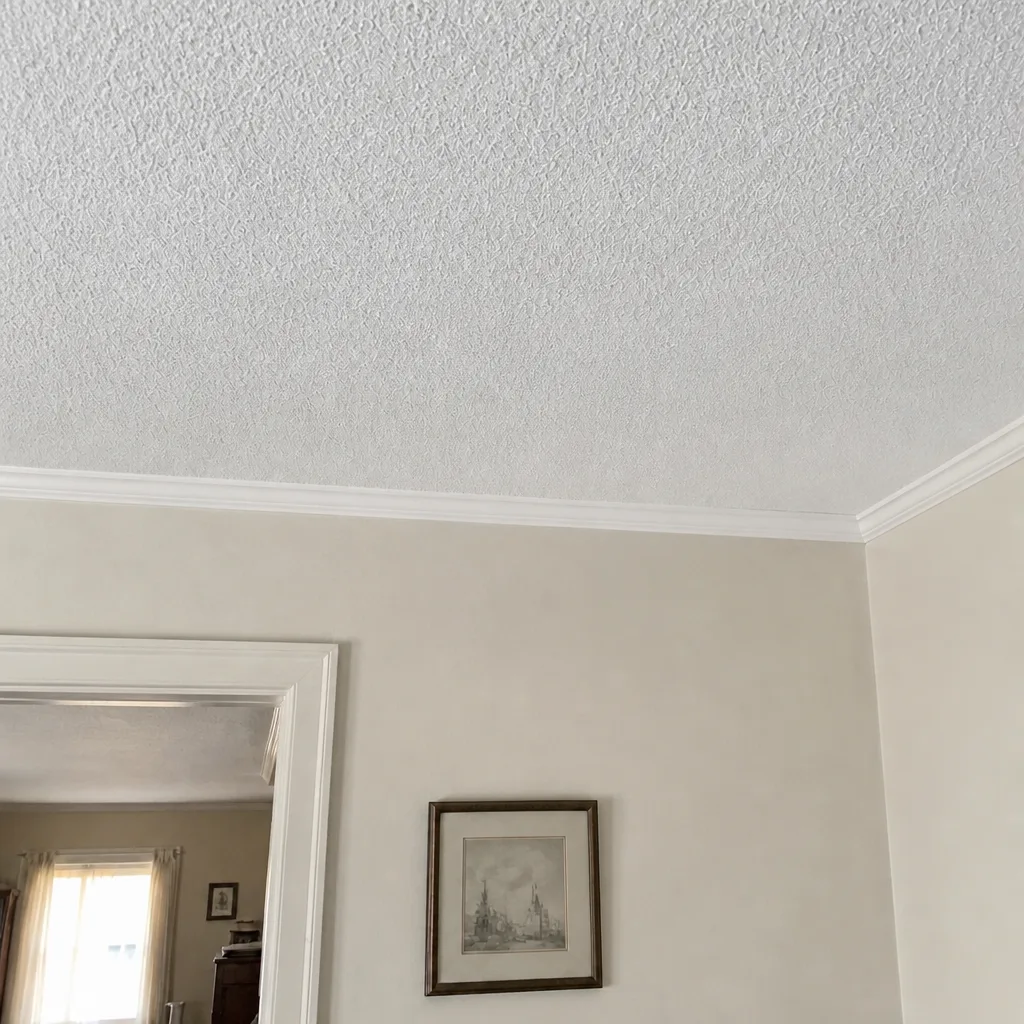 After
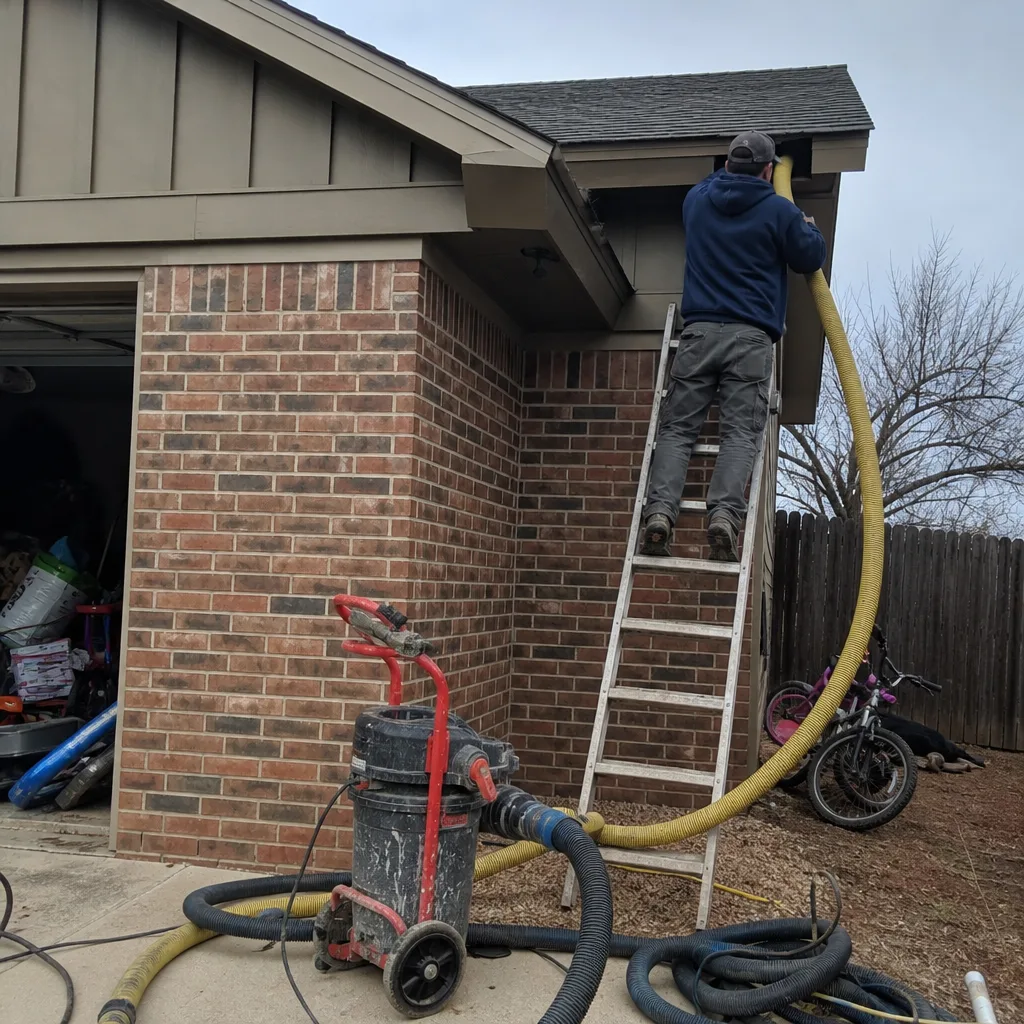 Before
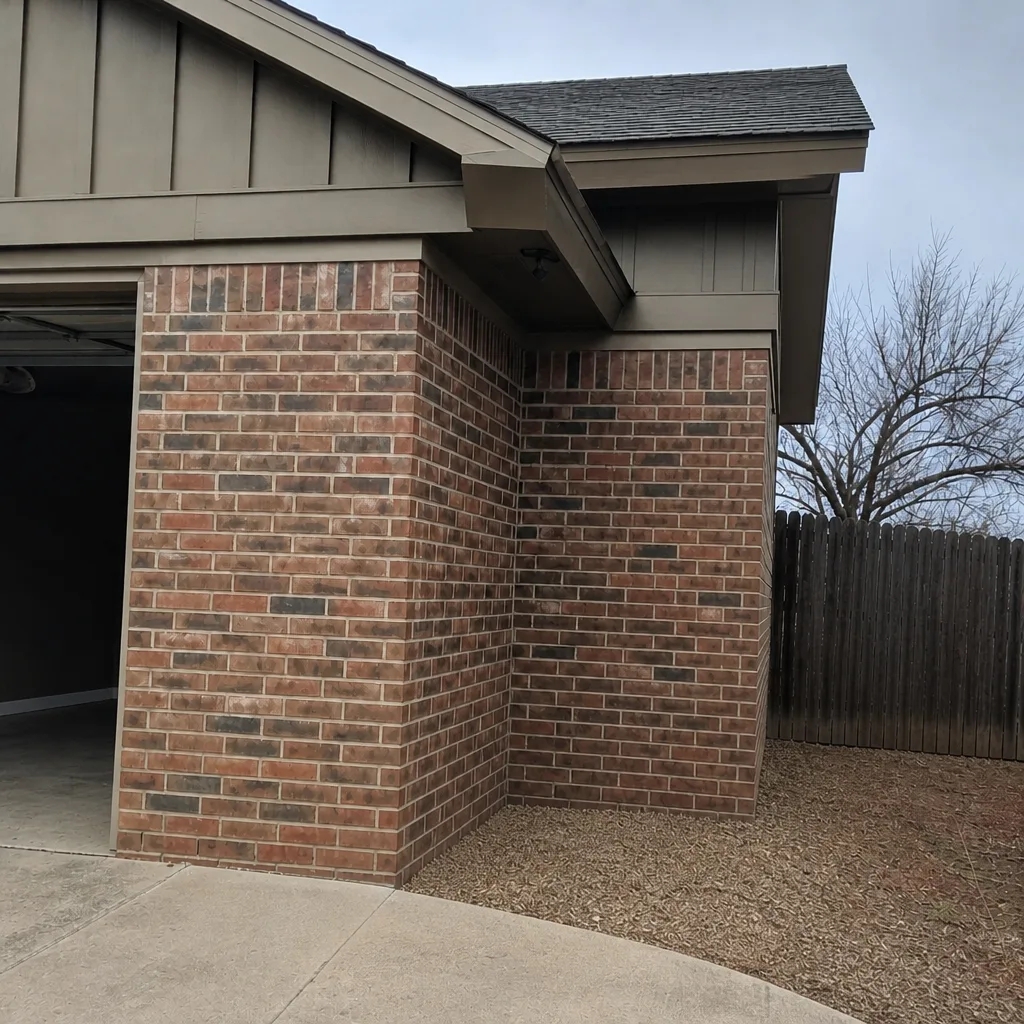 After
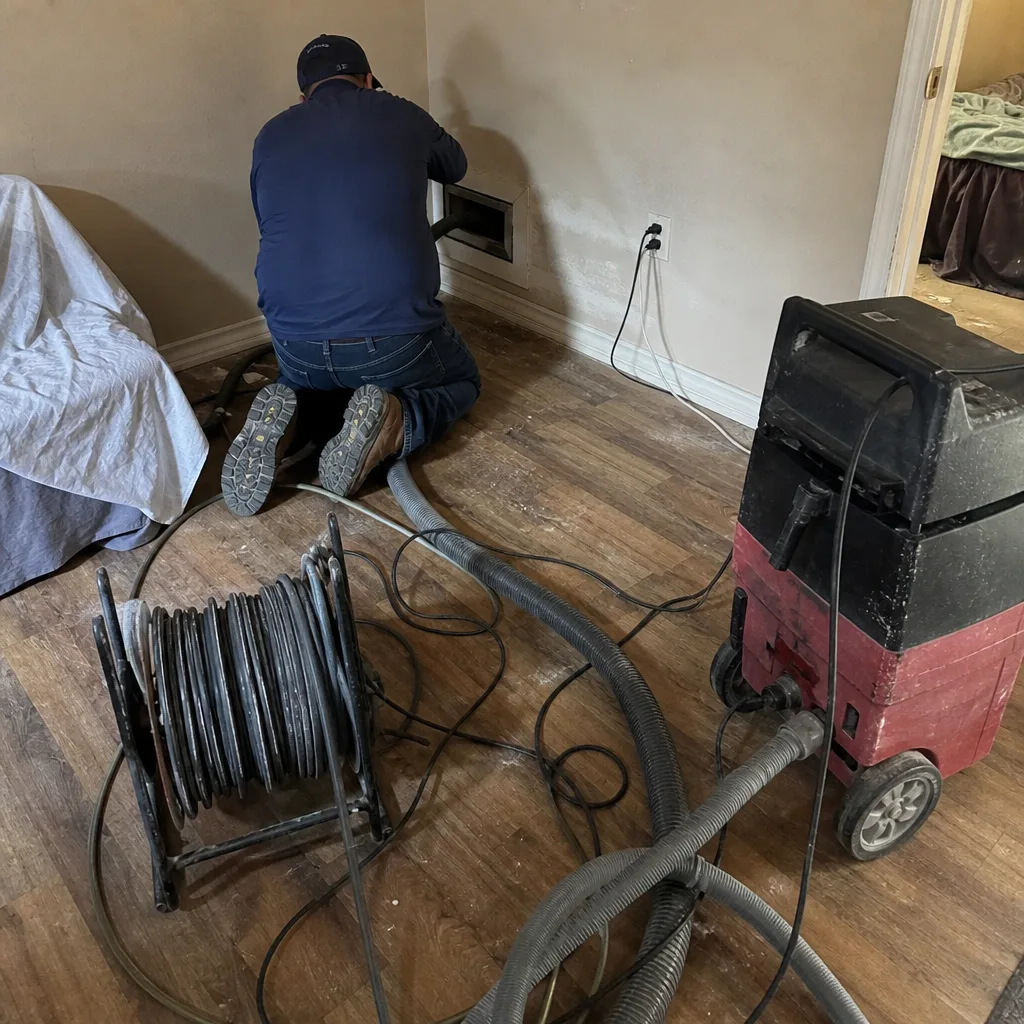 Before
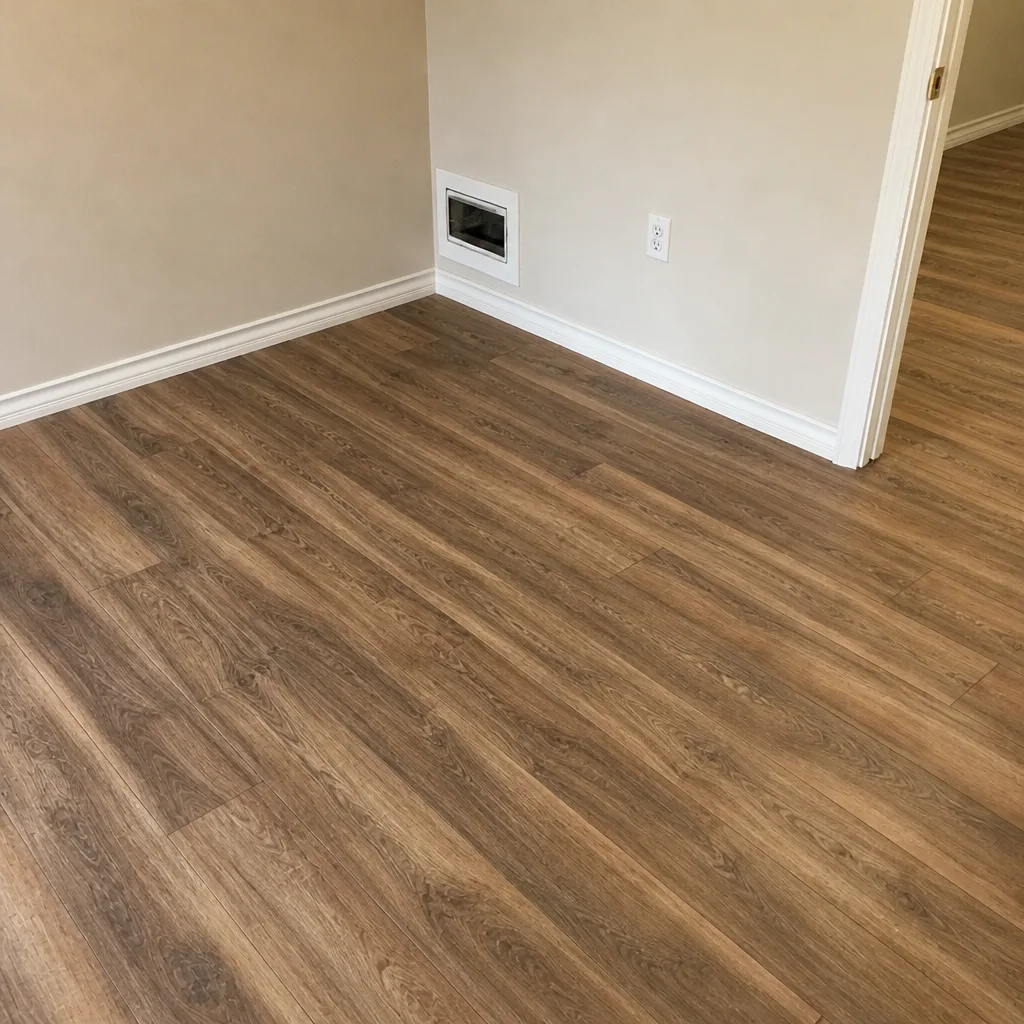 After
When to Call a Professional
Call a professional when any of these are true: the house had a renovation recently and the return saw drywall dust; a filter hasn’t stopped the visible dust accumulation on registers; the system recently pulled in fine grit from a wind event; someone in the home has asthma or allergies that seem worse indoors; you’ve just moved in and don’t know the cleaning history; or the dryer is taking longer than usual to dry a load. Visible debris on a register face is the simplest tell. If a technician can’t show you the inside of the duct when asked, that’s the next call to make.
Duct Cleaning Norman offers free estimates in Norman – call (866) 493-6592. We answer 24/7. Fast dispatch from 7am to 7pm, Sunday through Friday.
Frequently Asked Questions
Air duct cleaning in Norman is priced per job by written estimate, and the estimate is free. There’s no per-vent pricing and no coupon teaser – the price you agree before work starts is the price on the invoice after. Call (866) 493-6592 to schedule the walkthrough.
A full source-removal cleaning takes several hours on a typical Norman single-system home. Larger homes, dual-system houses, or systems that haven’t been cleaned in a long time can run longer. A one-hour “cleaning” is a surface pass, not source removal.
Both. Flex duct takes a soft-bristle rotating brush at controlled speed so the corrugated liner isn’t damaged. Sheet metal takes stronger agitation through a stiffer brush head or an air whip. Fiberglass-lined duct board takes the lowest pressure of the three, because the liner is soft and a torn liner becomes the problem instead of the fix.
If the technician finds a disconnected or crushed run during cleaning, we can repair it in the same visit. Cleaning a duct with a break in it pulls unfiltered air from the wall cavity; the repair is what makes the cleaning last. Duct Cleaning Norman handles air duct repair as a standalone service.
Yes. Dryer vent cleaning is a core service alongside air duct cleaning, and it’s often done in the same appointment. Lint buildup inside a dryer vent is a recognized residential fire risk, and a vent run through an attic or wall chase is not something a shop vac can handle safely.
Every few years is a reasonable baseline for most Norman homes, and sooner after a renovation, a storm event that pushed grit into a return, or if a household member has respiratory sensitivity. There’s no uniform rule that fits every house; the contamination profile tells you when it’s time. Call (866) 493-6592 for an assessment.
The Bottom Line
Duct cleaning in Norman comes down to three questions you can ask any contractor before they arrive: what equipment do you run, how many CFM does your negative-air machine pull, and will you show us photos of the inside of a duct when the job is done. A Rotobrush contact-cleaning system, a Nikro HEPA vacuum, and an Abatement Technologies setup for heavier loads are the equipment signals that distinguish source removal from a surface pass. Norman’s clay dust and storm-season grit are what make the difference visible – sandy material in the return means the source is exterior, and the tool list has to match. Duct Cleaning Norman specializes in three services – air duct cleaning, dryer vent cleaning, and air duct repair – because those three address the whole airflow system at once. Call (866) 493-6592. We answer 24/7. Fast dispatch from 7am to 7pm, Sunday through Friday.
Written by the team at Duct Cleaning Norman.