
Last updated November 14, 2026
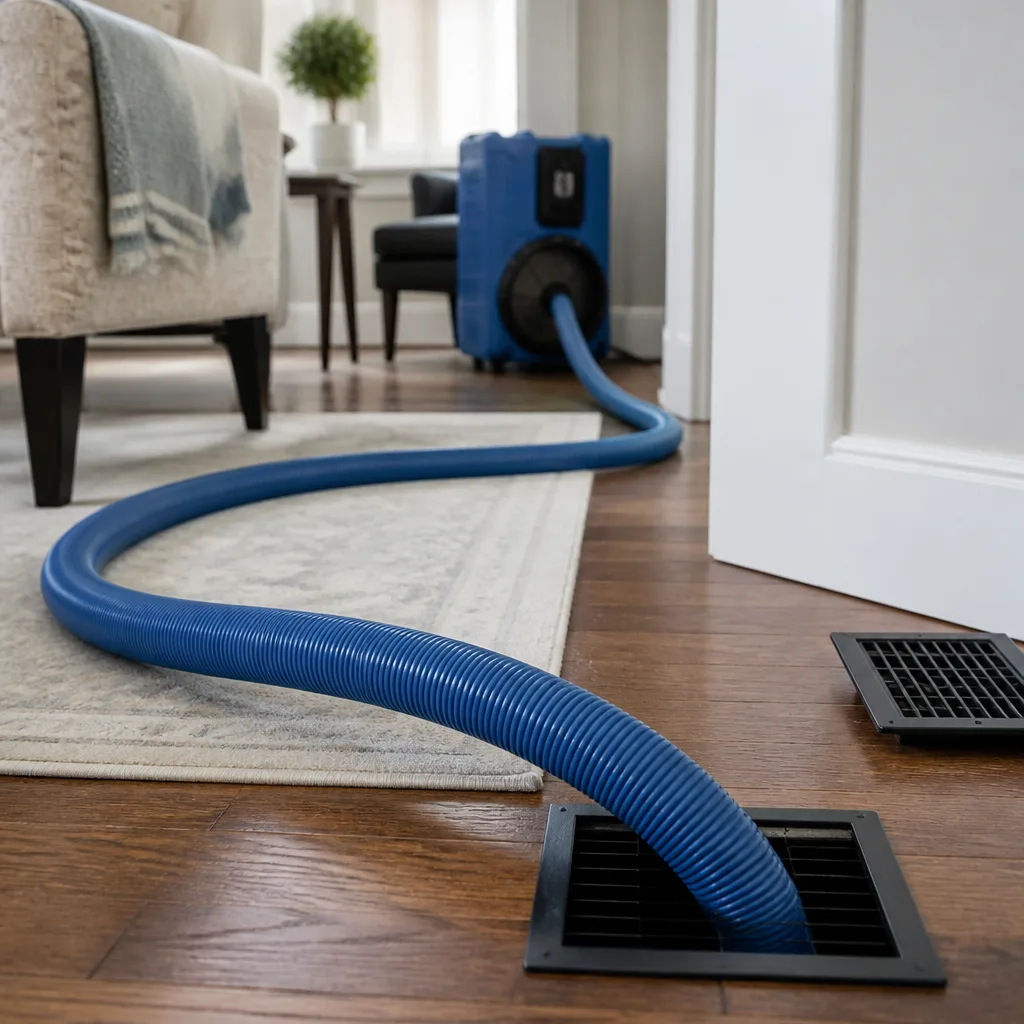 Whole-home duct cleaning
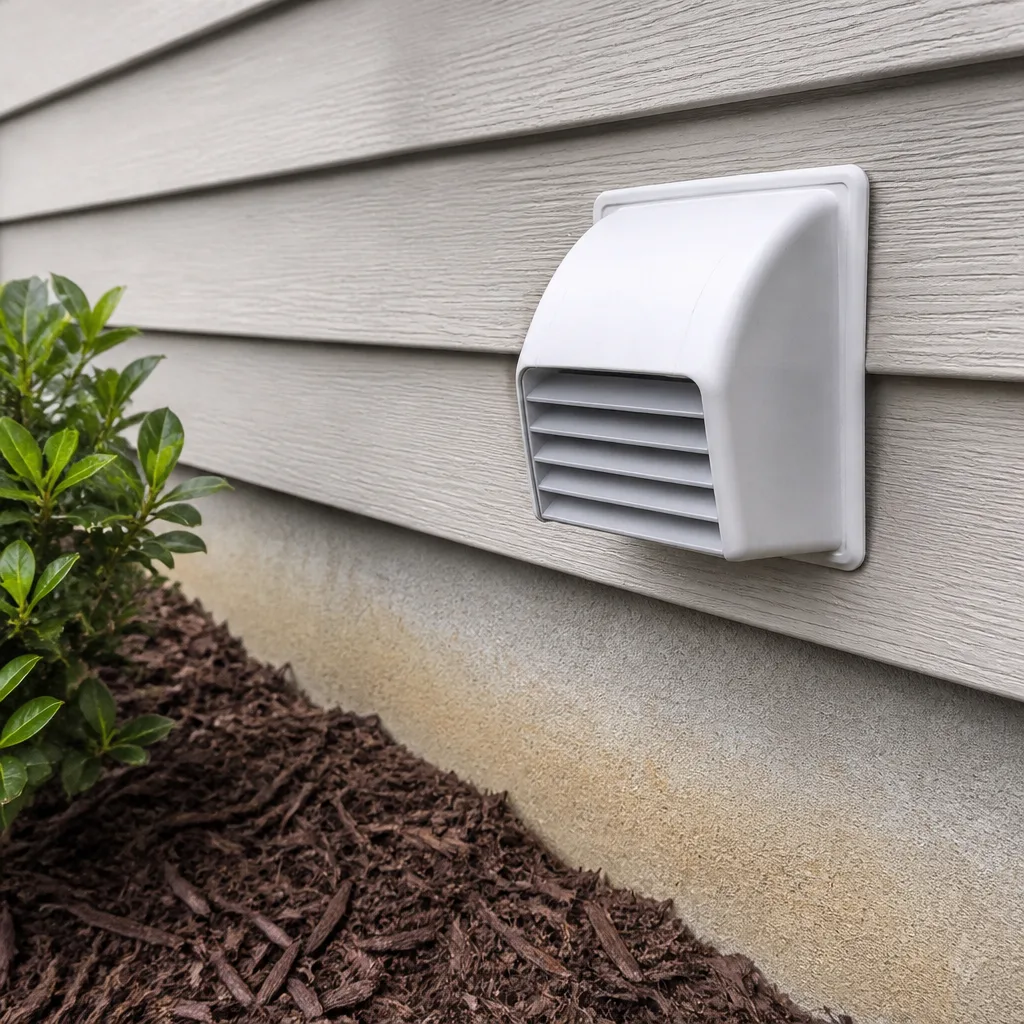 Dryer vent cleaning
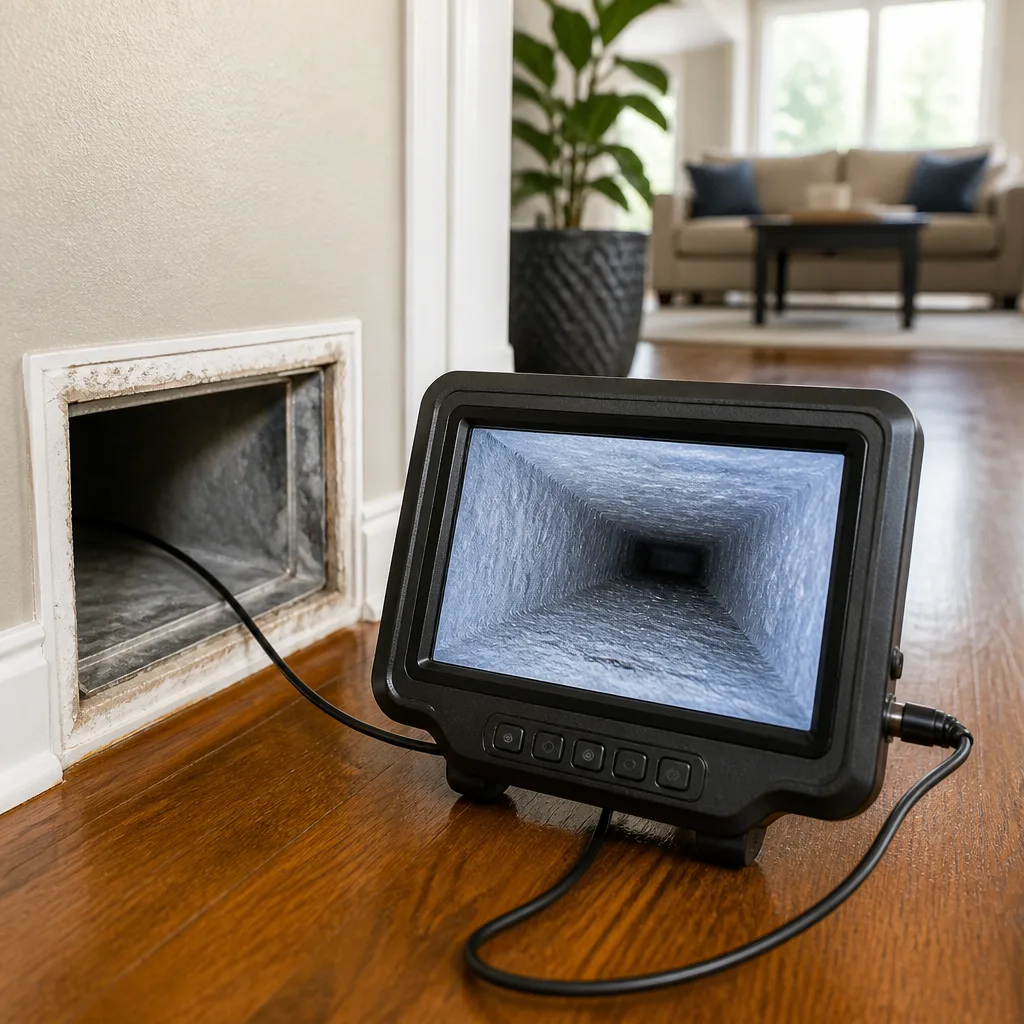 Camera inspection
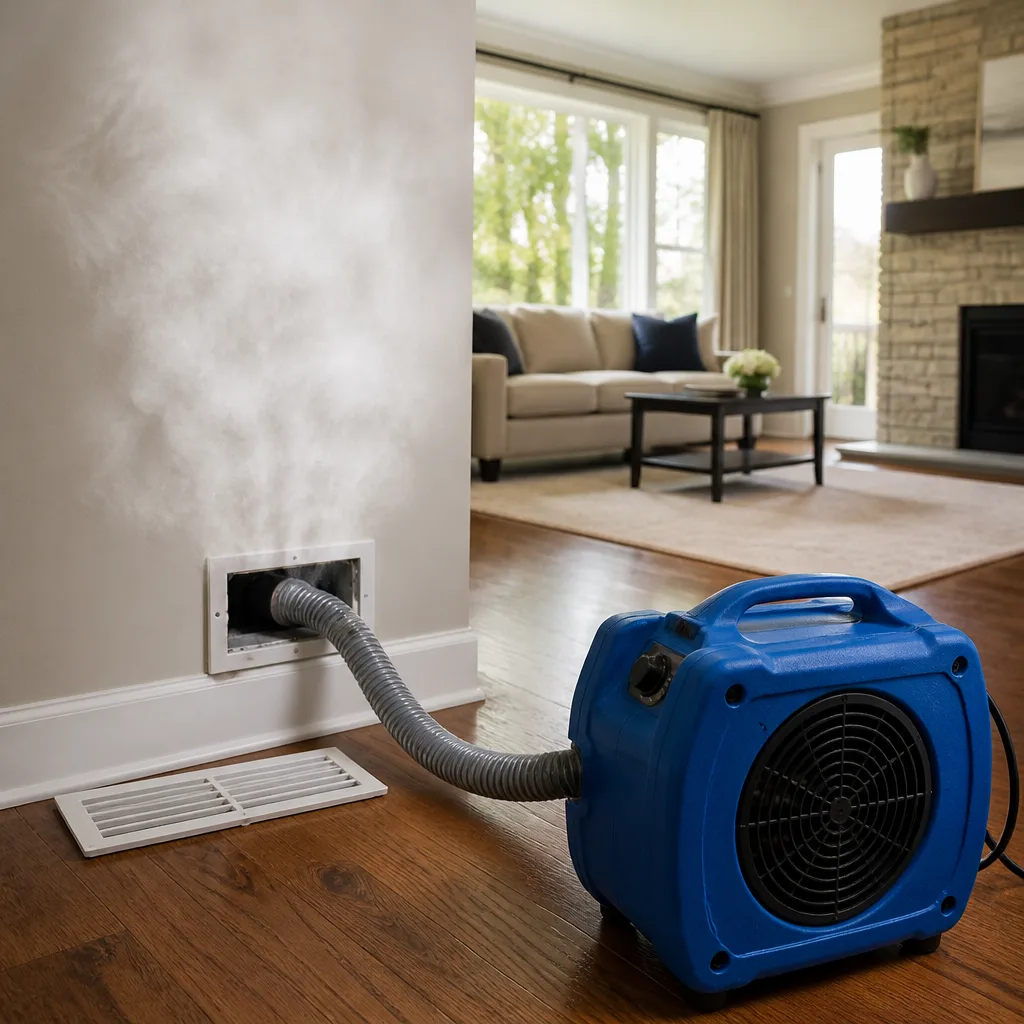 Sanitizing & deodorizing
Whole-system duct and dryer vent check with before-and-after photos - you see exactly what came out of your vents
That "$99 whole-house special" is a bait ad - the real number appears once they are in your hallway, or the "clean" is a shop-vac at the register. We photograph the inside of your ducts before and after instead.
Seasonal Air Duct Cleaning Care for Norman: Year-Round Homeowner’s Guide
Most homeowners treat duct cleaning as a clock-driven chore: every three to five years, call someone, get it done. That calendar was invented for a climate that doesn’t exist here. Norman averages more than 50 severe weather events a year, and every one that pushes outside air through your home – through doors, cracks, or pressure changes – drops fine particulates straight into your return air system. The result is four distinct contamination windows across the year, each with its own cause and its own timing. Read this guide and you’ll know which window you’re standing in right now, and whether your ducts need maintenance or a response.
Quick Answer
Air ducts in Norman need attention on a seasonal pattern, not a fixed number of years: spring storms and mold spore infiltration, summer dust pulled in by heavy HVAC runtime, fall ragweed and grass pollen loading, and winter condensation risk in older flex duct runs. Cleaning at the start of a high-demand season does more than cleaning at the end of one. A homeowner who tracks those four windows schedules duct cleaning every two to four years, unevenly spaced, and builds it around a professional inspection rather than a generic calendar.
Styles & brands we work with
- Whole-home duct cleaning
- Dryer vent cleaning
- Camera inspection
- Sanitizing & deodorizing
Table of Contents
- Why Norman’s Climate Creates Four Contamination Windows
- Spring: Post-Storm Debris and Biological Risk
- Summer: Heavy Runtime and Coil-Side Dust
- Fall: Pollen Loading and Timing
- Winter: Airflow, Condensation, and Older Flex Runs
- How to Build a Cleaning Schedule Around These Windows
- The Dryer Vent Belongs on the Same Calendar
- Common Mistakes to Avoid
- When to Call a Professional
- Frequently Asked Questions
Why Norman’s Climate Creates Four Contamination Windows
Norman sits in a part of Oklahoma where the weather changes fast and doesn’t always clean up after itself. Spring brings wind-driven storms that load the outdoor air with soil, plant debris, and mold spores. Summer bakes the ground and keeps the HVAC running long into the evening. Fall brings ragweed and the native grasses of the surrounding corridor. Winter swings between mild afternoons and hard freezes, which stresses the attic ductwork in a lot of the older homes around town. Each season stresses the duct system differently, which is why a single number on a calendar can’t answer the question.
The other half of the equation is the house itself. Norman has a deep stock of homes built across decades, from midcentury neighborhoods near campus to newer construction on the edges. Older homes often have flex duct runs in attics that were sized for a different era of equipment, with less insulation than modern installations call for. Newer homes are tighter, which changes how air moves and where it settles. Neither is a problem by itself. Both change when cleaning actually pays off.
Here’s the mental model we use. Think of four windows per year:
- Spring (roughly April-June): highest biological contamination risk from storm intrusion and mold spores.
- Summer (July-August): highest dust accumulation from extended equipment runtime.
- Fall (September-November): peak allergen loading from ragweed and native grasses.
- Winter (December-February): airflow reduction and condensation risk in poorly insulated flex runs.
Every home cycles through all four. What changes is which window holds the biggest load for your house, and that’s what an inspection tells you. If you want a straight explanation of what cleaning involves before you go further, air duct cleaning covers the equipment and process in detail.
Spring: Post-Storm Debris and Biological Risk
April through June is the highest-risk window for biological contamination in Norman duct systems. That’s not a scare line. Wind-driven storms push air through the building envelope – around doors, through foundation and attic penetrations, and through every small pressure difference – and the particles riding that air are soil, plant fragments, and mold spores. Once inside, they settle on the trunk lines, the plenum, and the return grilles, where humidity from the shoulder season gives spores a real chance to establish.
What you’ll notice in a house that loaded up over the spring:
- A musty or “damp attic” smell when the system first kicks on.
- Visible dark speckling on return grilles or near diffusers.
- Allergy complaints that continue past the local pollen count.
- More dust on horizontal surfaces than the house usually carries.
Cleaning in this window is a response, not just maintenance. Contact cleaning with a system like Rotobrush agitates debris off the duct walls so the vacuum can actually capture it, rather than blowing loose dust back into the living space. On a Norman home with any visible spotting, we bring Nikro HEPA and negative-air equipment so the particulate ends up in a filter, not on your furniture.
One safety note: anything that looks like actual mold growth on structural surfaces or insulation should be evaluated as a remediation question, not a cleaning question. Duct cleaning can lower spore loading in the system, but it isn’t mold remediation and shouldn’t be sold to you as a substitute. If a contractor tells you otherwise, get a second opinion.
The practical timing: if a spring storm cycle has visibly loaded the house, clean before the cooling season starts rather than mid-summer. Clearing the ductwork first means the system starts the heavy-runtime months without an existing debris load being pushed around for three more months.
Summer: Heavy Runtime and Coil-Side Dust
Summer is the dust accumulation window, and the mechanism is simple arithmetic. Every hour the air handler runs, it pulls a volume of air through the return system – and every particle that gets past the filter settles somewhere in the duct run or on the surfaces near the coil. In Norman’s July and August, the equipment runs far more hours than the shoulder seasons, so the load builds faster. That’s why duct cleaning advice from a mild-climate source often undersells what actually happens here.
What tends to build up during a Norman summer:
- Fine dust along the trunk and branch runs, especially beyond the last grille.
- Debris accumulating on and around the cooling coil, where air is damp and dust sticks.
- Filter bypass dust collecting at the filter frame and edges.
The coil-side surface is where a lot of premature problems start. A dirty coil of the supply side can restrict airflow, which makes the system work harder and run longer, which pulls more dust. If a homeowner tells us the house “doesn’t cool like it used to,” the duct system and coil surfaces are the first things worth inspecting before anyone quotes new equipment.
Late summer is the right time to think about filtration upgrades. We work with Honeywell and Aprilaire air quality products, which lets a homeowner move from a basic filter setup to a higher-capture one at the same time the ducts are being cleaned. That’s not about selling equipment. It’s that the system has just been cleared, and installing better filtration afterwards is what keeps it clearer going into fall. Doing the cleanup and leaving the same weak filter in place is where the savings get lost.
One caution: this is a scheduled job, not a same-day emergency. Speed isn’t what makes duct cleaning worthwhile. Timing and a machine that actually captures debris are. A company that pushes you into a “call now before it’s too late” booking isn’t telling you anything about your house.
Fall: Pollen Loading and Timing
Fall in Norman is the allergen-loading window, and it’s driven by ragweed and the native grasses of the surrounding corridor. Pollen grains are small enough to ride on air currents, get pulled into the return system, and settle into the duct volume. By October, a house that cleaned in spring has often reloaded the system with fine biological particulate, even if the visible dust looks unremarkable.
What cleaning in fall actually accomplishes:
- Removes the accumulated pollen load sitting in the duct system before winter cycling starts pushing it around.
- Gives the return system a clean start heading into the lower-airflow winter months.
- Reduces what a filter has to carry alone through the next season.
What it doesn’t accomplish: it won’t stop the outdoor pollen count from affecting the house, and it won’t replace a decent filter. If a home sits near open fields or a grass-heavy corridor, the outdoor load will keep coming. Cleaning clears what’s already made it inside. The point is timing it so the system doesn’t enter winter with a heavy biological load on top of a heavy particulate load.
We’ve seen this pattern enough in Norman to recommend fall cleaning to households that show seasonal allergy complaints without an obvious dust problem. The clarification that’s worth making: if the household reports symptoms only during the local pollen season and the ducts look fine, cleaning the ducts won’t fix the year-round air quality issue. It will clear the accumulated load. A homeowner with a real air quality concern should also ask about the filter and, if relevant, about dehumidification and filtration upgrades as separate conversations.
Winter: Airflow, Condensation, and Older Flex Runs
Winter is the quiet window, which is why it gets ignored. Airflow cycles drop, the heating system runs with a wider temperature differential, and the attic duct runs in older Norman homes face condensation risk from the temperature swing between the heated interior and the attic cavity. A less-insulated flex run can form condensation on its outer layer when warm interior air meets a cold attic surface, and that moisture is what turns settled dust into a real problem.
What the winter window does to a duct system:
- Reduced airflow means settled debris in branch runs stays put – and compounds from the previous three seasons.
- Condensation on poorly insulated runs creates a damp spot where dust and any biological material can establish.
- Heat pump systems cycling more frequently on cold mornings pull extra air through the return system.
This is where an inspection pays for itself. An inspector who knows what to look for can identify a flex run with poor insulation, a disconnected section, or a crushed segment – and that’s a repair conversation, not a cleaning one. We handle air duct repair alongside cleaning specifically because a torn or disconnected run means the cleaning effort goes right out into the attic. Cleaning without fixing the breach is wasted money.
Winter is also a sensible maintenance window for homes that show no active problems. Cleaning between the fall pollen season and the spring storm season sets up the system for the heaviest load months without pushing the cleaning into a busy window. If the furnace blower has been loud or the house feels dustier than usual at the start of the heating season, that’s a good sign the filter and the duct system need a look.
How to Build a Cleaning Schedule Around These Windows
Instead of a fixed years-based rule, build the schedule around three questions, answered in order:
- Has anything happened to the house this year? A renovation, a significant storm sequence, a new pet, or a change in household allergies shifts the schedule forward.
- What did the inspection show? Visible dust in the trunk, debris on return grilles, dust at the filter frame, or any debris visible at a supply diffuser all prompt an earlier cleaning. A clean-looking system with a light load can wait.
- Which season window is coming up? Cleaning before a heavy load season (spring storms, summer runtime, fall pollen) gets more out of the same cleaning than cleaning after the season has already deposited its load.
For most Norman homes, that works out to a cleaning every two to four years, unevenly spaced. For a home with pets, recent renovation dust, or a household with allergy sensitivity, it can be closer to a two-year rhythm. For a lightly occupied house on a well-maintained filter setup, four years between cleanings is reasonable.
The points that break the generic “every three to five years” advice here:
- Norman’s storm calendar makes spring a load event most years.
- Summer runtime here is long enough that the dust load builds faster than it does in cooler regions.
- Fall pollen loading is worth timing around rather than treating as background.
- Older flex runs can turn a mild condensation issue into a debris problem within a single winter.
Not every house needs a cleaning every year. But every house sits in one of the four windows at a given time. Knowing which one you’re in tells you whether you’re maintaining or reacting.
The Dryer Vent Belongs on the Same Calendar
A guide about whole-system airflow health that stops at the ductwork is missing half the system. The dryer vent runs the same kind of load and fails differently: lint packs into the vent run, restricts the dryer, and becomes a fire risk that insurers and fire departments both flag. Most duct cleaners skip it because they don’t carry the equipment or the expertise. We offer dryer vent cleaning alongside duct work because a homeowner shouldn’t have to make two calls to keep the whole system’s airflow clear.
What the seasonal calendar looks like for a dryer vent in Norman:
- One inspection once a year, ideally before the heavy winter laundry season when the dryer runs more.
- Cleaning whenever the dryer takes more than one cycle to dry a normal load, or feels hot to the touch on top.
- A visual check after any renovation, since lint and construction dust can pack into a vent run fast.
That last point matters more than most homeowners realize. A dryer vent packed with lint is a fire risk regardless of the season, and it’s one of the leading causes of residential fires. Cleaning it is a straightforward, non-alarmist job that’s worth doing on a predictable schedule rather than waiting for the dryer to fail.
Common Mistakes to Avoid
- Treating the three-to-five-year rule as fixed. That window was invented for a generic climate. In Norman, the right interval shifts with storm years, pollen seasons, and how the house is heated and cooled. Let the inspection and the seasonal window set the schedule instead.
- Cleaning after the season instead of before it. Cleaning at the end of summer means the system carries a full summer load into fall. Cleaning at the end of spring storm season means the whole cooling season runs with the accumulated load. Pull the cleaning before the heavy months, not after.
- Skipping air duct repair because the cleaning looks fine. A disconnected or crushed flex run in an attic passes a lot of visual inspections. Cleaning a breached system pushes the debris right back out, so fixing the breach is part of the same job, not a separate contractor.
- Comparing quotes without comparing equipment. A truck-mounted shop vac and a Rotobrush contact-cleaning system aren’t the same tool. Ask what machine and what capture equipment the company uses. If the answer is vague, keep asking.
- Ignoring the dryer vent because the ducts got cleaned. A clean duct system doesn’t touch the dryer vent, which is a separate fire-safety path. Book both on the same visit so it actually gets done.
- Putting the furnace filter on autopilot. A filter that’s loaded past its capacity doesn’t just fail to filter; it also increases restriction, which dries the coil-side dust onto surfaces. Change it on a schedule that matches your seasons, not a manufacturer’s calendar.
- Choosing the cheapest quote before the inspection. The cost comparison that matters is whole-system price per scope, not the headline number. A low bid with a per-vent price is usually a scope you can’t compare.
When to Call a Professional
A call is worth making when the seasonal pattern stops looking normal: a musty smell that won’t clear when the system runs, visible dust at supply diffusers, a return grille that darkens noticeably, allergy symptoms that don’t match the outdoor pollen count, a dryer taking two cycles to dry a normal load, a renovation that generated a lot of dust, or a home you’ve just moved into without a cleaning history. A professional inspection catches the flex run breach, the damaged branch line, or the filter frame bypass that a homeowner can’t see from the floor. Duct Cleaning Normana Dana offers free estimates in Norman – call (866) 493-6592. If you’re in a nearby part of Cleveland County, our work across Norman covers the homes here, and the same seasonal logic applies to surrounding communities that share the storm and pollen calendar.
Frequently Asked Questions
Most Norman homes do well on a cleaning every two to four years on the seasonal windows described above, not a fixed calendar. Homes with pets, recent renovation dust, or allergy sensitivity often land closer to the two-year rhythm, while a lightly occupied home on a strong filter setup can go four years. A professional inspection tells you which end of the range fits your house.
Spring is best if the home has been through a heavy storm season or shows a musty smell, because the biological load is what needs attention. Fall is best for households with seasonal allergy complaints and a system that’s loaded with pollen. In either case, clean before the heavy season starts, not after.
Yes, because summer is the highest-runtime season, so it’s when the duct system accumulates the most dust. Cleaning mid-to-late summer removes the load that’s built up, so the fall pollen season and winter cycling start from a cleared system. That’s a bigger win than cleaning in winter when the system has already run through three other seasons.
Ask for a whole-system scope and a written price – never a per-vent price or a teaser coupon figure. Ask what machine the company uses and whether they carry HEPA or negative-air containment for a home with a visible biological load. A quote that doesn’t name the equipment or the scope is not comparable to one that does.
Not every duct cleaning company offers repair, which is why it’s worth asking before you book. Cleaning a system with a disconnected or crushed run means the cleaning effort ends up in the attic. We handle air duct repair alongside cleaning so the breach gets fixed as part of the same visit.
In most cases it’s a vent restriction, and that’s worth checking before the dryer gets blamed. A restricted dryer vent is one of the leading causes of residential fires, so it’s not something to wait on. We offer Duct Cleaning Norman service including dryer vent cleaning, so one call covers both the duct and the vent check.
Professional-grade equipment, not consumer substitutes. That means a contact-cleaning system like Rotobrush, and HEPA or negative-air equipment like Nikro where the load calls for it. We also work with Abatement Technologies filtration equipment and Honeywell and Aprilaire air quality products, which lets a homeowner clean the system and improve the filter setup in the same visit. Ask any contractor what they use. The tools tell you a lot about the craft.
See the difference
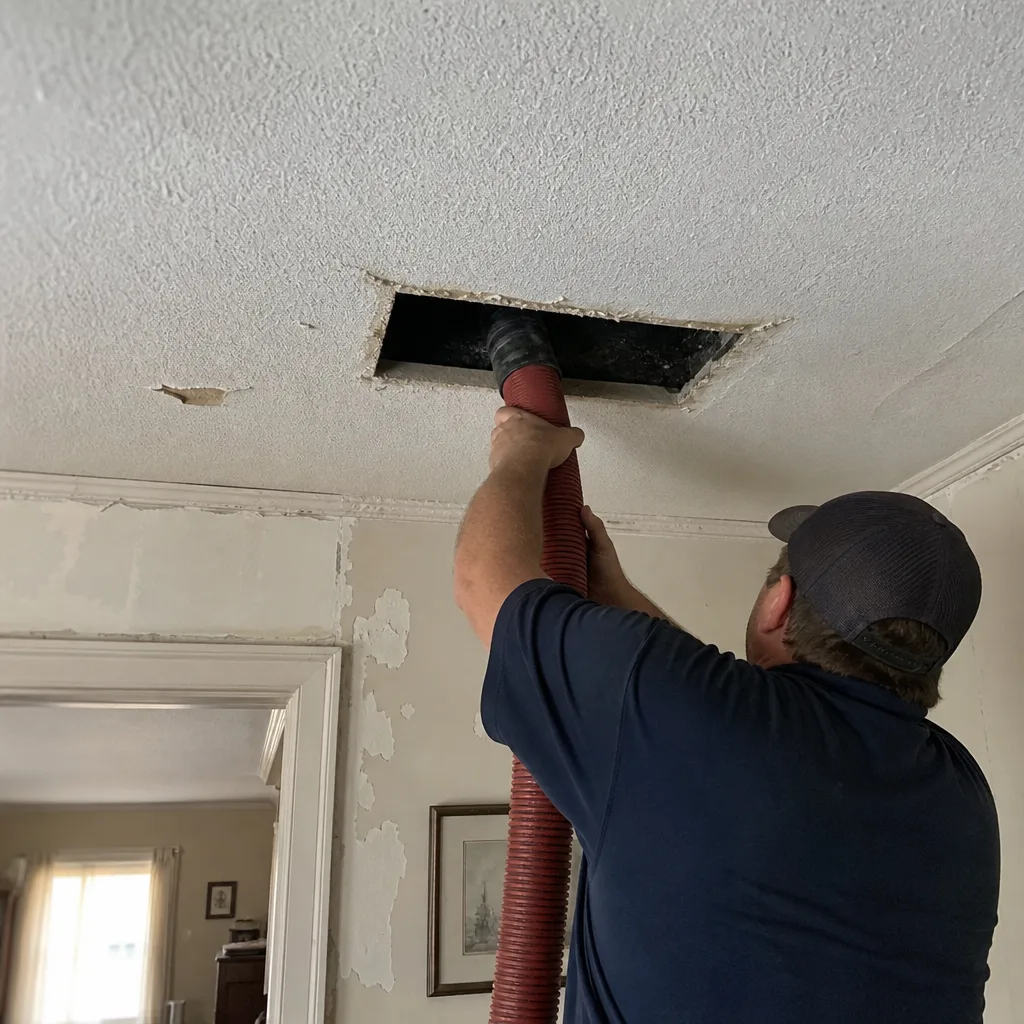 Before
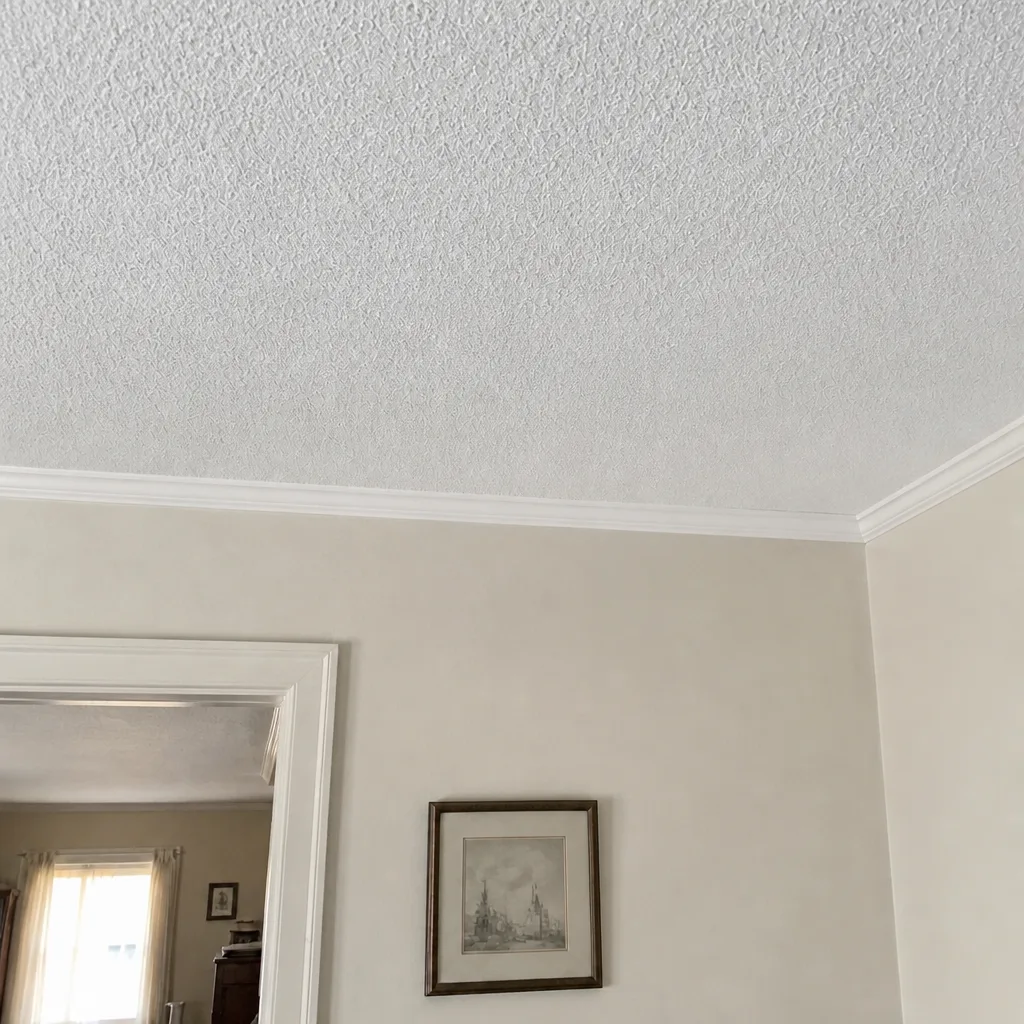 After
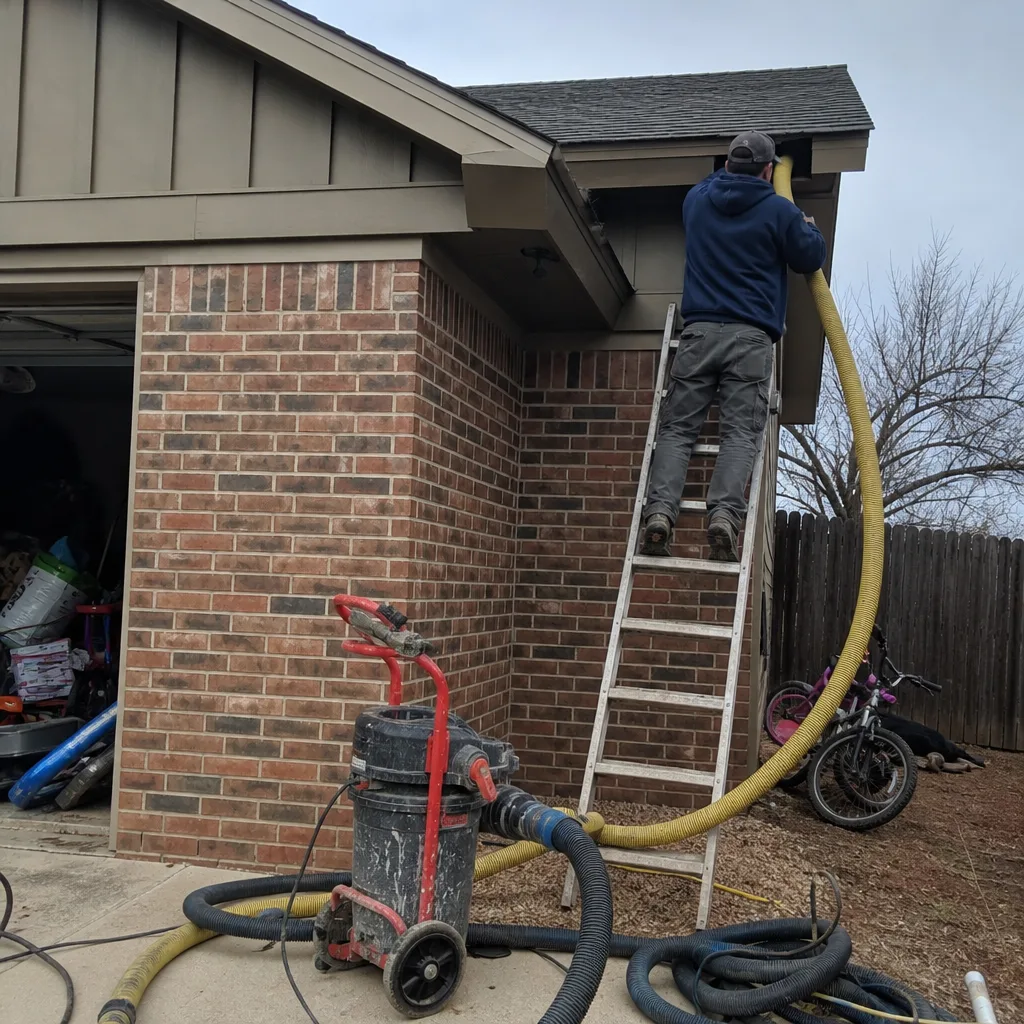 Before
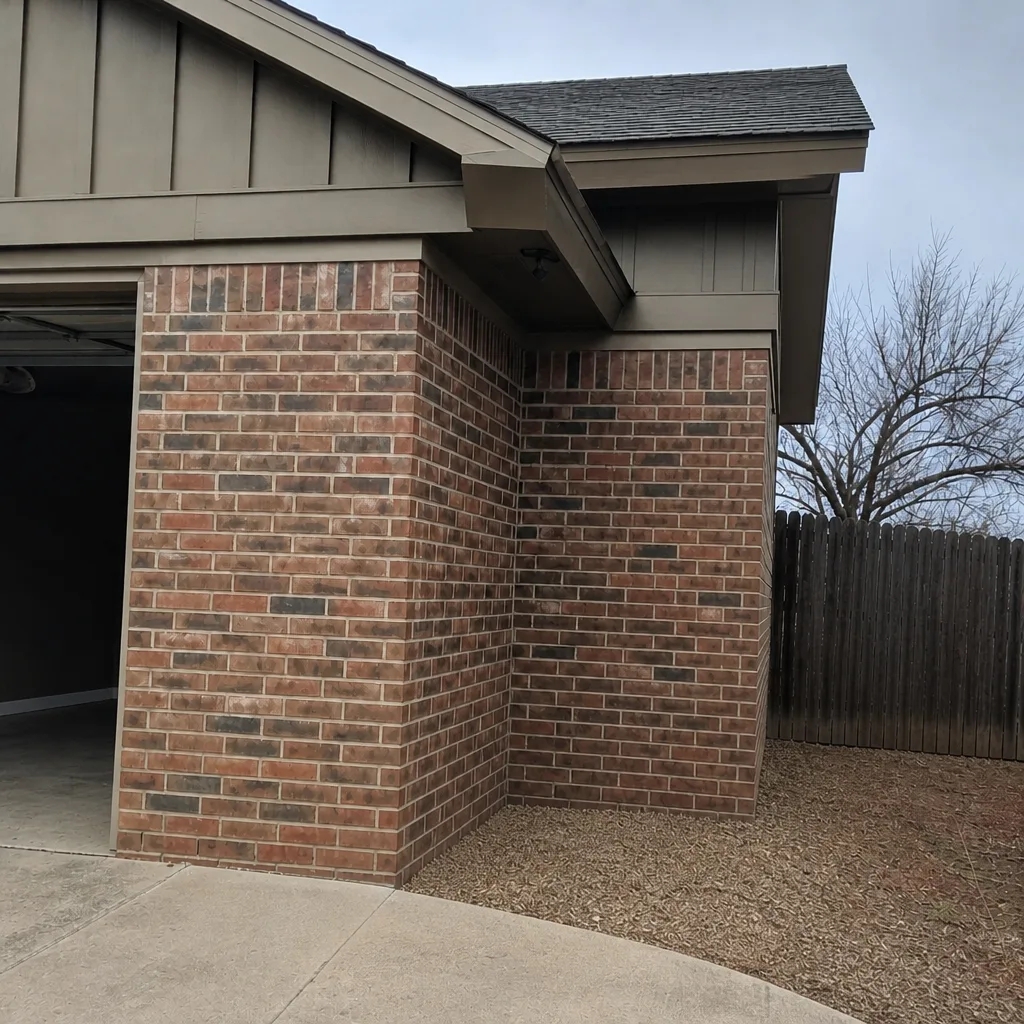 After
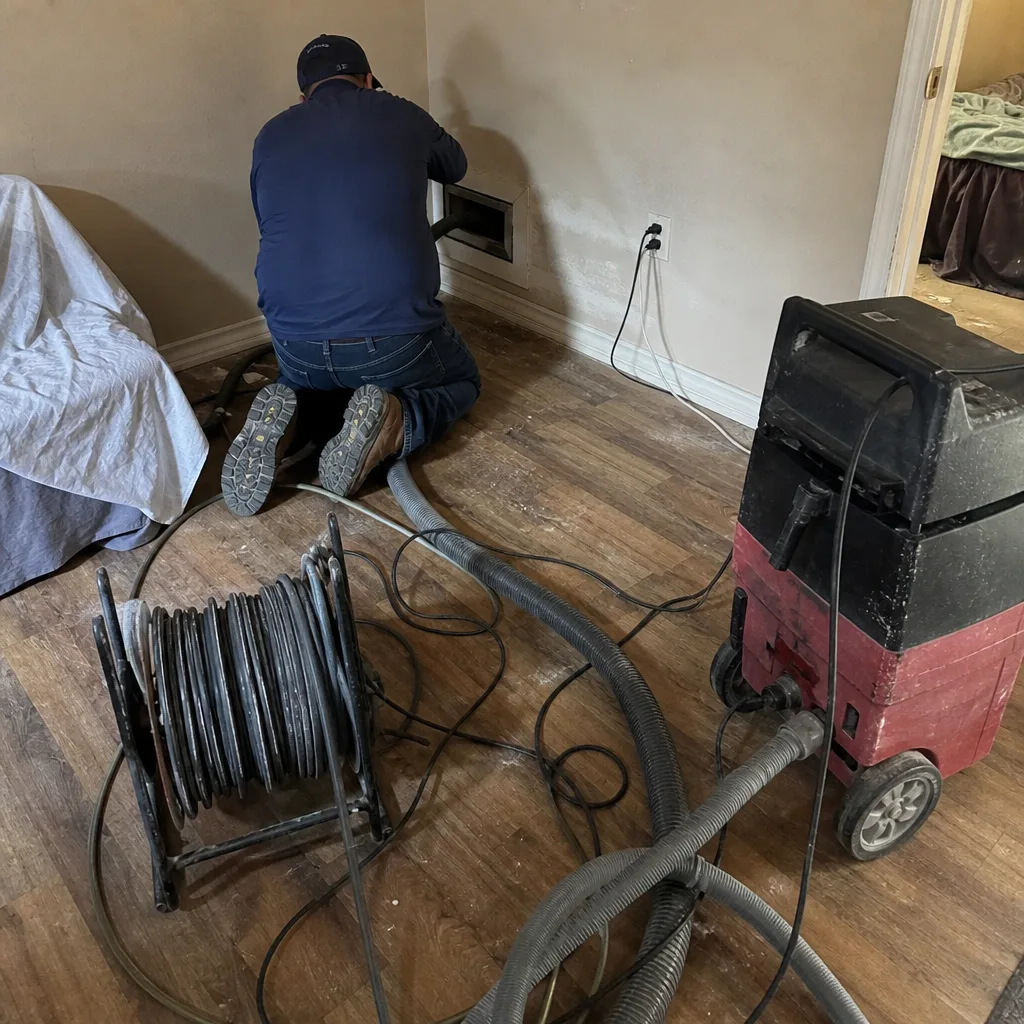 Before
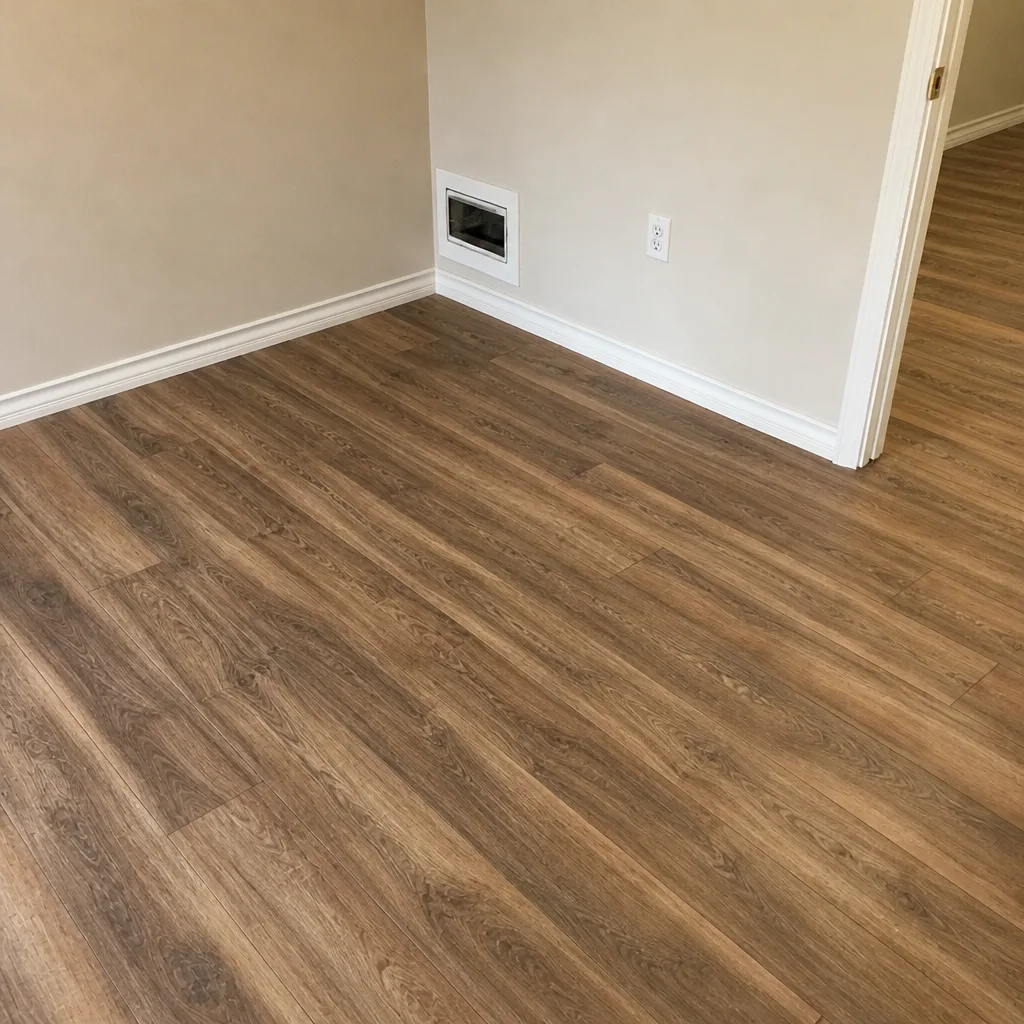 After
The Bottom Line
Norman’s climate creates four distinct contamination windows, and each one changes what your duct system needs and when. Spring is the biological risk window from storm intrusion. Summer is the dust accumulation window from extended runtime. Fall is the allergen loading window from ragweed and native grasses. Winter is the airflow and condensation window that older flex runs make worse. Build your schedule around those windows, let an inspection set the interval, and treat the dryer vent as part of the same system. That gets more out of every cleaning than any fixed-year rule ever could.
Common Questions Answered
How much does air duct cleaning actually cost in Norman?
We quote per job by written estimate, not per vent, and the estimate is free. Call (866) 493-6592 to get one for your house. A headline figure that isn’t tied to a scope isn’t a real quote.
Why are some quotes so much cheaper?
Because they’re quoting a smaller scope, not a cheaper version of the same job. A company using a shop vac and a truck-mounted system with contact cleaning aren’t doing the same work. The comparison to make is the equipment and the scope, not the headline number.
How do I know the work was actually done?
Ask for before-and-after photos of your own ducts. We take them on every job. That’s how you confirm the sector you saw on the truck matches the sector that left the duct.
How often does it really need doing?
Every two to four years for most Norman homes, with the interval set by inspection and the seasonal window rather than a fixed calendar. Call (866) 493-6592 and we’ll tell you what your system actually shows. Estimates are free.
Written by the team at Duct Cleaning Norman.