
Last updated November 14, 2026
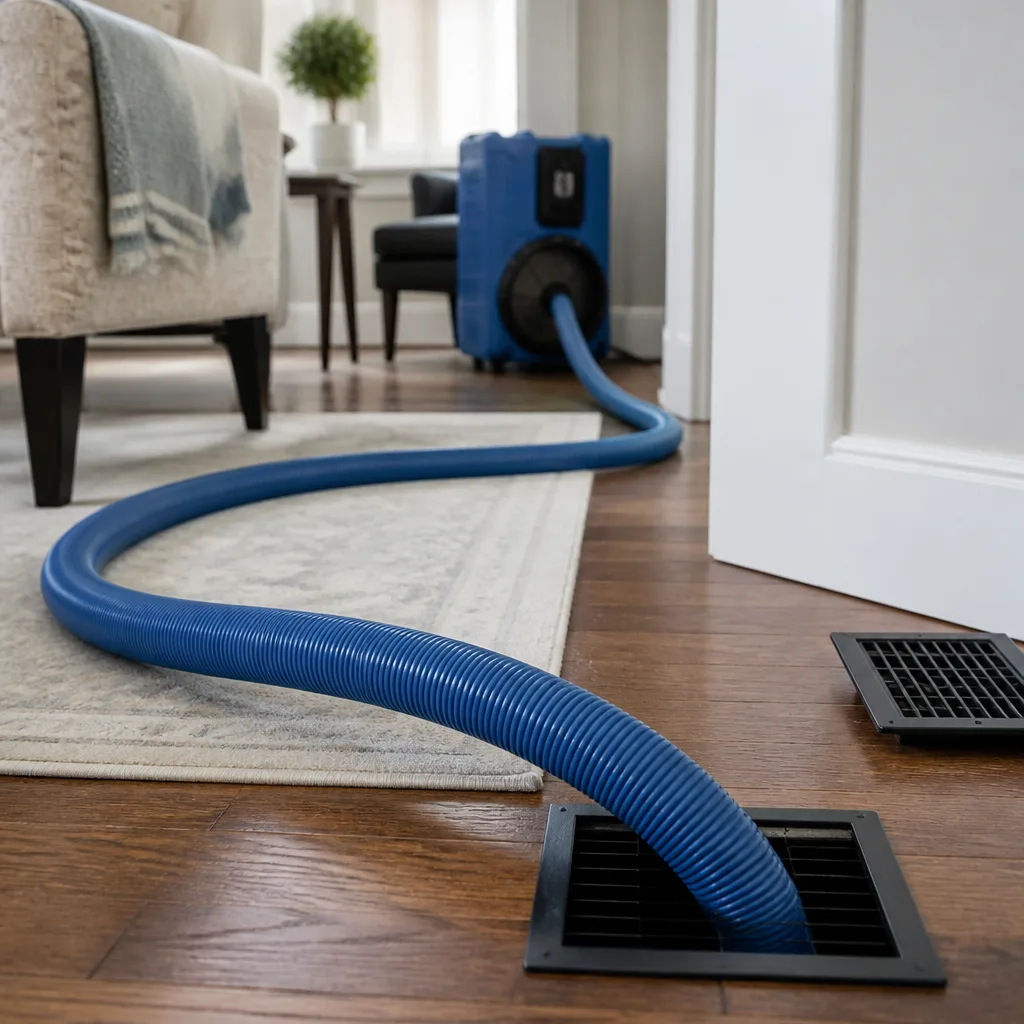 Whole-home duct cleaning
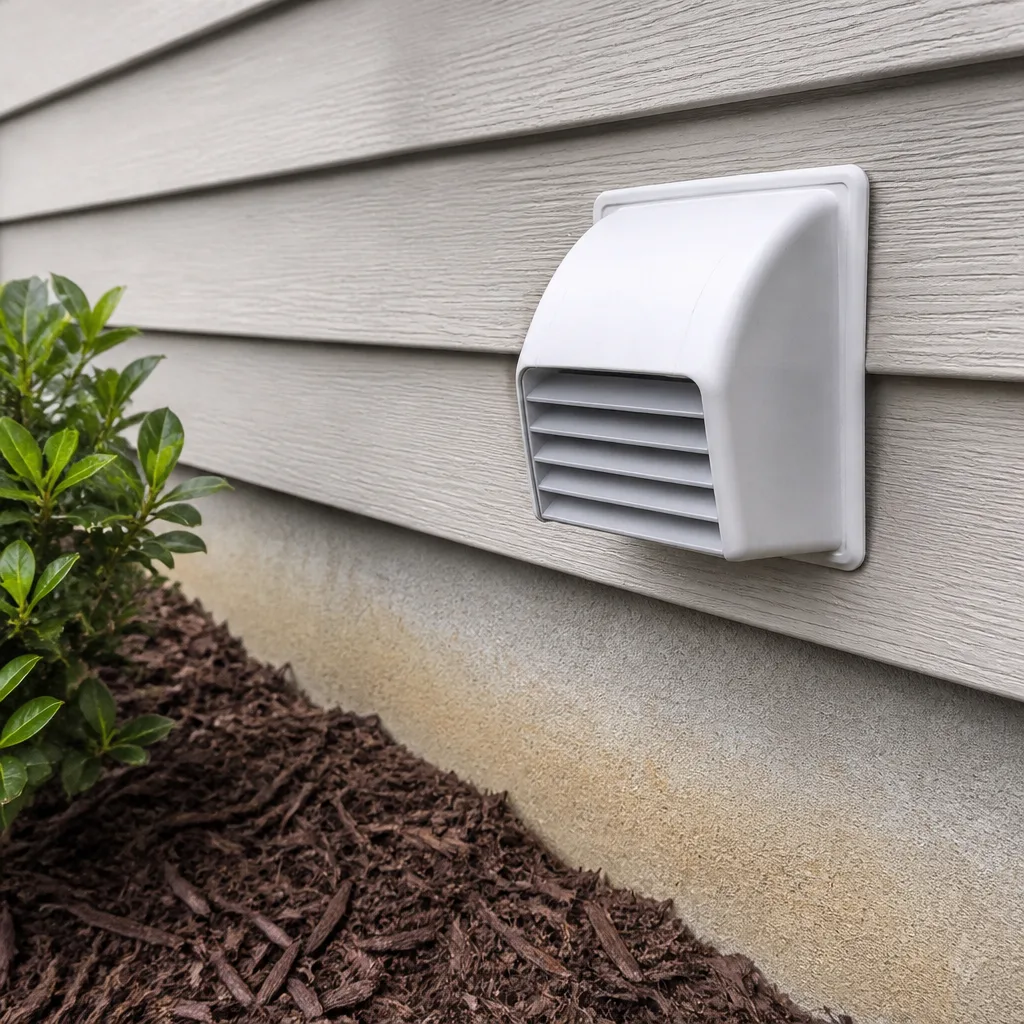 Dryer vent cleaning
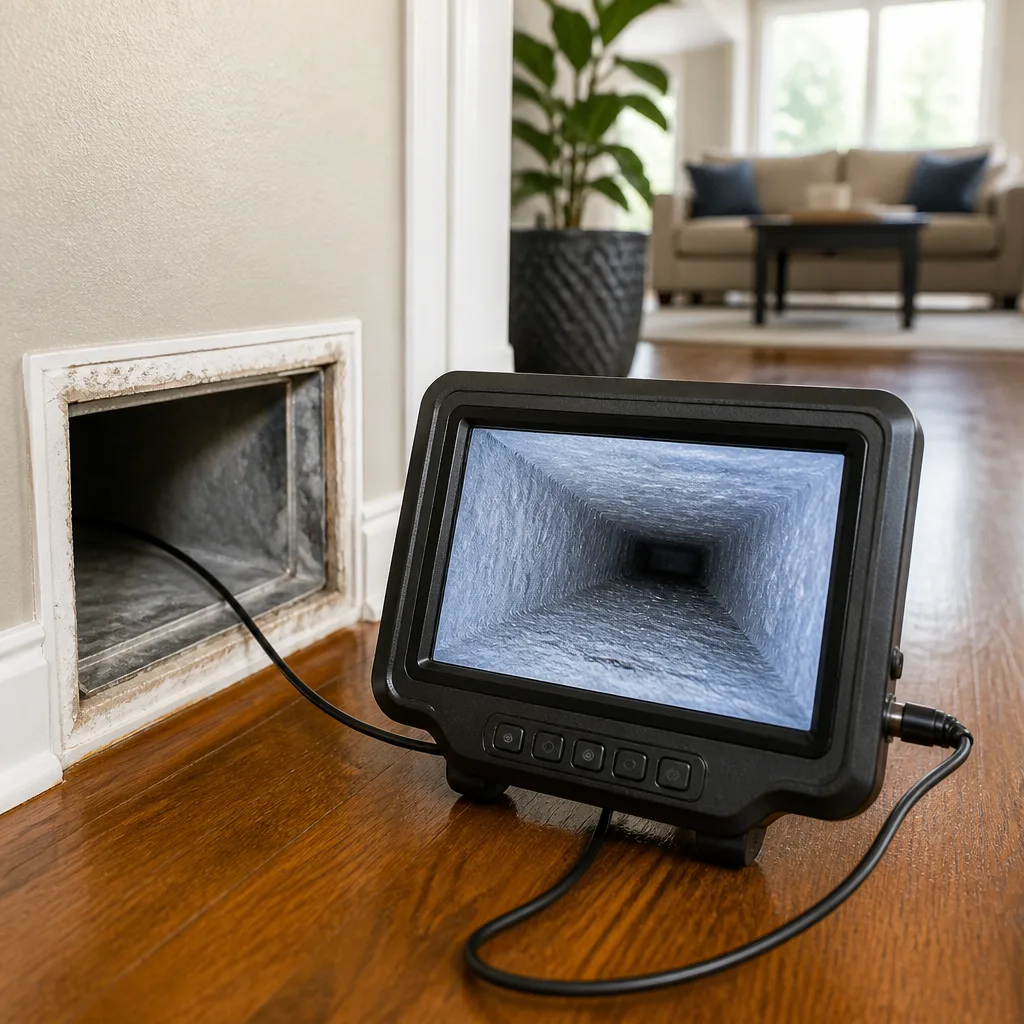 Camera inspection
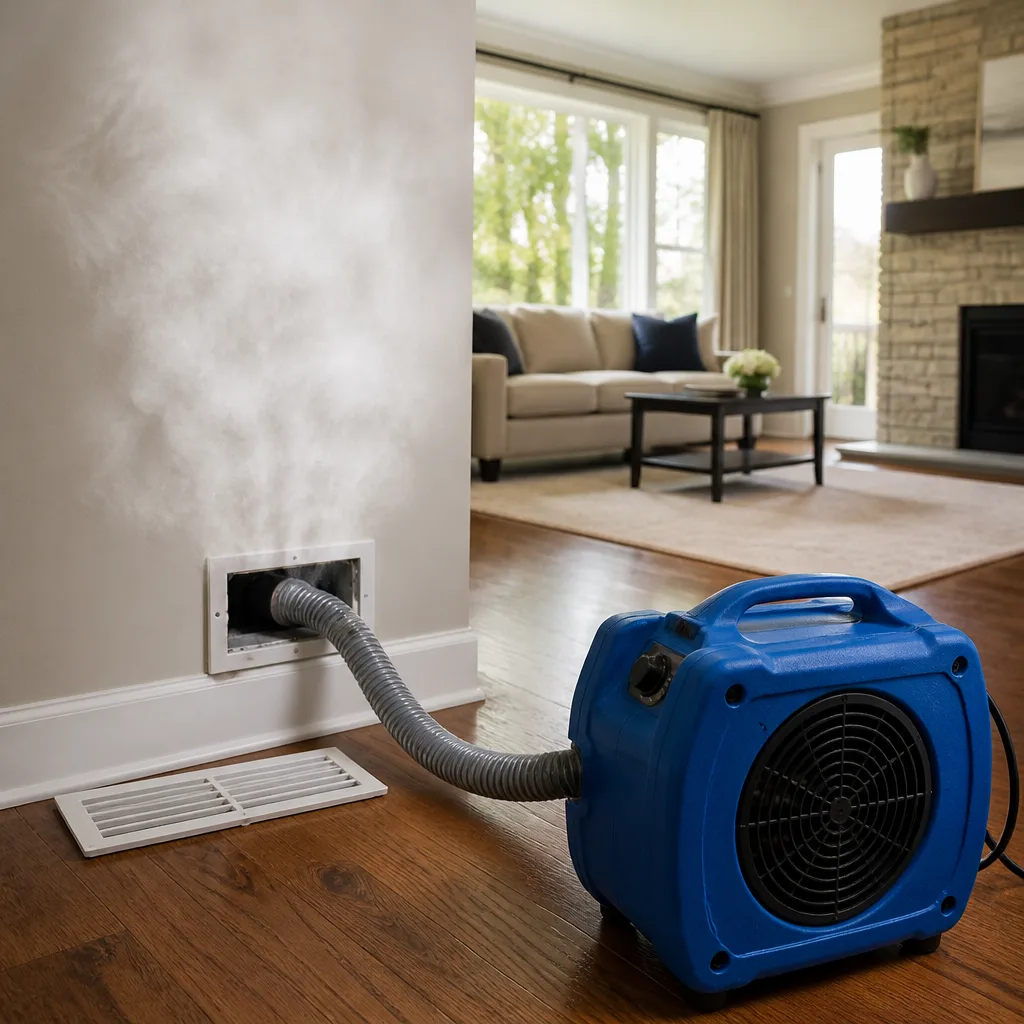 Sanitizing & deodorizing
Whole-system duct and dryer vent check with before-and-after photos - you see exactly what came out of your vents
That "$99 whole-house special" is a bait ad - the real number appears once they are in your hallway, or the "clean" is a shop-vac at the register. We photograph the inside of your ducts before and after instead.
How to Hire an Air Duct Cleaning Contractor in Norman: A Step-by-Step Guide
Oklahoma has no state license requirement specific to duct cleaning. That means the person who cleaned carpets last week can legally clean your ductwork tomorrow, and some do. The burden of vetting falls entirely on you, the homeowner. Most hiring guides tell you to “check reviews” and “get three quotes,” which is fine advice that separates almost nobody. This guide takes a different approach: it gives you the exact equipment questions to ask, tells you what a legitimate contractor should ask you before naming a price, and shows you how to verify the work after the job is done. If you live in Norman and want to hire well, read on.
Quick Answer
To hire an air duct cleaning contractor in Norman, verify the equipment before you discuss price. Ask what machine they’ll use, whether it’s truck-mounted or portable, and what negative-air equipment protects your home during the job. A contractor who can answer those questions specifically, who asks about your home and system before quoting, and who provides before-and-after documentation is a contractor worth hiring. One who quotes a flat price over the phone without seeing your system, or who can’t name their equipment, is not. The sections below walk through each step in order.
Styles & brands we work with
- Whole-home duct cleaning
- Dryer vent cleaning
- Camera inspection
- Sanitizing & deodorizing
Table of Contents
- Why Oklahoma’s Licensing Gap Changes How You Hire
- The Five Equipment Questions to Ask Before Booking
- What NADCA Membership Actually Means (and Doesn’t)
- Red Flags Specific to Norman’s Market
- How to Structure the Quote Conversation
- Post-Job Verification: What to Request as Documentation
- What Norman’s Climate and Housing Stock Mean for Your Ducts
- Common Mistakes to Avoid
Why Oklahoma’s Licensing Gap Changes How You Hire
In most trades, the state does the first round of vetting for you. Electricians are licensed. Plumbers are licensed. Duct cleaning is different. Oklahoma doesn’t require a specific state license for duct cleaning, which means the barrier to entry is a truck, a vacuum, and a phone number. Some operators are genuinely skilled technicians with professional-grade equipment. Others are generalists who added duct cleaning to a menu of carpet, tile, and pressure-washing services and bought the cheapest machine that fit the budget.
That gap isn’t a reason to panic. It’s a reason to ask better questions than you would for a licensed trade, where the license card at least tells you something. In Norman, where older housing stock and heavy spring pollen loads make duct cleaning a real annual consideration for allergy sufferers, that distinction matters. You’re not just buying a cleaning; you’re buying a process that either removes debris from the source or redistributes it through your home.
The key insight is this: when the state doesn’t set a floor, you have to set it yourself. The rest of this guide is that floor. It’s a set of questions and standards that any equipment-serious contractor will pass without blinking, and that a generalist with a shop-vac will fail.
What “Equipment-Serious” Means
The term sounds vague, so let’s define it. An equipment-serious contractor invests in machines built for the specific job of removing debris from ductwork under controlled conditions. That means contact-cleaning tools that reach into the duct interior, HEPA filtration and negative-air equipment that keep particulates from drifting into your living space during the work, and enough airflow to actually move the debris out rather than just loosen it.
Professional-grade brands matter here because they represent a real capability difference, not a marketing label. Rotobrush contact-cleaning systems are the equipment specified in professional duct cleaning standards. Nikro negative-air and HEPA equipment is used for containment-grade particulate control. Abatement Technologies equipment signals capability at the remediation level rather than simple maintenance cleaning. When a contractor names these brands, you can ask follow-up questions and verify. When a contractor can’t name a brand, there’s nothing to verify.
That’s the whole reason our duct cleaning in Norman approach is built around naming and explaining equipment. A homeowner who understands what’s being used can spot the difference between a specialist and an add-on service in about ninety seconds.
The Five Equipment Questions to Ask Before Booking
These five questions are the single most useful thing in this guide. Ask them in order, over the phone, before you book anyone. The answers tell you almost everything. This is where you start to see air duct cleaning in Norman separate into specialists and generalists.
- “What cleaning machine will you use, specifically?” You’re listening for a brand name, not a description. “A professional machine” is not an answer. “We use a Rotobrush contact-cleaning system” is. If they can’t name the machine, they either don’t know their own equipment or don’t want you to know.
- “Is it truck-mounted or portable?” Truck-mounted units generally deliver more sustained vacuum and airflow, which matters for moving heavy debris through a whole system. Portable units designed for duct cleaning work fine in many homes, but the contractor should be able to explain which they’ll use and why. If they can’t tell the difference, that’s your answer.
- “What airflow rating does your machine produce?” You don’t need to know the exact number to ask the question. You’re checking whether they understand airflow is the core physics of the job. A machine that doesn’t move enough air loosens dust without removing it.
- “What negative-air or HEPA equipment do you run during the job?” This is about containment. Any contractor serious about the work will have an answer involving negative-air pressure or HEPA filtration. Nikro and Abatement Technologies are common names here. A blank silence is a red flag.
- “Do you take before-and-after photos of my own ducts?” A contractor who documents the work is a contractor accountable to it. Photos of your ducts, not stock images, are the standard to expect.
Notice that none of those questions are about price. That’s intentional. Price comes after equipment, because price without equipment context is a number with no meaning. A $79 whole-house quote and a professional whole-system quote aren’t the same service – they’re not even the same category of work.
What NADCA Membership Actually Means (and Doesn’t)
You’ll see NADCA, the National Air Duct Cleaners Association, referenced on many contractor websites. It’s worth understanding what it represents before you weigh it. NADCA sets standards for the industry, and membership signals that a contractor has opted into a professional framework and, in the case of individual certification, passed a knowledge assessment. That’s a credential worth noting. It tells you this contractor cares enough about the trade to join a trade body.
But here’s the part most hiring guides gloss over: membership is not a quality guarantee. It’s not a license, it’s not enforced by a state agency, and it doesn’t tell you what equipment is on the truck. A contractor can be a member and still cut corners on a Tuesday afternoon when the schedule is tight. Conversely, a competent specialist may not carry the membership and still do excellent work. Use NADCA as one data point among several, not as a substitute for the equipment questions above.
How to Weigh a Credential
Here’s a simple way to think about it. A credential is most useful when you can’t easily verify the thing it stands for. In duct cleaning, you can verify equipment directly – by asking the five questions and listening to the answers. So don’t lean on NADCA as your only screen. Combine it with the equipment conversation and the quote process below.
| What to Check | Why It Matters |
|---|---|
| NADCA membership | Signals a professional framework; not a guarantee and not a license |
| Named equipment brands | Shows real capability; verifiable by asking |
| Negative-air / HEPA on-site | Protects your home during the job |
| Before-and-after photos | Accountability and proof of source removal |
| Questions asked before quoting | Shows they understand your system before pricing it |
Red Flags Specific to Norman’s Market
Norman has a duct cleaning market like most mid-size college towns, which means a mix of established specialists and rotating crews that work a route and move on. A few red flags show up here again and again, and they’re worth memorizing.
- Door-hanger ads quoting $49 for a whole-house clean. A whole-house clean at that price isn’t a cleaning; it’s a bait-and-switch hook. Expect the price to climb once the technician is inside and “finds” extra work needed. A professional quote for a whole system is a fixed number agreed before the technician arrives.
- A contractor who can’t name the negative-air machine they’ll use. Containment equipment is basic to professional duct cleaning. Can’t name it, probably don’t run it.
- Pressure to book on the phone. Legitimate contractors are happy for you to think about it. If the sales script gets aggressive, that’s the script doing the work, not the equipment.
- No photos of your own ducts before and after. If the work can’t be documented, ask why.
- A “half-house” special that ignores part of your system. Duct cleaning is whole-system work. A discount that covers one side of the house isn’t a discount on the job you need.
- Vague service scope that drifts into services outside duct work. A specialist stays in their lane because that lane is the whole business.
If you see two or more of these in a single conversation, you’re not talking to the right kind of contractor. That’s not an insult to them; it’s just that the work you need isn’t the work they do.
How to Structure the Quote Conversation
Most homeowners think the quote conversation is about the contractor telling you a price. It’s actually about the contractor asking the right questions first. A legitimate contractor should interview you before naming a price, because price depends on the system.
Here’s what a real contractor should ask before quoting:
- How many supply and return vents does the system have?
- How large is the home, and how many floors?
- How old is the HVAC system, and when was it last serviced?
- Have there been recent renovations, pet issues, or a known moisture problem?
- Do you have allergies or asthma in the household?
- Have the ducts ever been cleaned, and do you have any record of it?
Notice this list has nothing to do with price per vent. That’s on purpose. Per-vent pricing is how bait-and-switch jobs are structured, because the technician counts vents on site and the total grows. A specialist quotes the whole system as a flat number, agreed before the technician arrives, with no per-vent upcharges on the invoice. That’s the standard to ask for.
What to Confirm in Writing
Before you book, confirm three things in the quote itself: the fixed price for the whole system, the equipment brands that will be used, and that before-and-after photos of your own ducts will be provided. Anything not confirmed in writing is a negotiating position, not a commitment. A clear written quote that states all three protects both sides and lets you compare apples to apples between contractors.
Post-Job Verification: What to Request as Documentation
The job isn’t done when the technician leaves. It’s done when you can verify the work was performed to source-removal standards. Source removal means the debris was actually removed from the ductwork, not stirred up and pushed back into the living space. Here’s what to request.
Photos of Your Own Ducts
Before-and-after photos of duct interiors, taken by the technician during the job. The contractor should be willing to share them. If they only offer stock images, that’s a problem. Real documentation has the specific marks, seams, and dust patterns of your system.
A Written Summary of Work
A simple written summary describing what was cleaned, what equipment was used, and any ductwork issues noticed. If the contractor found damaged flex duct or a disconnected joint, that should be noted – because air duct repair may be needed to keep the rest of the system working. A specialist who offers cleaning and repair together can address it without a second contractor.
Airflow Check
After cleaning, check airflow at several registers yourself. A well-cleaned system should feel consistent across rooms. If one register is noticeably weak while others are strong, that points to a duct problem rather than a cleaning issue, and it’s worth mentioning to the contractor.
A Dryer Vent Note
If you booked dryer vent cleaning alongside the duct work (and in our experience you should), ask for a note on the dryer vent condition. A clogged dryer vent is a fire risk, and cleaning it is a legitimate safety step. A single appointment that covers ducts and dryer vent is worth more than two separate calls.
What Norman’s Climate and Housing Stock Mean for Your Ducts
Norman sits in a climate with a real spring pollen season, hot summers with heavy AC runtime, and periodic humidity swings. That combination drives a lot of HVAC usage and, in turn, dust and debris accumulation in ducts. Add in the older housing stock found through neighborhoods like Brookhaven and the areas around the university, where original ductwork may have been retrofitted or extended over the years, and you get a lot of systems with complex routing and joints that flex, disconnect, or collect debris.
What that means for hiring: contractors in Norman need to handle systems that aren’t all new construction. That means assessing flex duct versus rigid duct, checking for disconnected joints, and being able to repair damaged sections rather than simply vacuuming around them. A contractor who can only clean, who can’t repair, will leave you looking for a second specialist to fix what the first one found. When you’re vetting contractors, ask whether they handle duct repair as well as cleaning, and how they handle a damaged section discovered mid-job.
What to Ask About Your Specific Neighborhood
Neighborhood matters less than the age and condition of your specific system, but it’s a useful prompt. If you’re in an older home in central Norman or a newer build on the edge of town, the duct layout will differ substantially. Mention the home’s age and approximate square footage when you get a quote, and ask whether the contractor will inspect the system on site before finalizing the price. A whole-system quote agreed before work starts is the goal, and that agreement needs to be based on the actual system in your home.
If you want a broader look at how we approach this work across the area, a good place to start is the Norman service area page, which lays out what residential and light commercial systems typically involve.
Common Mistakes to Avoid
Here are the mistakes we see most often, spelled out for anyone hiring in Norman.
- Booking on price alone. The cheapest quote is almost always the one with the least equipment and the least accountability. A low price without a named machine behind it is a warning sign, not a bargain.
- Skipping the equipment questions. Ninety seconds of questions on the phone saves hours of regret. Ask about the machine, the airflow, the containment, and the photos before you book.
- Accepting a per-vent price. Per-vent pricing is how the invoice grows once the technician is on site. Insist on a whole-system flat price agreed up front.
- Ignoring the dryer vent. A duct cleaning that skips the dryer vent leaves a genuine fire risk unaddressed. Ask whether the contractor handles dryer vent cleaning in the same appointment.
- Not asking about duct repair. If the contractor can only clean and not repair, a damaged duct section found mid-job means a second specialist and a second bill. Look for contractors who offer both.
- Overlooking the filtration upgrade. A cleaning followed by a proper filtration upgrade – with equipment like Honeywell or Aprilaire – gets you more from the same visit than a cleaning alone. Ask whether the contractor can quote both.
- No post-job documentation. If you don’t request before-and-after photos and a written summary, you have no way to confirm the work happened to standard.
See the difference
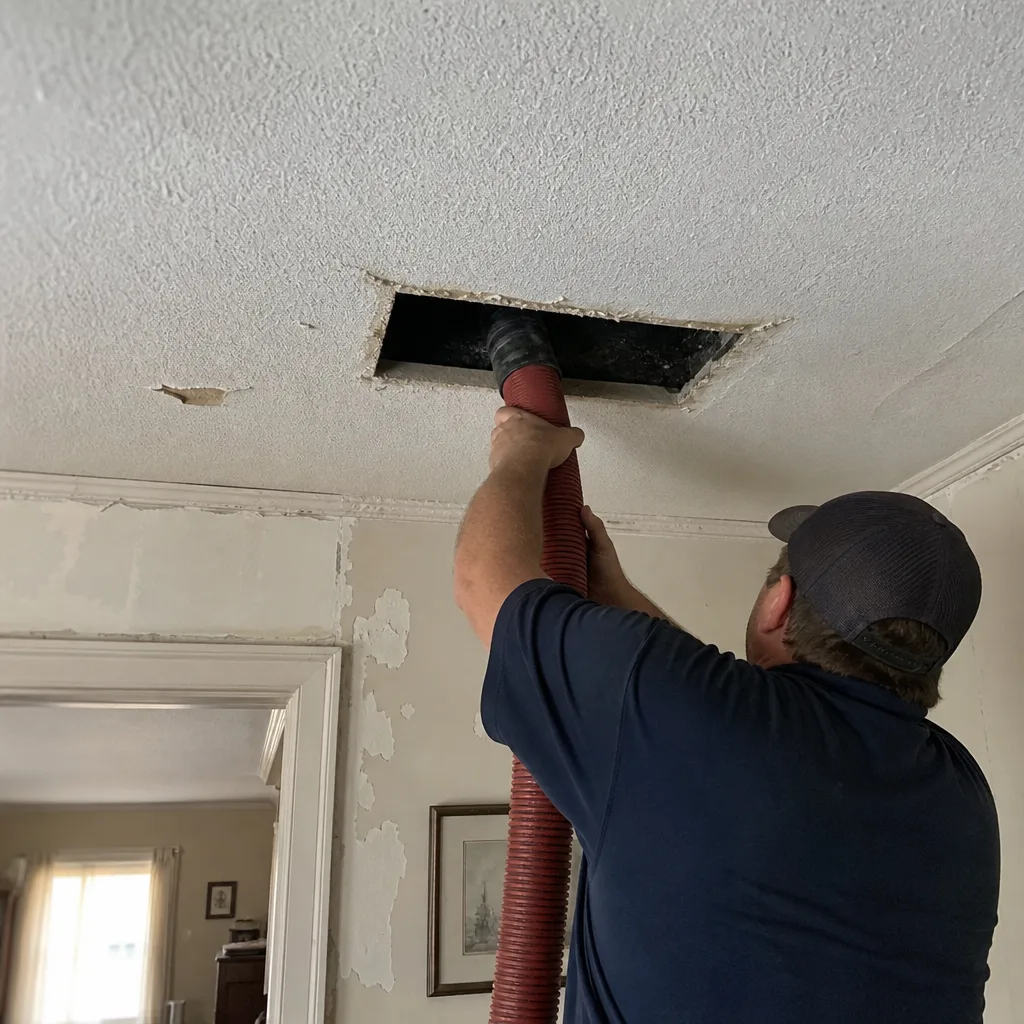 Before
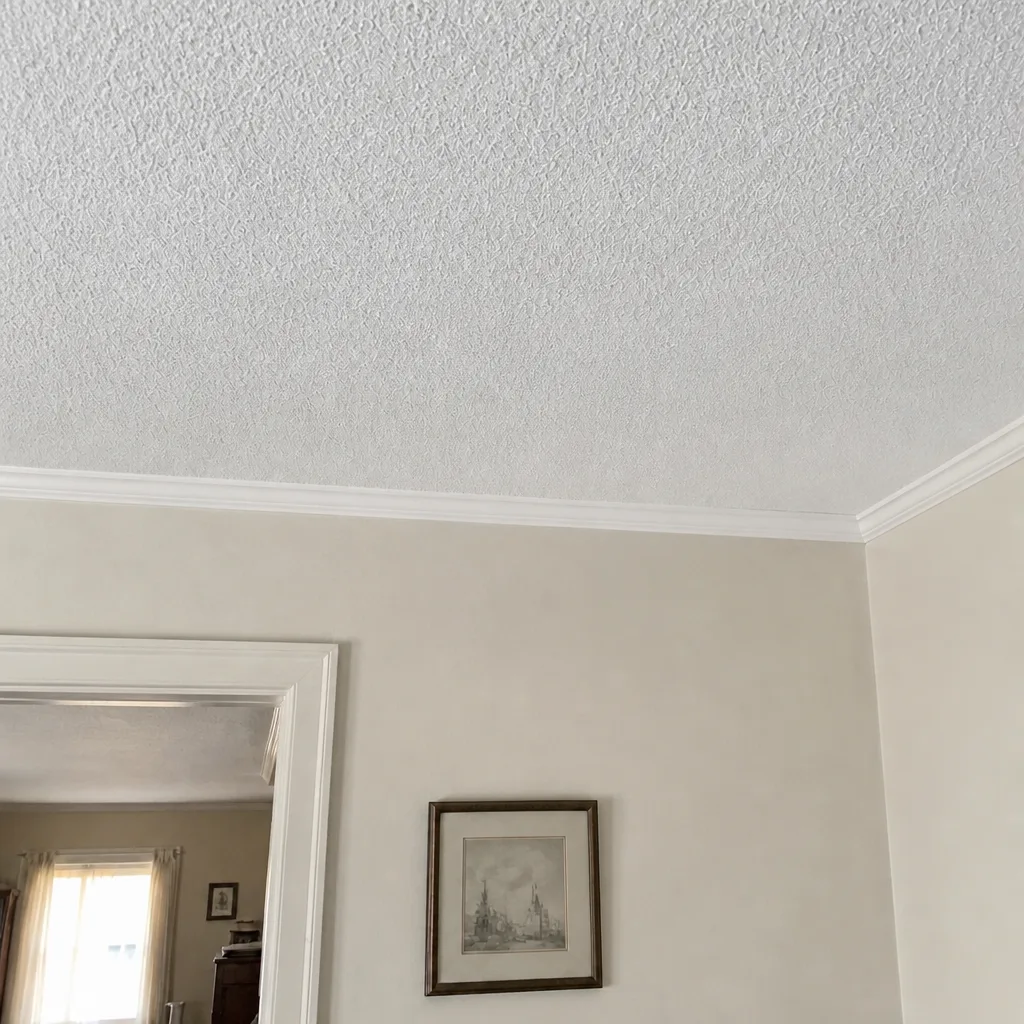 After
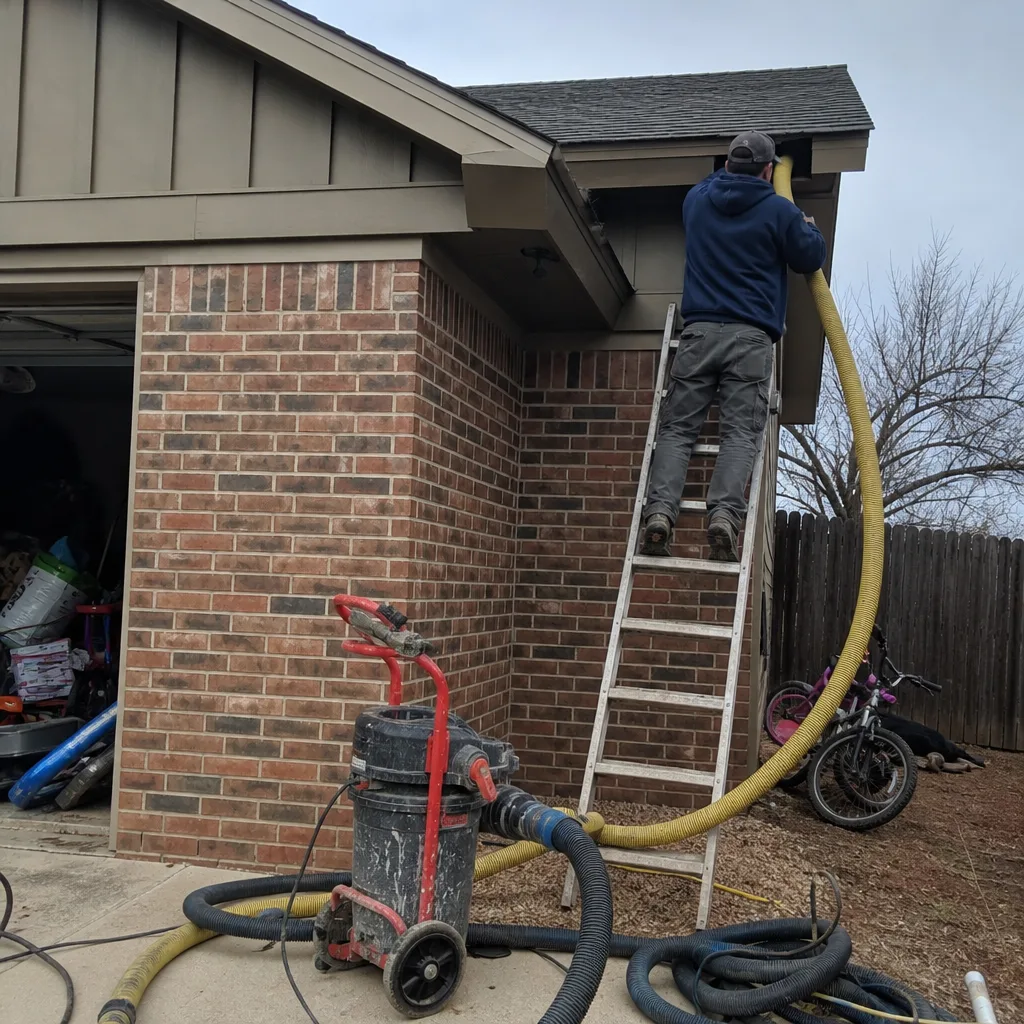 Before
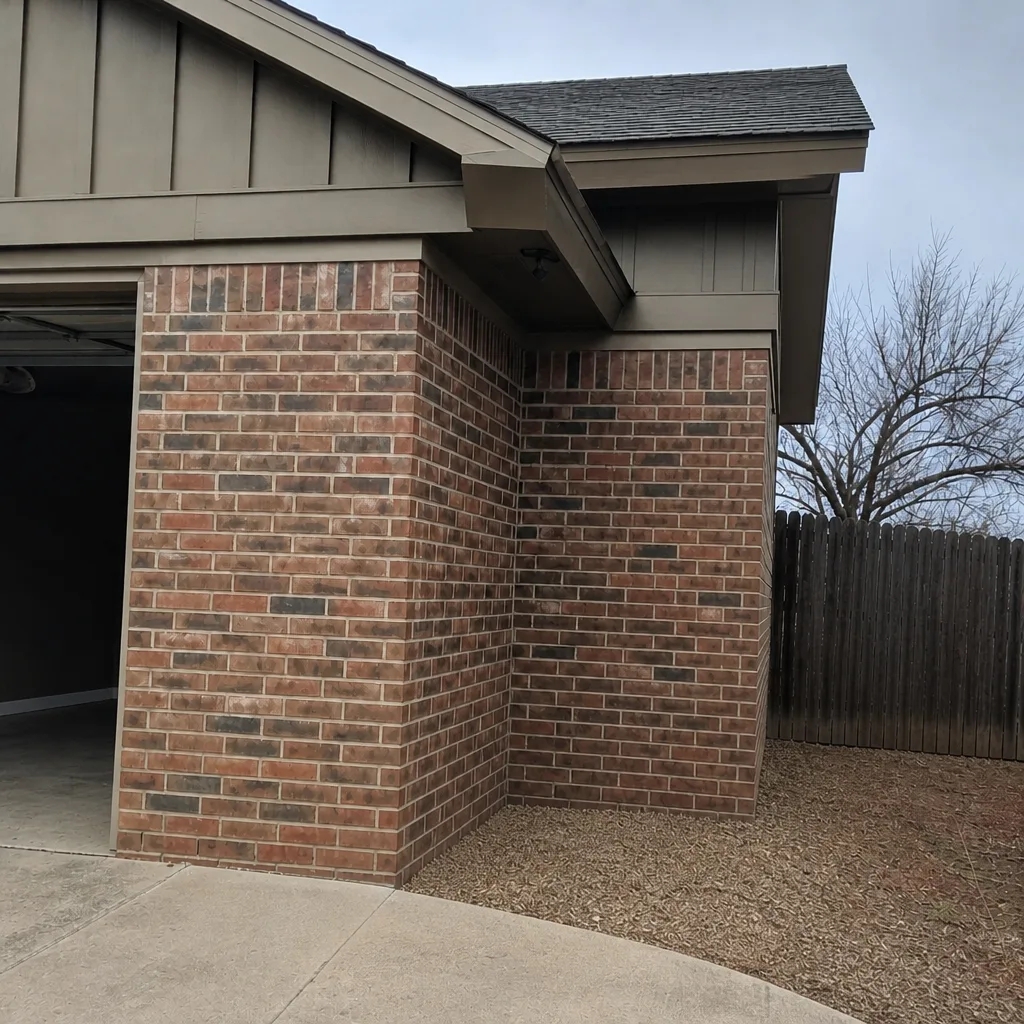 After
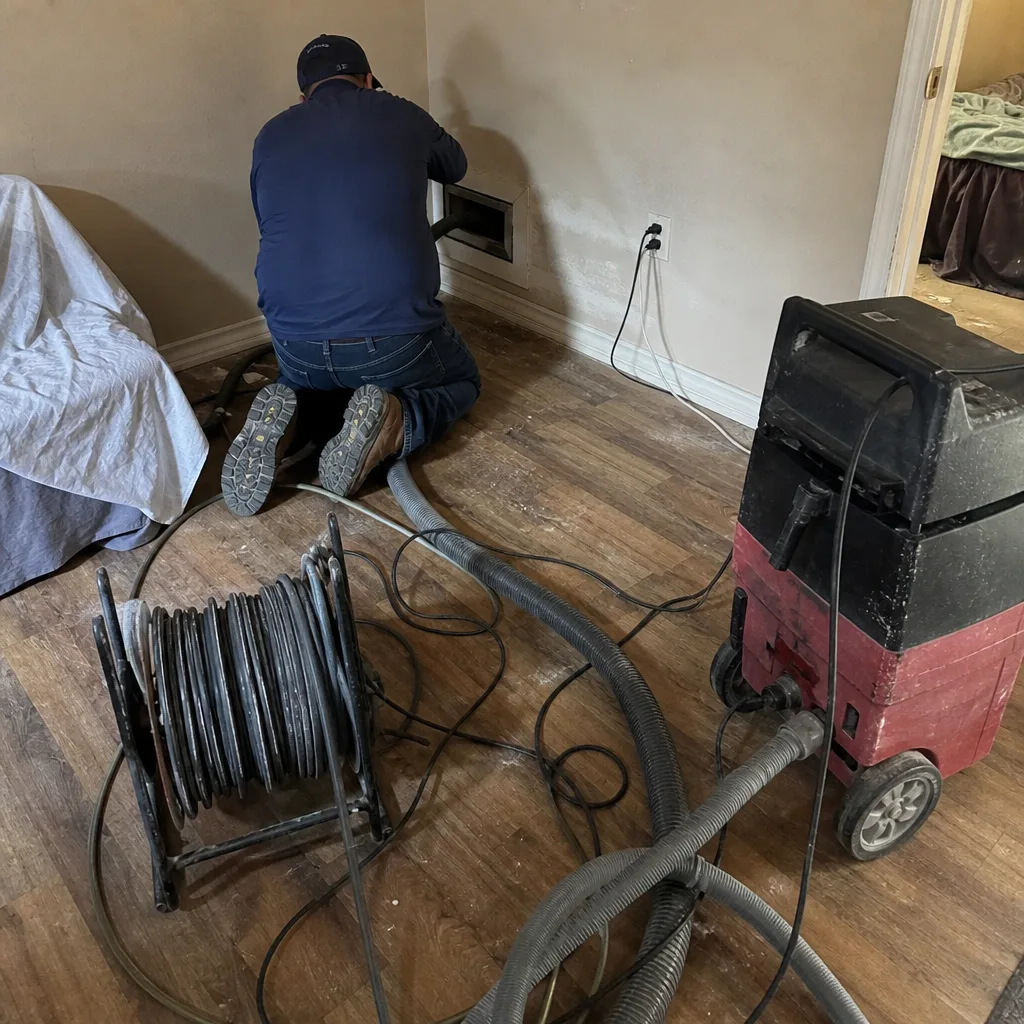 Before
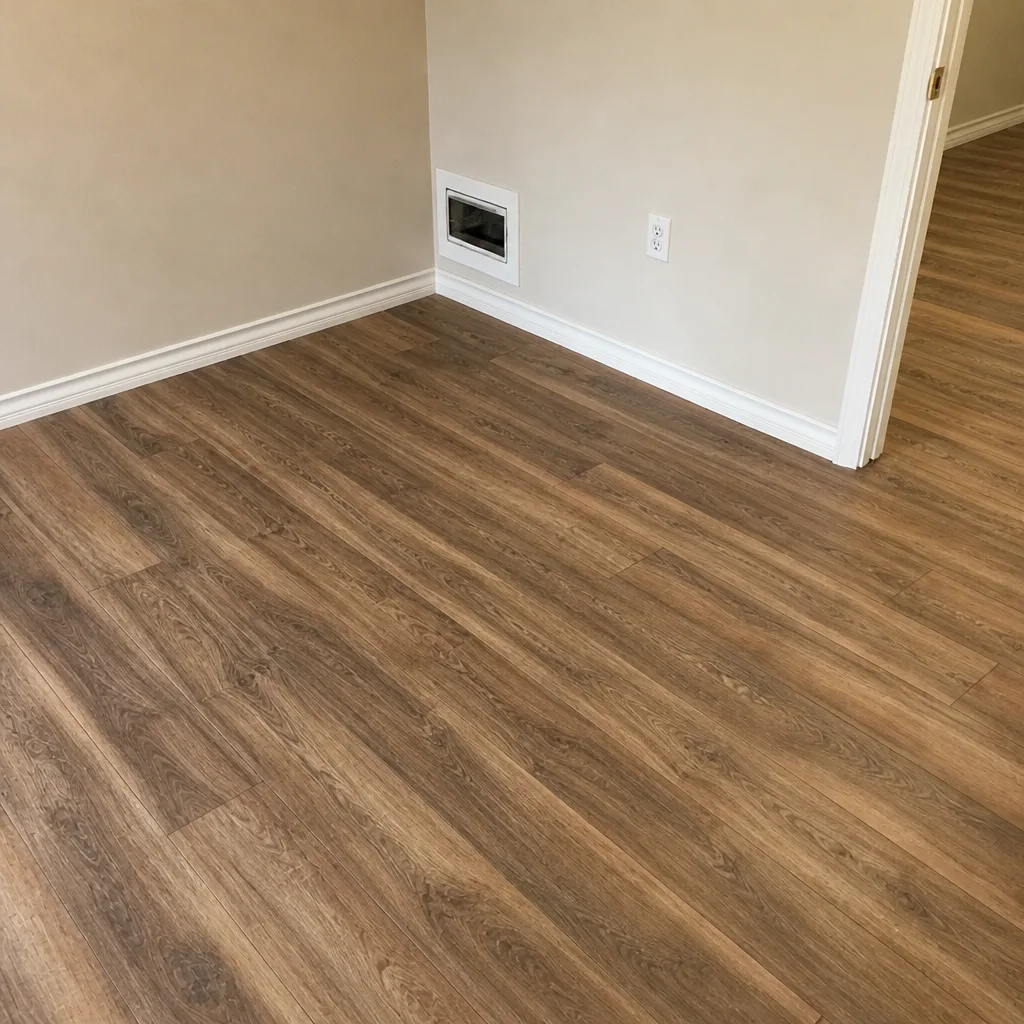 After
When to Call a Professional
Some duct issues are visible from the living room. Others only show up in the airflow. Call a professional if you’ve recently renovated and drywall dust has likely entered the return system, if you’ve had a persistent allergy or dust problem that cleaning hasn’t solved, if the system is older and you don’t have a record of it ever being cleaned, if the dryer is taking noticeably longer to dry, or if a room’s airflow is weak while others are strong. Duct damage – disconnected flex, crushed runs, torn insulation – is a specific scenario where a contractor who offers air duct repair is worth more than one who only cleans. If you’re in one of these situations, that’s exactly when it’s worth asking the equipment questions in this guide. Duct Cleaning Norman offers free estimates in Norman; call (866) 493-6592. We answer 24/7. Fast dispatch from 7am to 7pm, Sunday through Friday. Our technicians have up to 13 years of experience, and we can work with our equipment brands listed above as part of a scheduled estimate.
Frequently Asked Questions
There’s no single price, because the price depends on the size and complexity of the system. A whole-house clean for a typical Norman home is quoted as a flat per-system price agreed before work starts, not a per-vent figure. Be cautious of any quote that’s fixed before anyone inspects the system, and of any quote low enough to require an upcharge on site. Call (866) 493-6592 for an exact quote – estimates are free.
Cheap quotes are usually cheap because they’re for a smaller scope of work, or because the price is a teaser that expands on site. A $49 whole-house quote doesn’t reflect the equipment, labor, or accountability of a real whole-system cleaning. Ask the five equipment questions, and the gap between a real quote and a teaser usually explains itself. Call (866) 493-6592 if you want a quote you can compare line by line with the questions above.
Ask for before-and-after photos of your own ducts taken during the job, plus a written summary of the work. A legitimate contractor is happy to provide both. If the work can’t be documented, ask why before you pay. Call (866) 493-6592 to book a job where the documentation is standard.
Every three to five years is a reasonable general guideline for a typical Norman home, with more frequent intervals after renovations, in homes with pets, or where allergies are a household concern. If you’ve never had the system cleaned and don’t know its history, it’s worth doing once to establish a baseline. Call (866) 493-6592 to get started.
No. Oklahoma doesn’t require a specific state license for duct cleaning, so NADCA membership and certification are voluntary. They’re a useful data point but not a substitute for asking about the equipment and the documentation. Call (866) 493-6592 if you’d like to talk through the specific questions to ask a contractor.
Yes. Call (866) 493-6592 to request a free estimate, and ask for a flat whole-system price agreed before work starts. We’ll walk through the equipment and the scope so you can compare it with any other quote you’re collecting. We answer 24/7. Fast dispatch from 7am to 7pm, Sunday through Friday.
The Bottom Line
Hiring a duct cleaning contractor in Norman comes down to a short list of verifiable questions. Ask what machine they use, whether it’s truck-mounted or portable, what negative-air or HEPA equipment they run, and whether they’ll provide before-and-after photos of your own ducts. Expect a written quote for the whole system, agreed before the technician arrives, with no per-vent upcharges. Check for red flags like door-hanger teaser prices and contractors who can’t name their equipment. NADCA membership is worth noting, but it isn’t a license and isn’t a guarantee. Verify the work after the job with photos, a written summary, and an airflow check. Do those things and you’ve done the vetting the state doesn’t do for you.
If you’d like a free estimate, call Duct Cleaning Norman at (866) 493-6592. We’re set up to answer questions about equipment, process, and scope before you commit, and to provide before-and-after photos of your own ducts as part of every job.
Written by the team at Duct Cleaning Norman.