
Last updated November 14, 2026
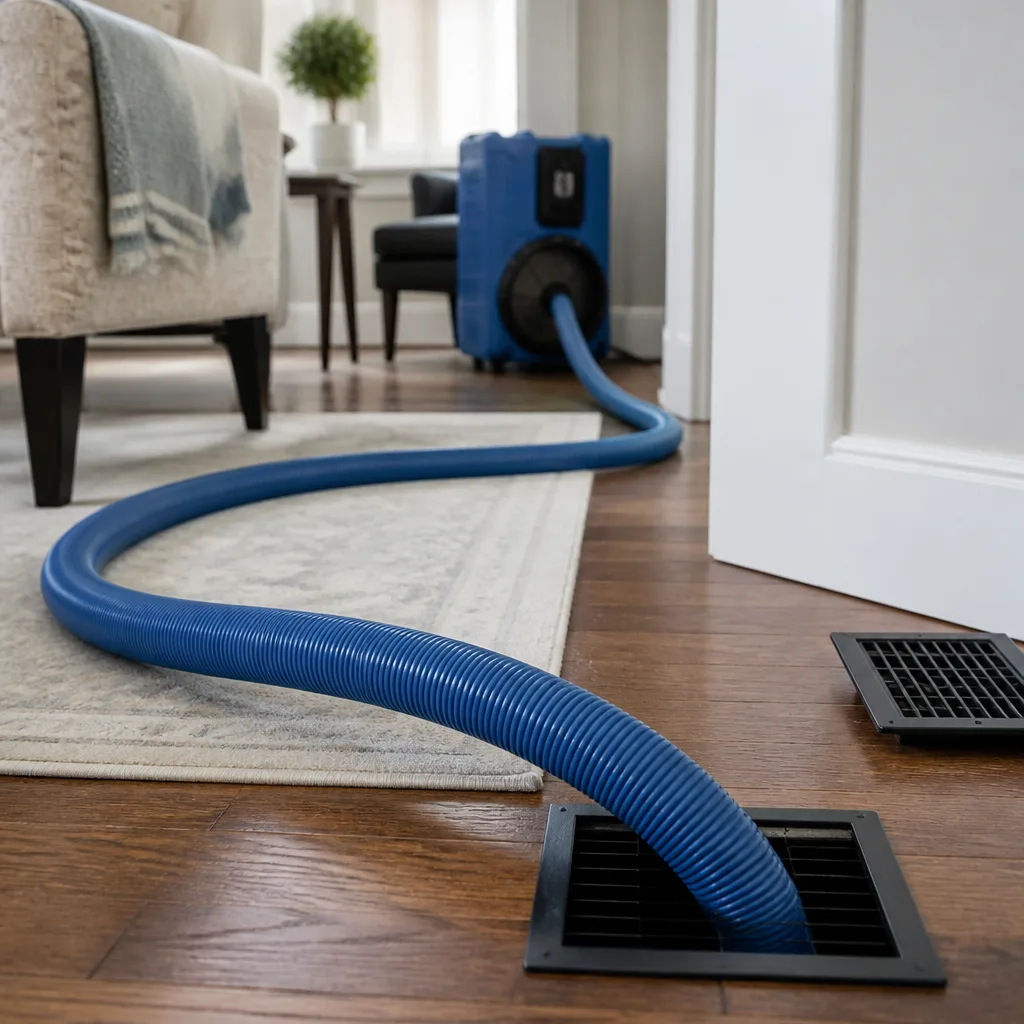 Whole-home duct cleaning
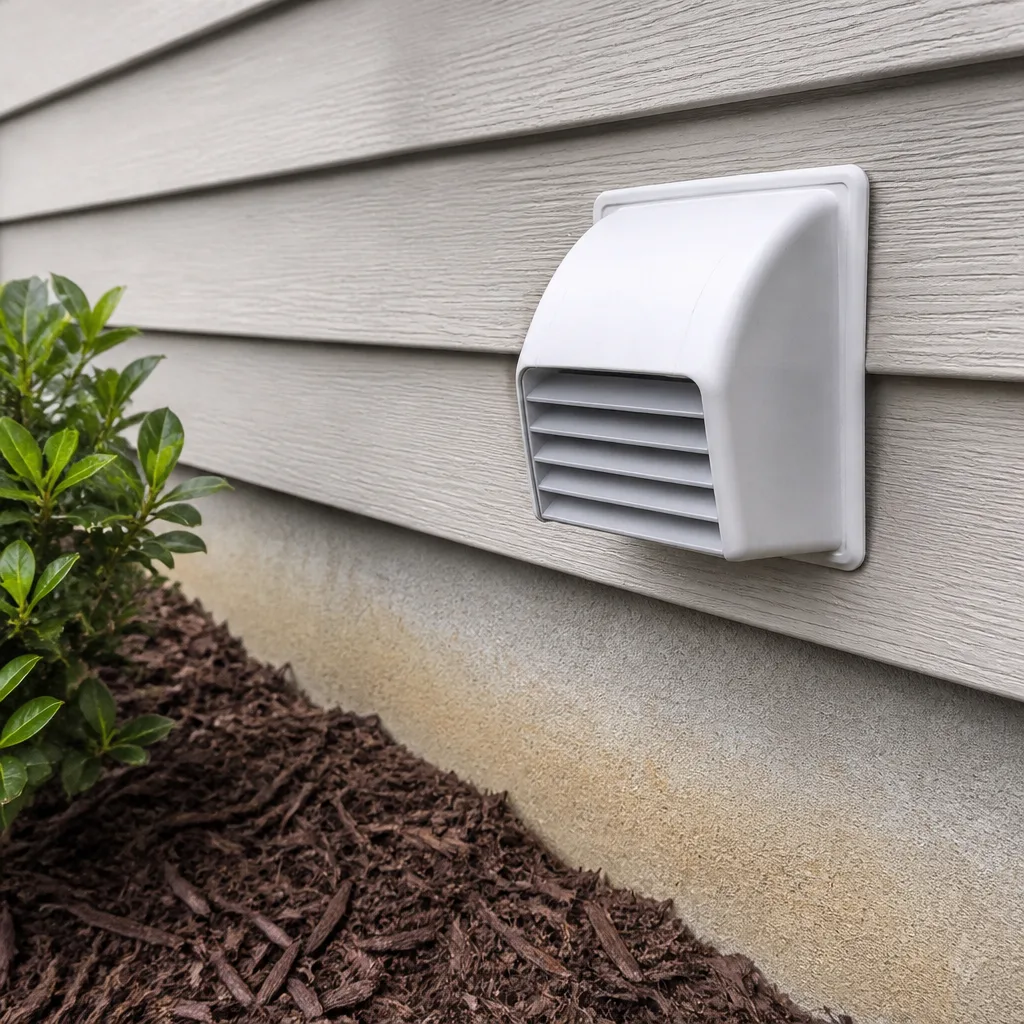 Dryer vent cleaning
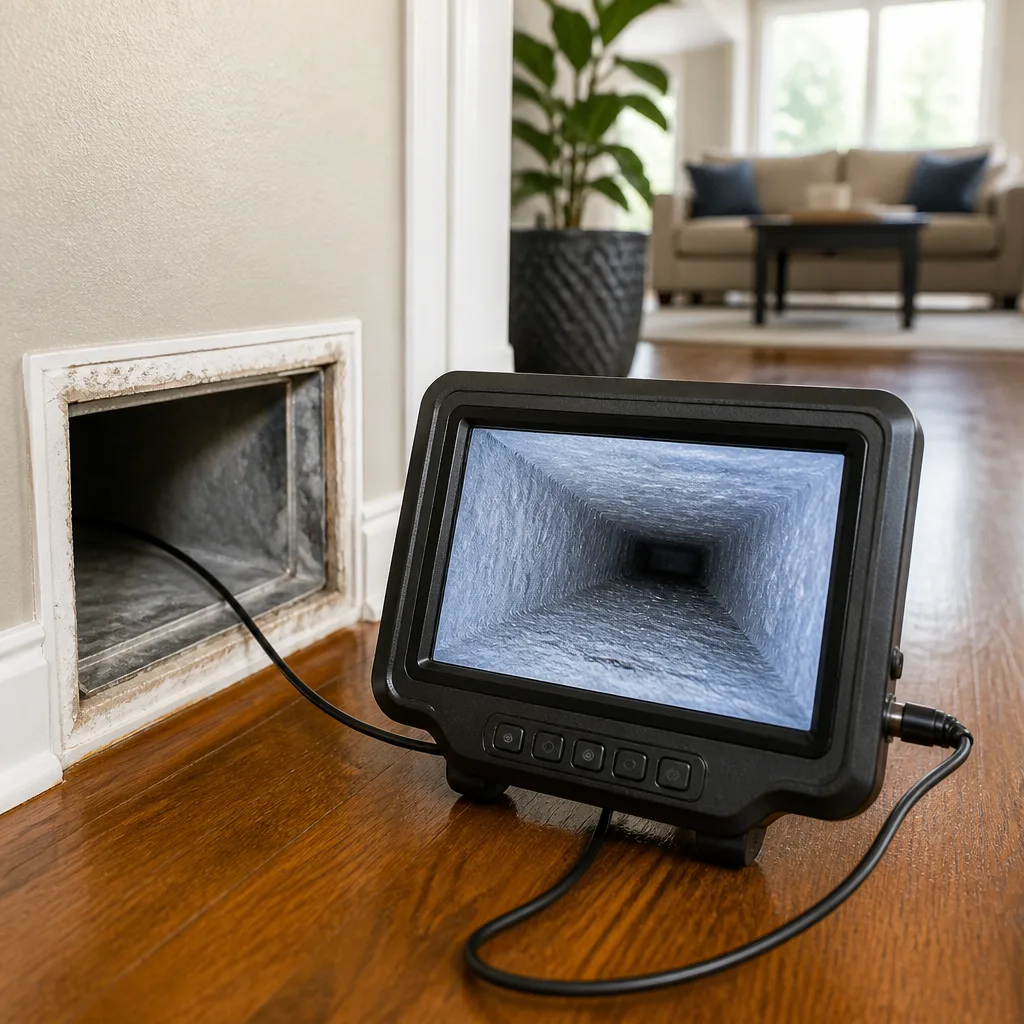 Camera inspection
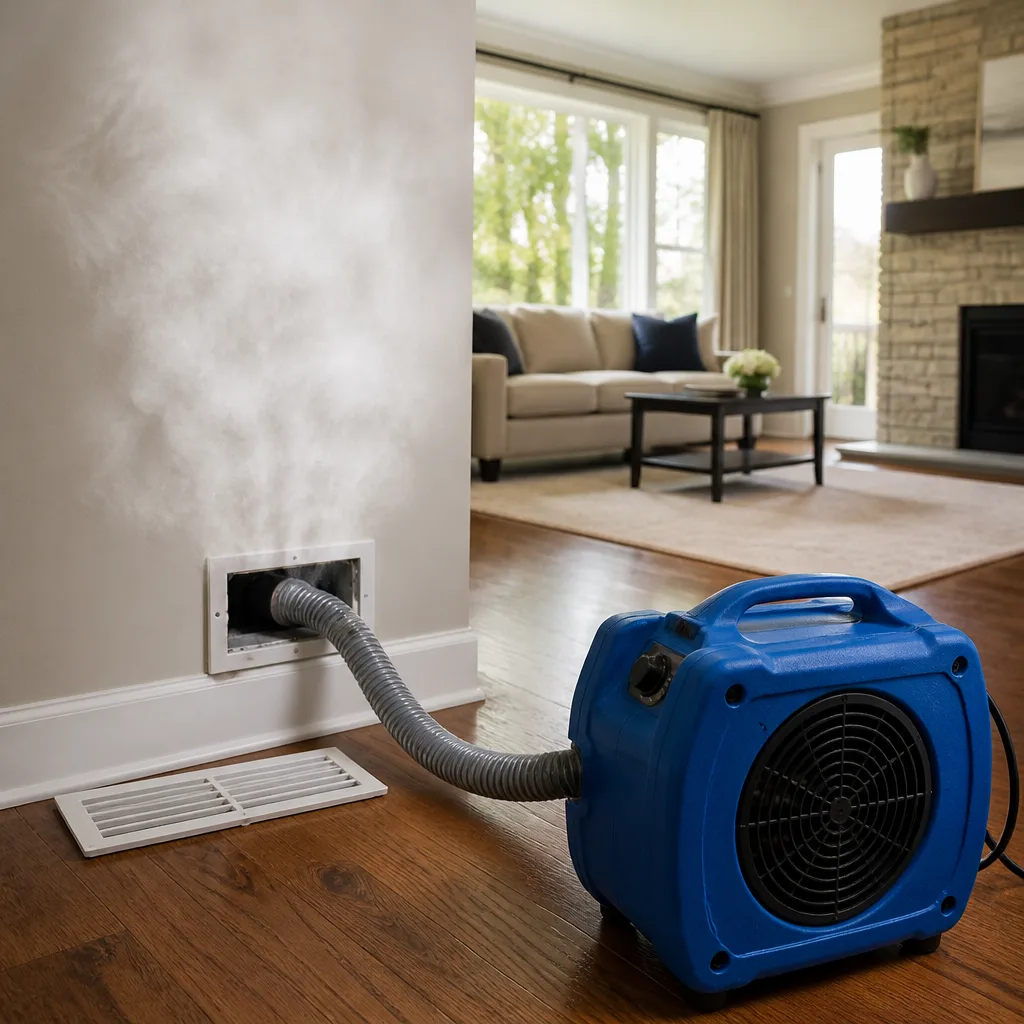 Sanitizing & deodorizing
Whole-system duct and dryer vent check with before-and-after photos - you see exactly what came out of your vents
That "$99 whole-house special" is a bait ad - the real number appears once they are in your hallway, or the "clean" is a shop-vac at the register. We photograph the inside of your ducts before and after instead.
DIY vs Professional Air Duct Cleaning: The Norman Homeowner’s Decision Guide
Every consumer duct cleaning kit sold online generates less suction than the return air port on a standard residential HVAC system. That single fact reframes the entire DIY debate. You can move dust around inside your ducts. You can’t remove it without equipment that pulls far more air than any shop-vac or drill-mounted brush ever will. Most homeowners assume the choice is one or the other: spend a weekend getting dirty or pay a crew. The smarter approach splits the work. There are real, useful tasks you can handle yourself, and there are jobs where effort without the right tool actually makes the next professional pass harder. This guide covers both sides honestly, with the Norman climate and housing stock in mind.
Quick Answer
DIY duct cleaning can meaningfully reduce surface contamination at your registers, grilles, and return air filter cavity, but it cannot remove settled debris from trunk and branch lines because consumer tools don’t produce the airflow or negative pressure required. Professional cleaning with contact agitation and HEPA containment is the only way to reach the source. The best results come from doing the DIY tasks first, then calling a specialist for the whole-system work.
Styles & brands we work with
- Whole-home duct cleaning
- Dryer vent cleaning
- Camera inspection
- Sanitizing & deodorizing
Table of Contents
- What DIY Duct Cleaning Actually Accomplishes in Norman
- Why Suction Physics Make Source Removal Impossible Without Pro Equipment
- When DIY Effort Makes a Professional Job Harder
- When Professional Cleaning Is Non-Negotiable
- The Practical Split: What to Do Before a Pro Arrives
- The Equipment Gap in Plain Terms: Consumer vs. Professional
- How Norman’s Climate and Housing Shape the Decision
- How to Evaluate a Duct Cleaning Company in Norman
What DIY Duct Cleaning Actually Accomplishes in Norman
There’s a version of DIY duct cleaning that’s genuinely worth your Saturday morning. It doesn’t touch the ductwork interior beyond the first inch or two, and it doesn’t pretend to. What it does is slow the rate at which your system loads up between professional cleanings. For a Norman home in a mature neighborhood with mature trees dropping pollen and seed fluff through the spring, that matters.
Three tasks worth doing yourself
- Register and grille cleaning. Pop off the floor and wall registers with a screwdriver. Vacuum both faces of each grille with a brush attachment, then wipe with a damp microfiber cloth. Dust and pet hair pack against the fins and cut airflow before it ever reaches the duct. You’ll see an immediate difference in how much air a room gets.
- Visible flex duct inspection. In an attic or crawl space, look at the flexible duct runs feeding your registers. You’re not cleaning them, you’re checking for kinks, crushed sections, disconnected collars, and sagging runs. A crushed flex duct behind a knee wall is a common cause of a cold bedroom in a Norman ranch house, and no amount of professional cleaning fixes a kink. Note what you find and flag it.
- Return air filter cavity vacuuming. With the system off, remove the filter and vacuum the sheet metal surfaces where the filter sits. Dust film builds there and gets pulled straight into the blower. A crevice tool and five minutes gets most of it.
What these tasks do and don’t buy you
Grille cleaning restores airflow at the point of delivery. Cavity vacuuming keeps the blower and evaporator coil cleaner. Flex inspection heads off a repair before it becomes a comfort complaint. None of these remove settled particulate from inside a 20-foot trunk line, and that’s the honest limit. If you take nothing else from this guide, take this: DIY is maintenance between professional cleanings, not a substitute for one. Our air duct cleaning service exists precisely because those deeper tasks require tools most homes don’t have.
Why Suction Physics Make Source Removal Impossible Without Pro Equipment
Duct cleaning is a removal problem, not a dusting problem. The debris that accumulates in ductwork gets there because the system’s own airflow carried it and then couldn’t keep it moving. Once particles settle against the duct wall, static cling and a thin film of moisture hold them in place. Getting them out means breaking that bond and then capturing the material in a way it can’t recirculate into the house. That’s two jobs, and consumer equipment does neither well.
The numbers that matter
A standard residential air handler moves roughly a thousand to two thousand cubic feet per minute of supply air depending on tonnage and blower settings. A consumer shop-vac with a 2.5-inch hose moves a small fraction of that, and it drops close to zero the moment you push the hose 15 feet into a duct. Static pressure rises with every foot of hose and every turn. The vacuum fights itself. Professional contact cleaning uses a rotating brush or air whip driven at the register opening and paired with a high-volume negative air machine pulling at the trunk or plenum, so loosened debris has somewhere to go before it settles again.
What “containment” actually means
When we clean, the negative air side of the setup is as important as the agitation side. Equipment like Nikro negative air machines and Abatement Technologies HEPA filtration units create a pressure differential that pulls loosened particulate toward the collection point instead of into your living room. A shop-vac running inside the duct does the opposite: the exhaust air it pushes out carries fine dust with it, right back through your registers. This is why consumer duct cleaning sessions often leave a house dustier than it started.
When DIY Effort Makes a Professional Job Harder
This is the part most guides skip. Attempting serious duct cleaning with inadequate tools isn’t just ineffective. It can set up problems that cost more to resolve.
Pushing debris deeper into trunk lines
Take a shop-vac hose or a homeowner-grade brush and work it into a branch duct. Debris that was sitting loosely near the register now gets shoved down the run toward the trunk, where the cross-section is bigger and the airflow slower. You’ve taken material that a professional could have reached easily and buried it. In a Norman home with a long horizontal trunk in the attic, that’s a real complication.
Disturbing insulation in lined ducts
Some duct systems use internal acoustic lining or insulated flex with an exposed facing. Aggressive brushing or high-pressure air from a consumer tool can tear that facing loose. Now you’ve got fiberglass particles in the airstream, which is worse than dust. Professional equipment is designed for contact cleaning without shredding the duct wall, and technicians watch for this exact failure.
Water and chemical mistakes
Renting a wet extraction unit or spraying a chemical cleaner into ductwork is where casual DIY turns into an insurance claim. Moisture in a dark duct is a setup for biological growth. Harsh chemicals can damage the blower, the coil, or the duct sealant. Neither is a tool a homeowner should reach for.
The false-confidence trap
You ran a shop-vac through the register for a few minutes and saw less dust come back the next day. That feels like success. Often the visible dust was just what was near the opening, and the material that actually drives air quality complaints lives 10 or 20 feet farther in. Thinking the job is done means the real cleaning never happens.
When Professional Cleaning Is Non-Negotiable
Some situations don’t belong in the DIY-versus-pro calculation. They call for a specialist with the right containment, period.
- Post-fire smoke. Smoke residue penetrates duct walls and leaves a persistent odor that returns every time the system runs. Removal requires contact cleaning plus filtration with HEPA equipment, not surface wiping.
- Confirmed rodent activity. Droppings, nesting material, and urine contamination in ductwork are a health concern. Cleaning must include safe removal and disposal with proper containment, plus attention to the entry points or the problem returns.
- Visible mold growth. Growth beyond the register surface means a moisture source exists inside or near the duct system. Cleaning without identifying and correcting the moisture will only buy a few weeks. This is a case where a specialist should look at the whole picture before any work starts.
- Recent major renovation. Drywall dust is ultra-fine and loves to settle in ductwork. A remodel in a Norman home without sealing registers during the work is a common reason for a sudden air quality complaint.
- Airflow problems after cleaning attempts. If you’ve done the DIY tasks and rooms are still not getting air, the issue is likely deeper than surface debris: a collapsed duct, a disconnected joint, or a damper stuck closed. That’s a repair, not a cleaning, and our dryer vent cleaning team also handles duct repair work as a separate specialized service.
If any of these situations sound familiar, stop reaching for the shop-vac. Call a specialist and get an honest assessment before you invest more of your own time.
The Practical Split: What to Do Before a Pro Arrives
Here’s where DIY and professional cleaning stop competing and start working together. The tasks below are what you can do in the days before a scheduled professional cleaning to get more out of the visit. They lower the debris load so the specialist’s equipment spends its time on the material that actually matters.
Pre-service checklist
- Clean all registers and grilles on both faces with a brush attachment and damp cloth.
- Vacuum the return air filter cavity with a crevice tool.
- Replace the HVAC filter if it’s due. A fresh filter before cleaning keeps downstream components cleaner during the service.
- Clear access to any attic or crawl space duct runs and to the air handler. Technicians can’t clean what they can’t reach.
- Note any rooms with weak airflow, strange odors, or recent dust complaints. Tell the technician which rooms and when the problem started.
- Move furniture away from floor registers so grilles can be removed quickly.
That’s roughly an hour of your time and it directly improves the outcome of the professional visit. When you book with us, the technician arrives to a system that’s ready to clean, not one that needs two hours of access clearing first.
What happens during a professional cleaning
- The technician sets up containment and negative air at the trunk or plenum.
- Registers and grilles are removed and cleaned separately.
- A Rotobrush contact cleaning tool agitates the duct walls branch by branch while the negative air system pulls loosened material toward collection.
- The air handler, blower, and accessible coil are inspected and cleaned as needed.
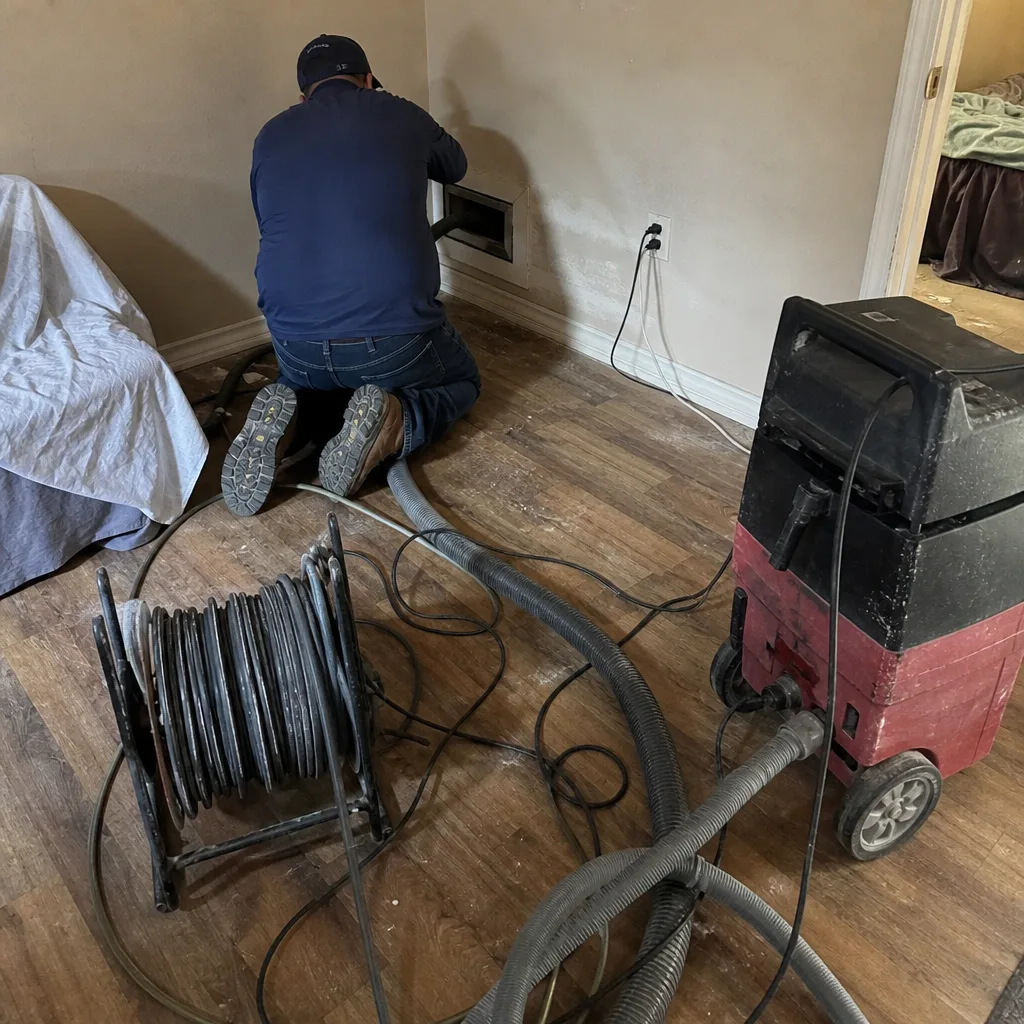
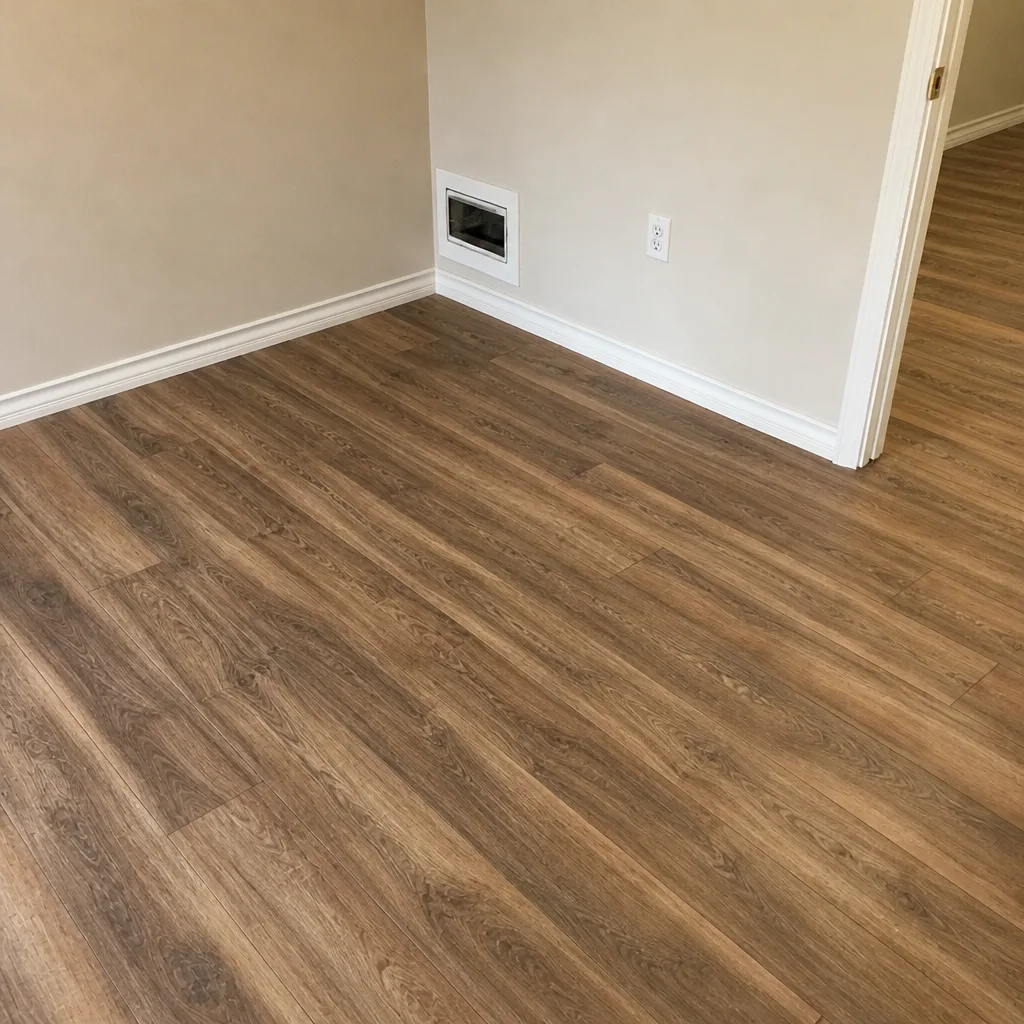
- Before-and-after photos of your own ducts document the change.
The gap between a homeowner with a shop-vac and a professional visit comes down to tools that exist only at professional scale. Rotobrush contact cleaning equipment and Nikro negative air systems are built for this work and have no consumer equivalent.
The Equipment Gap in Plain Terms: Consumer vs. Professional
Air duct cleaning isn’t a single tool. It’s a system of tools that each handles a different part of the job. Consumer solutions have no equivalent for most of them.
Side-by-side
- Suction source. Consumer: a shop-vac, which reduces to near-zero airflow past a few feet of hose. Professional: a high-volume negative air machine running at the trunk, pulling consistent airflow through the entire duct system.
- Agitation. Consumer: a hand brush or a drill attachment, which reaches only a few feet. Professional: a rotating contact brush on a flexible whip that travels the full length of each branch run.
- Containment. Consumer: none, so loosened dust recirculates into the home. Professional: HEPA filtration and negative pressure that keep dust from returning through the registers.
- Access and inspection. Consumer: register openings only. Professional: access cuts at strategic points plus camera inspection of interior conditions.
- Post-cleaning verification. Consumer: none. Professional: before-and-after images of the specific ducts in your home.
Different companies specify different tooling. When we clean, that means Rotobrush contact cleaning, Nikro negative air and HEPA equipment, and Abatement Technologies filtration where a job calls for it. The point isn’t brand loyalty. It’s that these tools are what the work schedules actually specify, and they’re the reason a professional visit reaches what a consumer session can’t. We also work with Honeywell and Aprilaire air quality products, so if your filtration setup is underbuilt for the dust load in your Norman home, we can address it at the same appointment.
How Norman’s Climate and Housing Shape the Decision
Duct cleaning needs aren’t the same everywhere. Norman sits in central Oklahoma, where the swing between a damp spring and a hot, dusty summer loads HVAC systems in two directions. Understanding that pattern helps you decide how much of the work to hand off.
Seasonal load
Spring brings pollen and cottonwood fluff through open windows and the fresh-air intake of most central systems. Summer runs the blower hard, so anything sitting in the ducts gets cycled repeatedly. A home in a mature neighborhood near the University of Oklahoma campus or in Brookhaven will see more fine particulate through late spring than a newer build on the city’s west side. Either way, the practical takeaway is the same: DIY grille cleaning should happen more often than once a year, especially after pollen season.
Housing stock
Norman spans a huge range of building vintages. Mid-century homes near downtown often have original sheet metal trunk lines and retrofit flex branches, which are prone to disconnected joints and crushed runs. Newer construction in the western growth areas uses more flex but also tighter envelopes, which means anything that does settle in the ducts recirculates more. Older homes also tend to have more return air paths, which means more surfaces to keep clean. Both profiles benefit from a combination approach: homeowner tasks between visits, professional cleaning on a sensible schedule.
The humidity window
Oklahoma’s humid stretches matter here. Any moisture introduced into a duct system during DIY cleaning is a real problem, because humidity levels in the summer can keep it damp for days. This is a strong argument against renting wet extraction equipment or spraying cleaners as a DIY project. If you want to address moisture-related concerns in your ductwork, bring in a professional with proper containment. Learn more about how we approach Norman homes specifically when you’re ready to book.
How to Evaluate a Duct Cleaning Company in Norman
If your research has led you toward a professional cleaning, the next question is which company. The industry has a well-earned reputation problem: low teaser pricing that becomes a much larger invoice once the technician is on site. Here’s how to protect yourself from that.
Questions to ask before you book
- What equipment will be used? If the answer is “a shop-vac and a brush,” that’s a red flag. Ask specifically about negative air and HEPA filtration.
- Is the price per system or per vent? Per-vent pricing is how the invoice grows. A flat price per system agreed before work starts is what you want.
- Will I see photos of my own ducts before and after? A technician who documents the work has nothing to hide.
- Is repair work in scope? If the technician finds damaged ductwork, can the same company fix it, or will you be chasing a second contractor?
- Are dryer vents part of the service? A dryer vent packed with lint is a fire risk, and not every duct cleaning company handles it.
What we do differently
We’ve built the business around three services: air duct cleaning, dryer vent cleaning, and air duct repair. That’s the whole list. No carpet cleaning, no mold remediation, no full HVAC installation. Staying focused on this work means the equipment, the process, and the technicians’ experience (up to 13 years) go deep rather than wide. Every job gets a flat price per system agreed in writing before we start, and every customer gets before-and-after photos of their own ducts. Estimates are free. If you’re not sure whether your situation calls for DIY or professional attention, call and we’ll tell you honestly. For a broader look at what we do, see Duct Cleaning Norman.
Common Mistakes to Avoid
- Assuming a shop-vac equals a duct cleaning. The hose reaches the first few feet and does nothing beyond it. The dust that matters is farther in.
- Spraying chemical cleaners or air fresheners into registers. Fragrant sprays mask odor without addressing the cause and can leave residue in the airstream. In Norman’s humid summers, moisture from sprays lingers longer than you’d expect.
- Skipping the filter change during a DIY weekend. Running the system with a fresh filter during or right after DIY work protects the blower and coil. Doing the grille cleaning with a loaded filter just pulls dust back through.
- Not documenting what you find. If you see a crushed flex run or a disconnected joint during inspection, photograph it. Technicians can work faster with those notes, and you’ll have a record for the estimate.
- Renting wet extraction equipment. Moisture introduced into a duct system in an Oklahoma summer creates a worse problem than the dust it removes. Leave wet methods to professionals with proper drying and containment.
- Forgetting the dryer vent. Homeowners focused on air ducts often overlook the dryer vent, which is a documented fire risk nationally. A lint-clogged vent is a slow-speed hazard that’s easy to fix.
- Believing a quote that seems too low. If the number is dramatically lower than everyone else’s, the difference gets made up on-site. A flat price per system agreed in writing is the protection you want.
See the difference
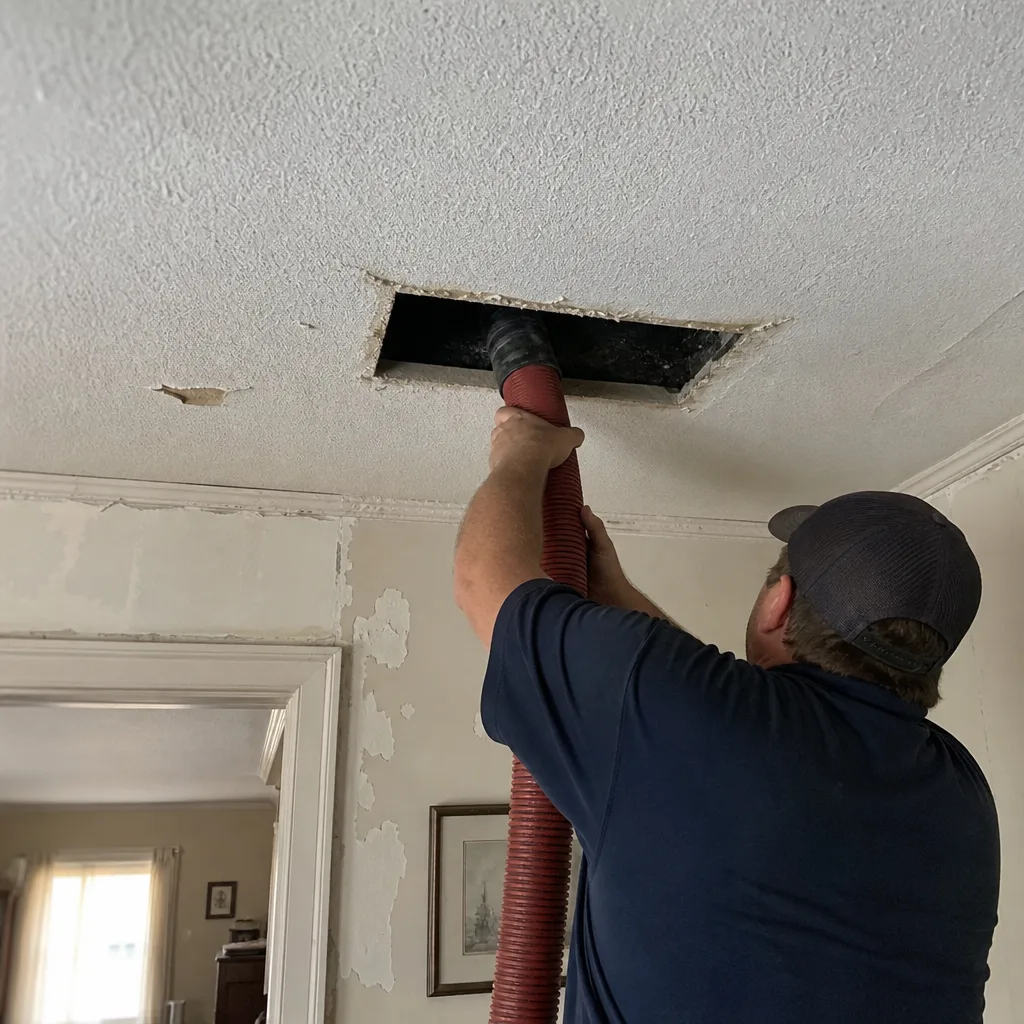 Before
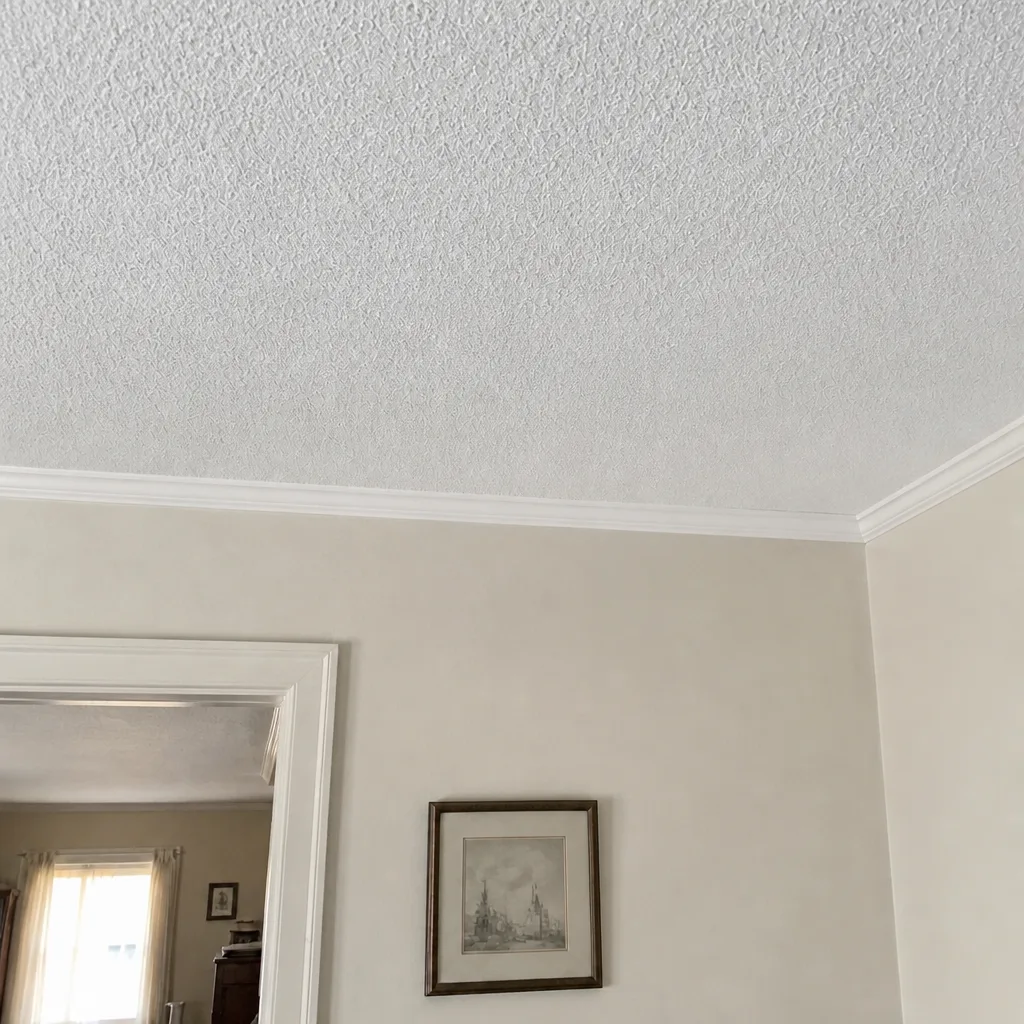 After
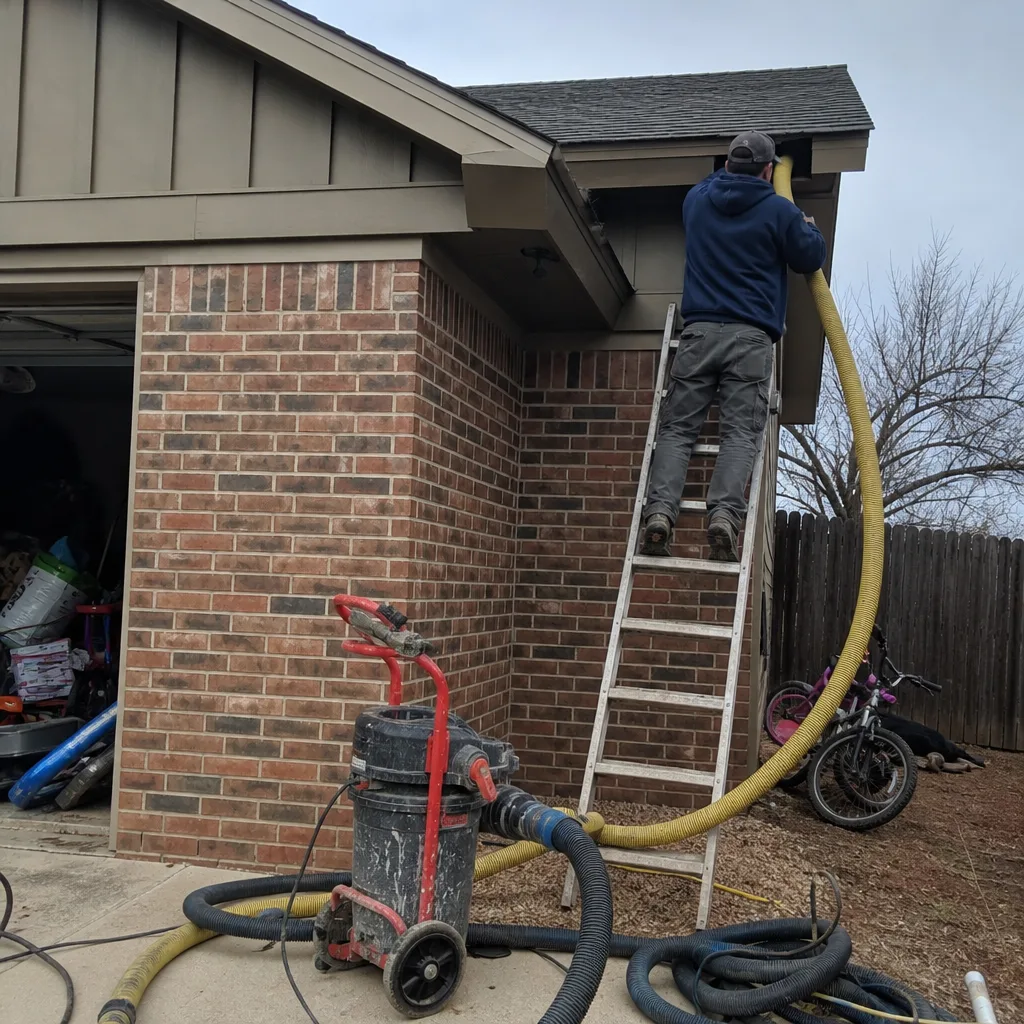 Before
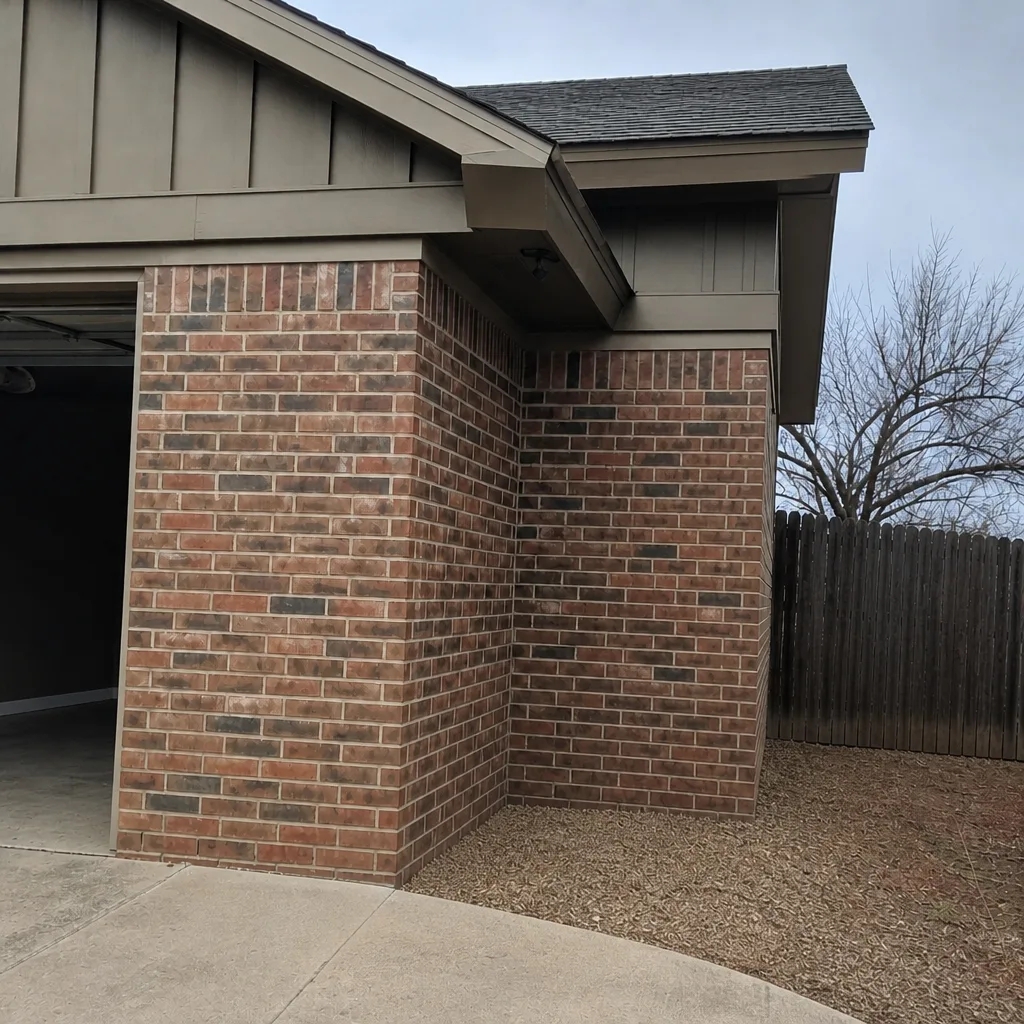 After
 Before
 After
When to Call a Professional
Call a professional if you’ve confirmed rodent activity, seen mold growth beyond the registers, had a fire or major renovation, or dealt with a persistent musty odor that returns when the system runs. Call if airflow hasn’t improved after your DIY tasks, or if you’ve never had the ducts cleaned and can’t recall when the previous owners did. Call if the dryer is taking longer than it used to, because that vent needs attention too. Duct Cleaning Norman offers free estimates in Norman. Call (866) 493-6592 and we’ll book a time that works for you.
Frequently Asked Questions
Professional cleaning is priced per system, not per vent, with a flat price agreed in writing before work starts. We don’t publish a single figure because systems vary widely: a small ranch with short runs is a different job than a two-story with an attic trunk. The estimate is free, and the written quote is the final price. Call (866) 493-6592 for an exact quote on your home.
Yes, in specific ways. Consumer suction isn’t strong enough to pull debris out, so pushing a hose or brush into a branch duct often moves material deeper toward the trunk where a professional can’t reach it as easily. Aggressive brushing can also tear the facing on insulated ducts and cause a bigger problem than the dust you started with. Stick to the surface tasks and leave the duct interiors to a specialist.
There’s no fixed schedule that fits every house. Homes with pets, allergy sufferers, recent renovation, or older systems tend to need it more often. In Norman, where spring pollen loads are heavy, the practical answer is to keep DIY grille cleaning on a tighter rotation and schedule professional cleaning based on what you observe: visible dust at registers, musty odors, or reduced airflow that doesn’t respond to a filter change. A professional assessment can tell you whether the timing is right.
A shop-vac will pull dust from the first few inches past the register and any debris sitting loose in the boot. It cannot generate enough airflow at the trunk to move the settled material farther inside the system. What most homeowners see after a shop-vac session is the outer layer, not a clean duct.
The cheapest quotes typically come from companies that use shop-vac equipment, skip containment, or price per vent and add charges on-site. The bait-and-switch pattern is common enough that it’s the main reason homeowners are skeptical of the industry. Ask what equipment will be used, whether the price is per system or per vent, and whether before-and-after photos will be provided. Call (866) 493-6592 for a flat quote per system with the answers to all three.
The most reliable indicator is before-and-after photos of your own ducts, not stock images. A technician who cleans carefully has nothing to hide and will happily show the change from the trunk line and one or two branch runs. At our visits, we photograph the specific ducts in your home so you can see exactly what changed. Call (866) 493-6592 to book and ask for those photos on your visit.
The Bottom Line
DIY duct cleaning is real maintenance, and it’s worth your time. Cleaning registers, vacuuming the return cavity, and inspecting flex runs will slow contamination and protect your blower between professional visits. But the physics of airflow mean you can’t remove settled debris from deeper in the system with tools that don’t have the suction or containment to do it. Where DIY turns harmful is when it moves debris deeper or shreds duct lining, so keep the work surface-level. When you need the deeper work done, work with a specialist who uses professional-scale equipment (Rotobrush, Nikro, Abatement Technologies) and prices per system. That’s the split that gets the most out of every cleaning.
If it’s time for the deep cleaning, call Duct Cleaning Norman at (866) 493-6592 for a free estimate. We answer 24/7. Fast dispatch from 7am to 7pm, Sunday through Friday. Closed Saturday.
Written by the team at Duct Cleaning Norman.